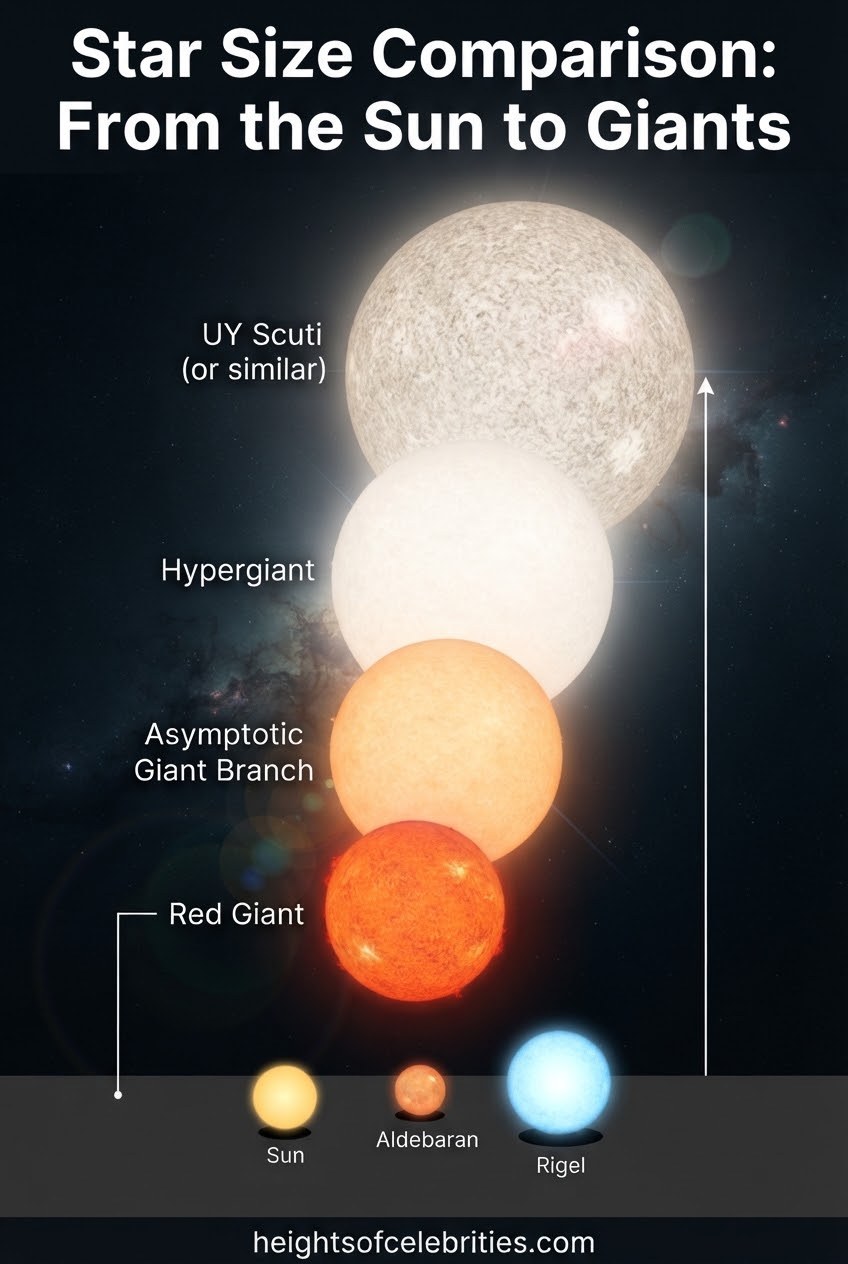
I use this star size comparison as a scale guide: the Sun provides the reference point, and each larger star shows how stellar diameters can expand from millions to billions of kilometres. The measurements below are based on published astronomical estimates, because many stars do not have a directly measured edge.
For stars, the most reliable figures are usually estimated diameters based on distance, brightness, temperature, and observations such as interferometry. Values can change as new measurements refine our understanding.
The Sun: Our Reference Star
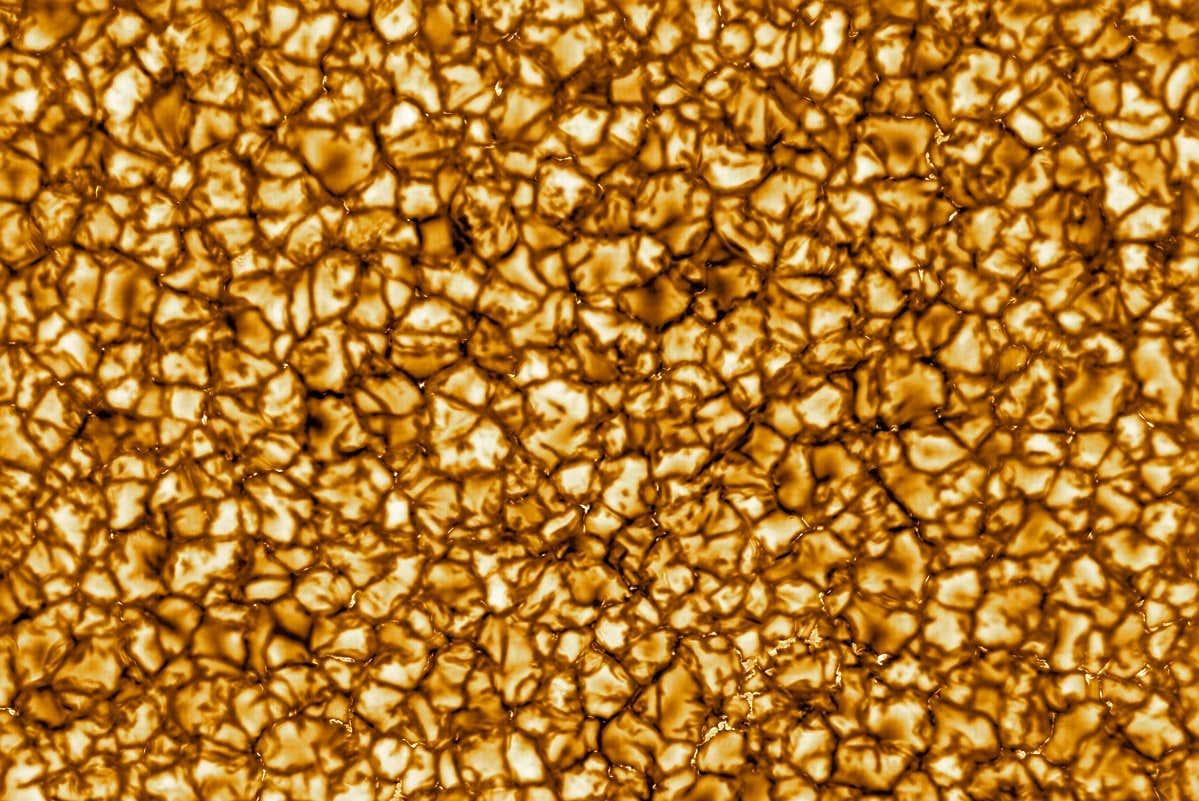
The Sun is the baseline for every stellar size comparison. NASA lists its diameter at about 1.39 million kilometres, or roughly 864,000 miles. That gives astronomers a familiar unit: one solar radius.
The Sun's radius is about 696,000 kilometres (432,000 miles), and most stars in this guide are compared against this reference. Its size is classified as typical for a main-sequence star rather than a giant or supergiant.
1.39 million km
Approximate solar diameter used as the comparison baseline
Proxima Centauri: A Tiny Red Dwarf
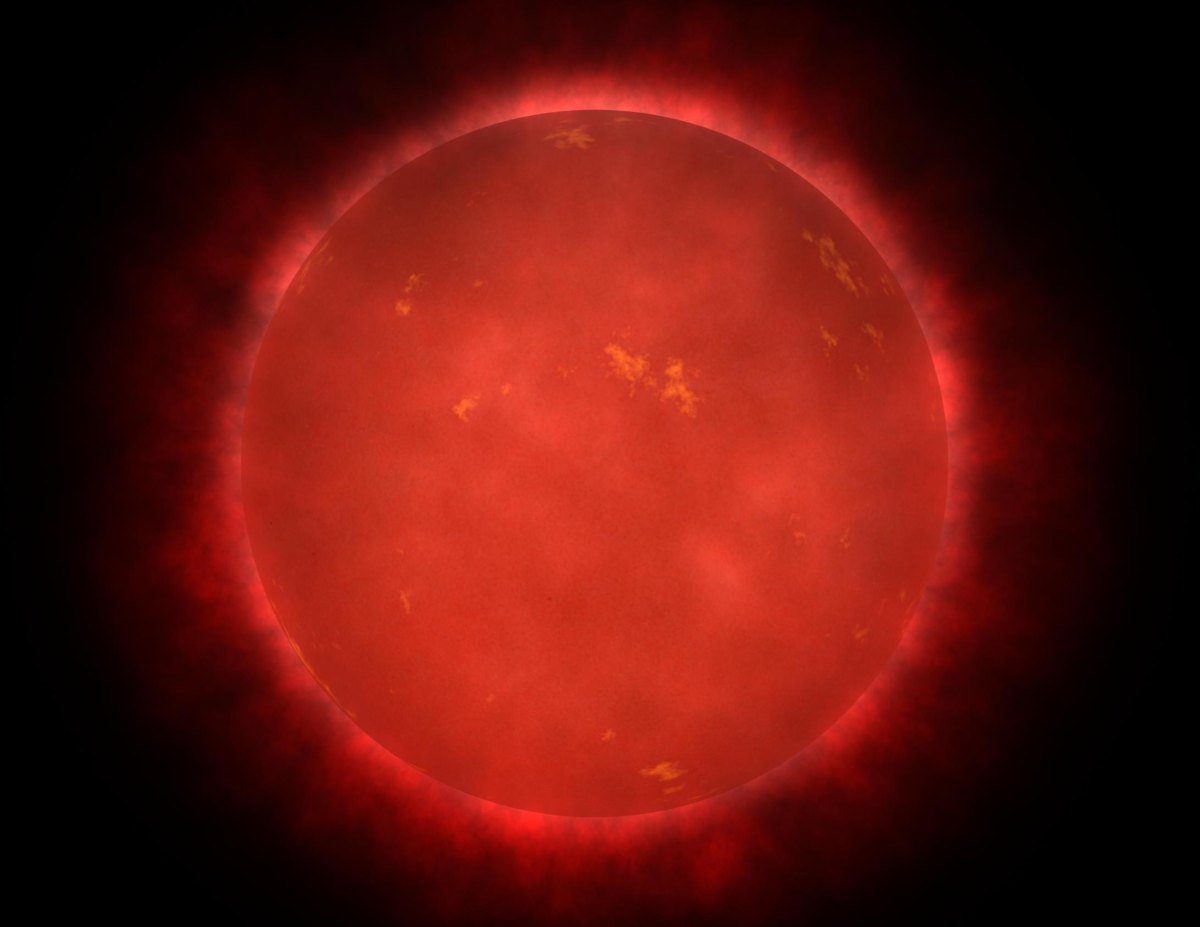
Proxima Centauri is the closest known star to the Sun and belongs to the red dwarf category. Measurements from astronomical databases place its diameter at about 200,000 km, making it much smaller than the Sun.
Its low mass and small radius are typical of red dwarfs, the most common type of star in the Milky Way. The exact diameter is model-based because distant stars cannot be measured like objects in our Solar System.
Measurement note
Stellar diameters often carry uncertainty because astronomers infer the physical surface from light and temperature measurements.
Sirius: The Brightest Star in the Night Sky
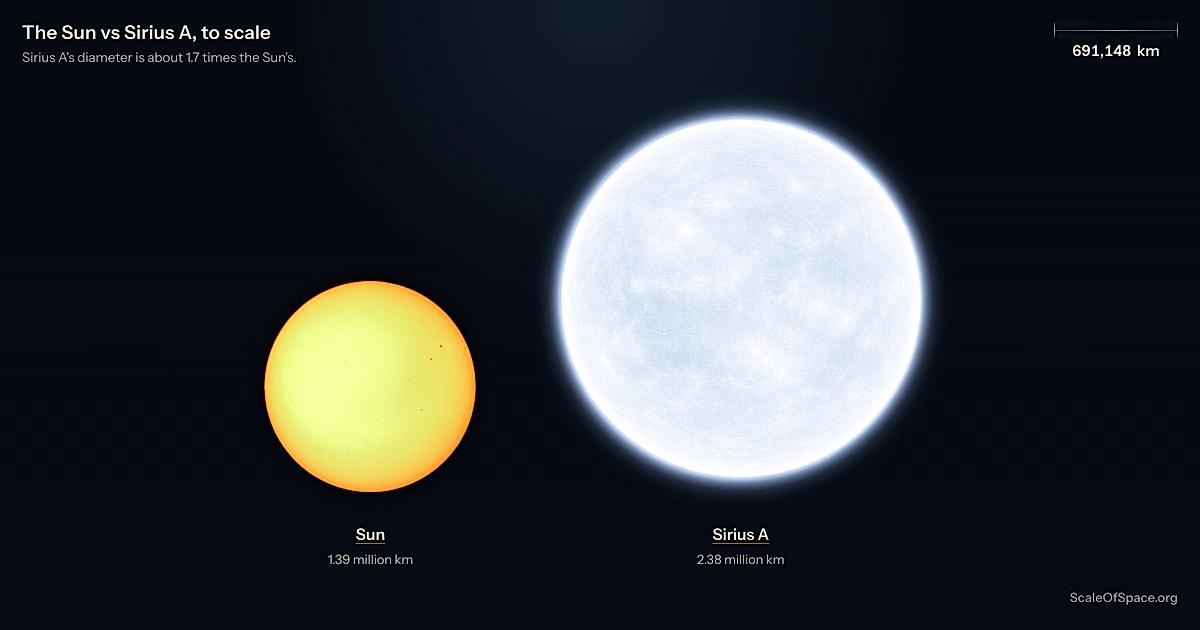
Sirius A, the main star in the Sirius system, has a diameter about 1.7 times that of the Sun. Its measured properties come from observations of this nearby bright star, including its stellar radius estimate.
Although Sirius appears extremely bright from Earth, its physical size remains in the range of larger main-sequence stars rather than giants.
Alpha Centauri A: A Sun-Like Neighbor
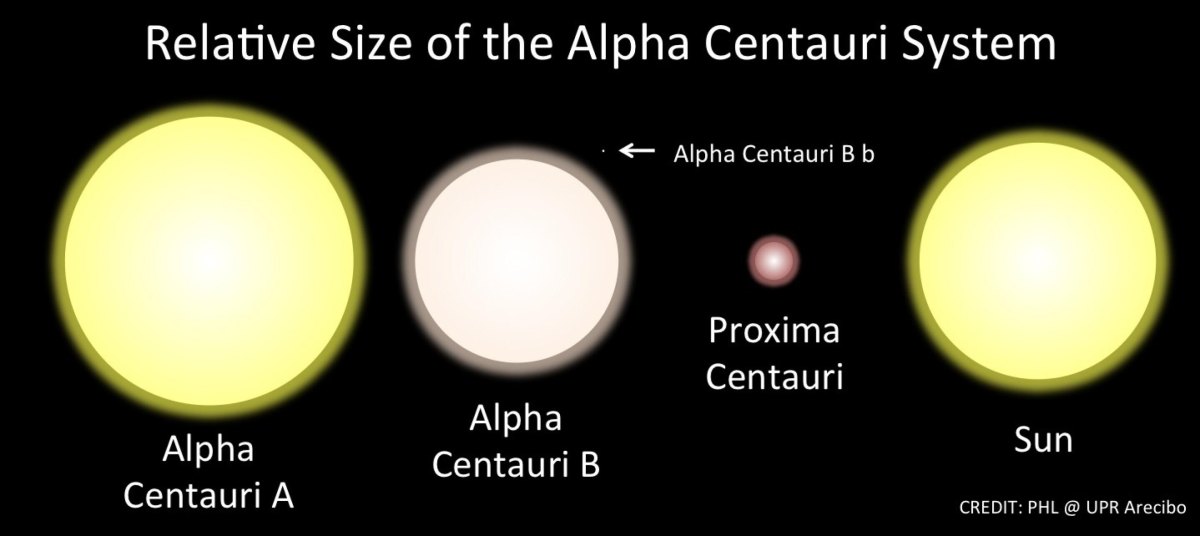
Alpha Centauri A is one of the closest Sun-like stars and has a diameter slightly larger than the Sun. Astronomers estimate it at around 1.2 times the solar diameter, with measurements supported by observations of the nearby triple-star system.
The comparison is useful because it shows that stars similar to the Sun can still vary in size while remaining in the main-sequence category.
Vega: A Massive Blue-White Star
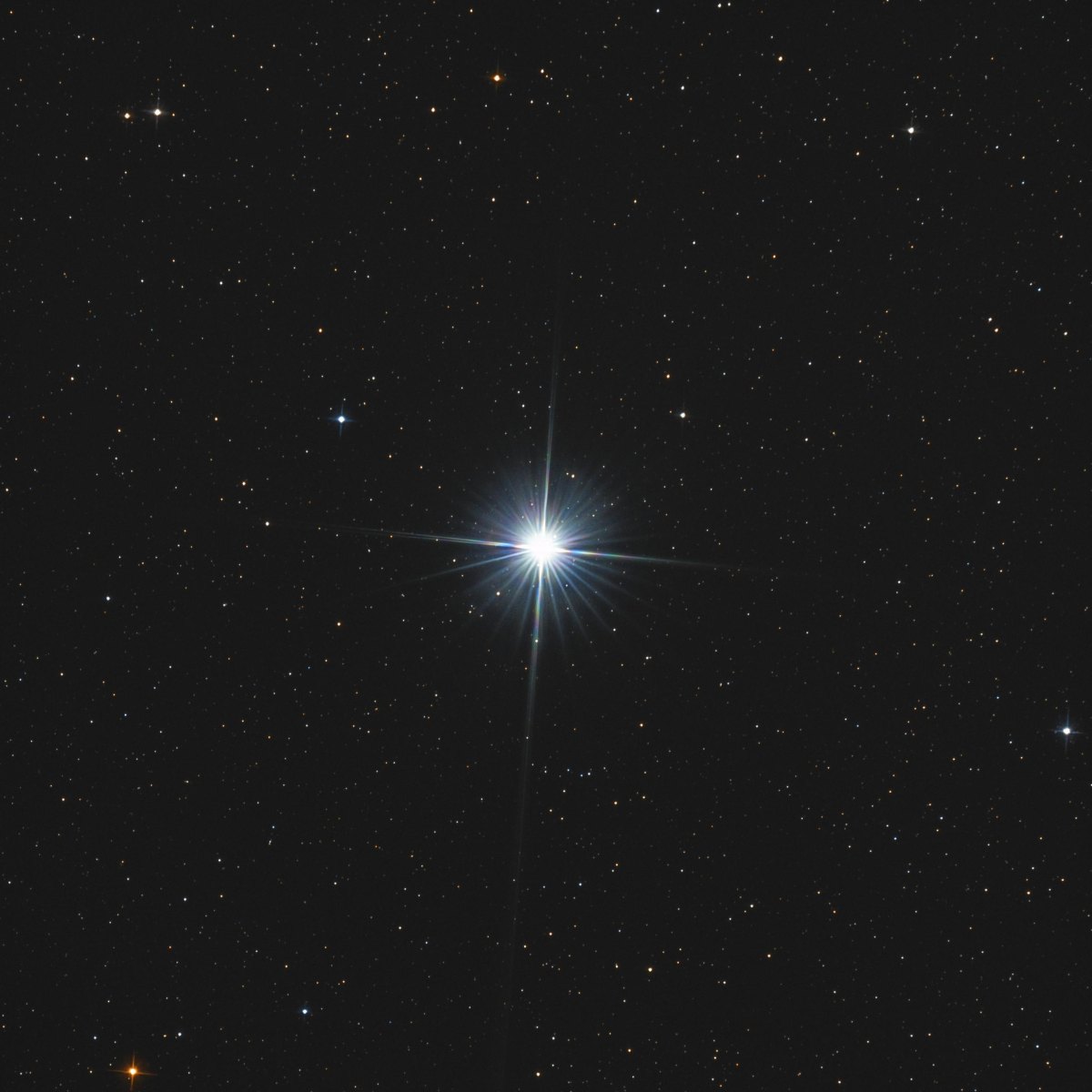
Vega is a bright blue-white star in the constellation Lyra. Its diameter is estimated at roughly 2.4 times the Sun's diameter, although its rapid rotation makes measurements more complex.
Because Vega spins quickly, its shape is not a perfect sphere. This creates additional uncertainty in calculating its exact stellar dimensions.
Rigel: A Giant Blue Supergiant
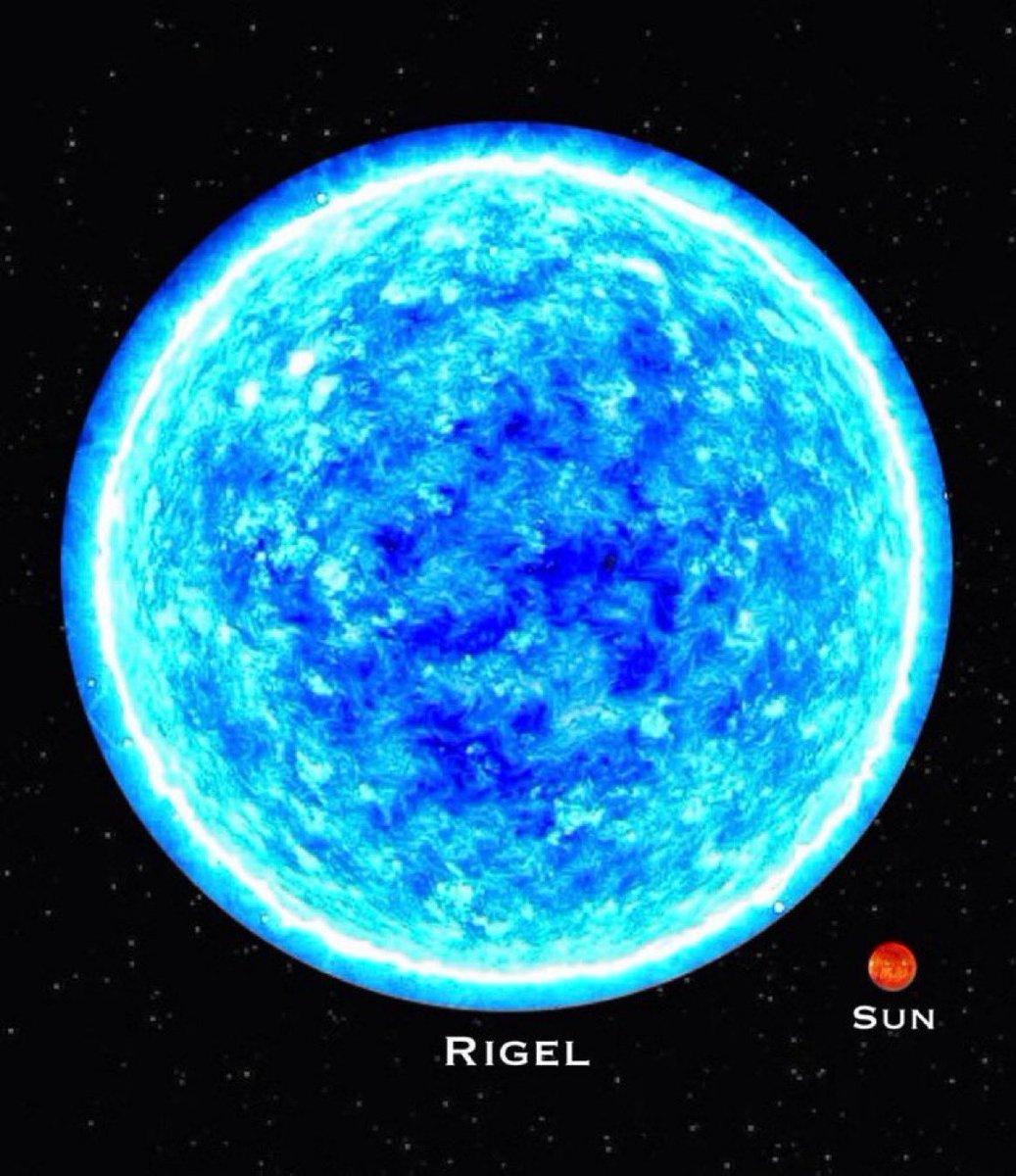
Rigel is a blue supergiant with an estimated diameter around 70 times that of the Sun. It demonstrates how stars can expand dramatically after leaving the main sequence.
The exact value varies between studies because Rigel's distance and physical properties involve measurement uncertainties. The accepted range still places it among the largest bright stars visible without a telescope.
Aldebaran: The Orange Giant Star
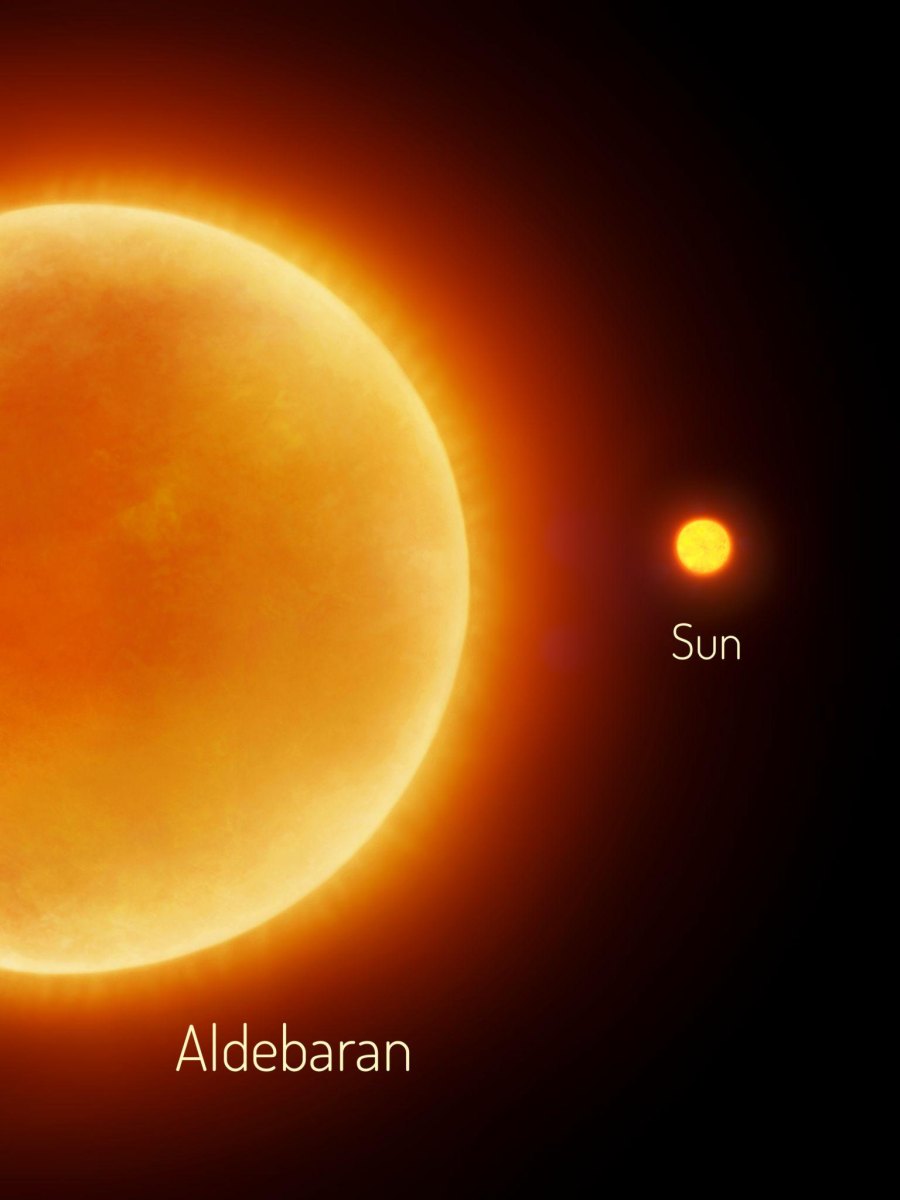
Aldebaran is an orange giant star with a diameter estimated at about 44 times the Sun's diameter. It appears bright because of both its size and its relatively close distance.
Its expanded outer layers formed as the star evolved beyond the main sequence, creating a much larger stellar radius than the Sun has today.
Antares: A Red Supergiant Compared to the Sun
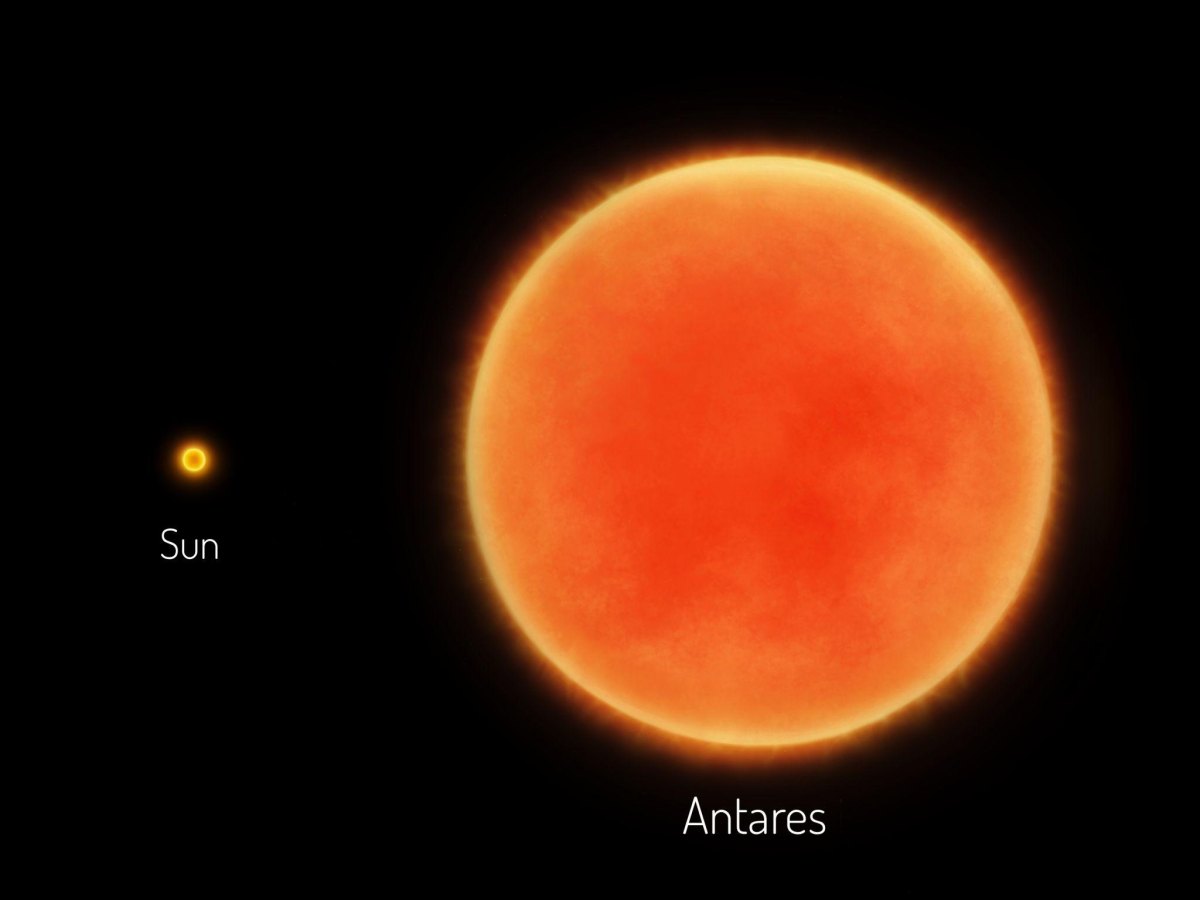
Antares is a red supergiant in Scorpius. Estimates place its diameter hundreds of times larger than the Sun, commonly around 700 times, although published values vary.
A useful way to picture Antares is that its outer boundary could extend beyond the orbit of Mars if placed at the Sun's location. The comparison highlights the scale of red supergiant stars.
| Star | Approximate diameter |
|---|---|
| Sun | 1 solar diameter |
| Antares | Hundreds of solar diameters |
Betelgeuse: One of the Largest Visible Stars
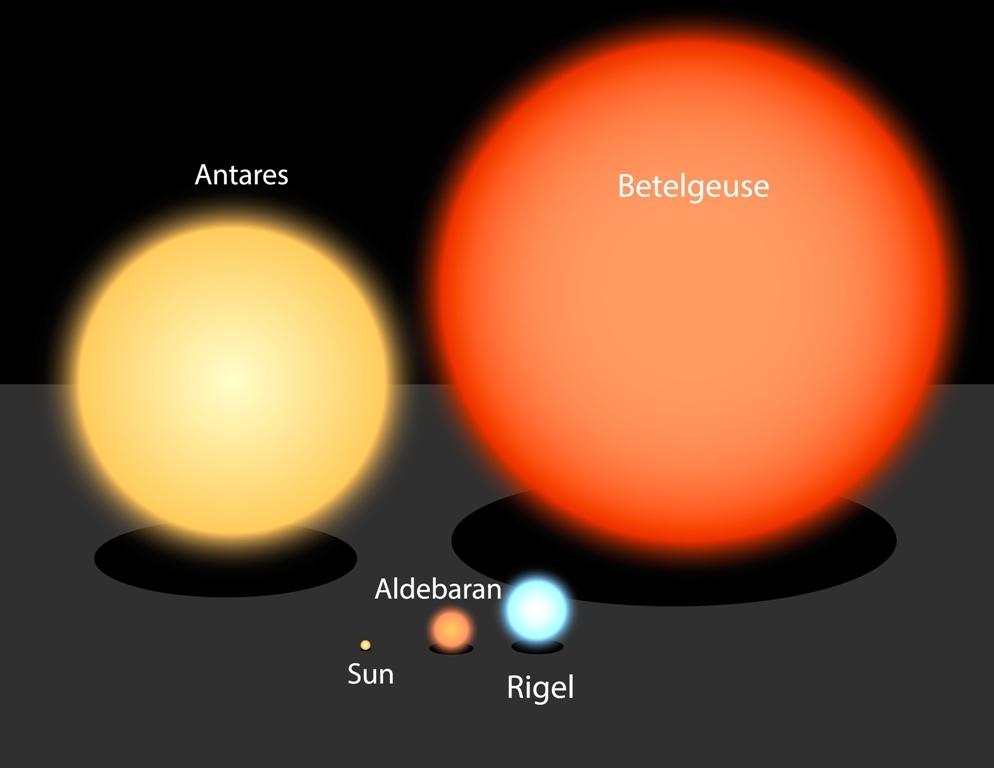
Betelgeuse is a red supergiant famous for its enormous size and variable brightness. Estimates commonly place its diameter around several hundred times that of the Sun.
Measurements have changed over time because the star has an extended atmosphere rather than a sharp surface. Astronomers therefore report a range instead of a single fixed diameter value.
Mu Cephei: The Garnet Star Giant
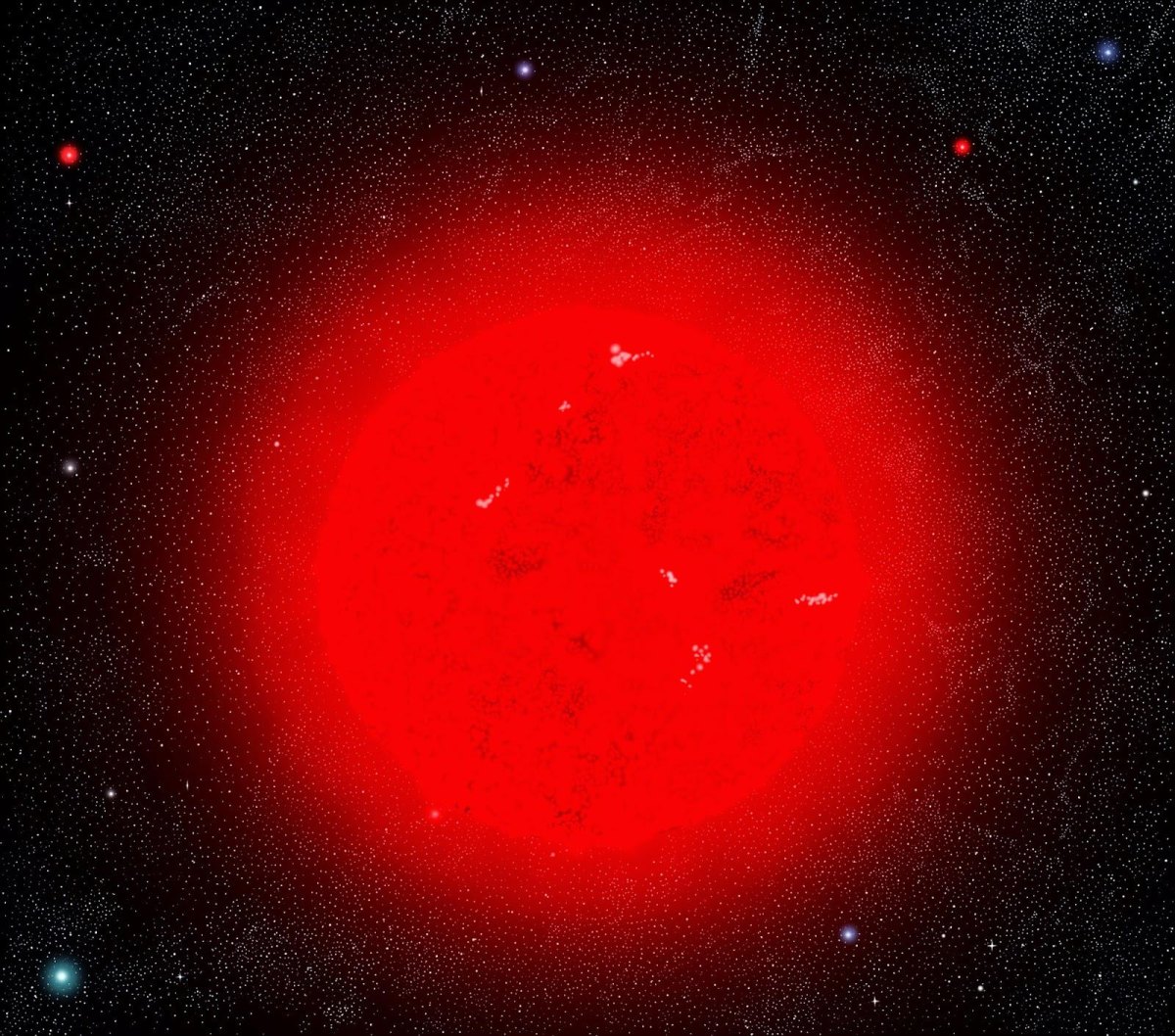
Mu Cephei, also known as the Garnet Star, is a red supergiant with an estimated diameter several hundred times larger than the Sun. Its deep colour comes from its cool surface temperature.
Like other giant stars, its size estimate depends on models of temperature, brightness, and distance. The available figures are best treated as astronomical estimates.
VY Canis Majoris: An Extreme Stellar Giant
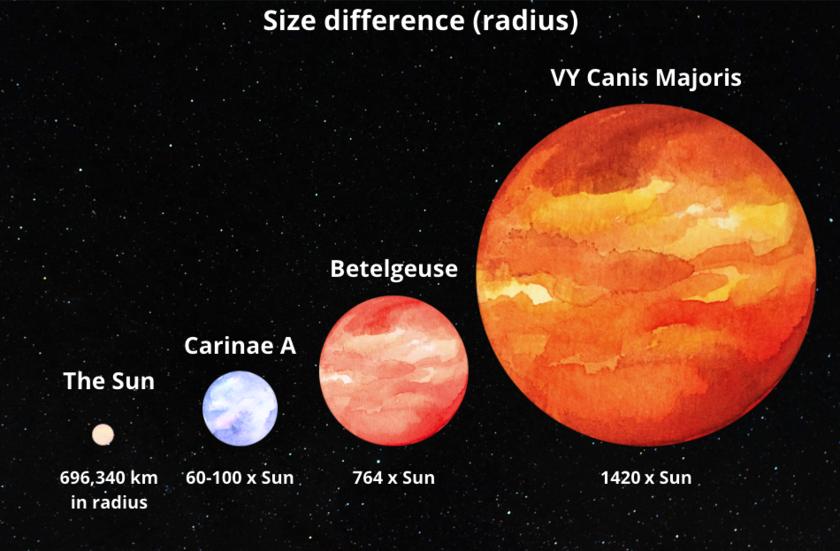
VY Canis Majoris is a red hypergiant that has appeared in many large-star comparisons. Modern studies estimate its radius at hundreds of times the Sun's radius, though older claims were even larger.
The star's extended atmosphere and surrounding material make defining its edge difficult. Researchers continue refining its size measurements with improved observations.
UY Scuti: A Famous Hypergiant Star
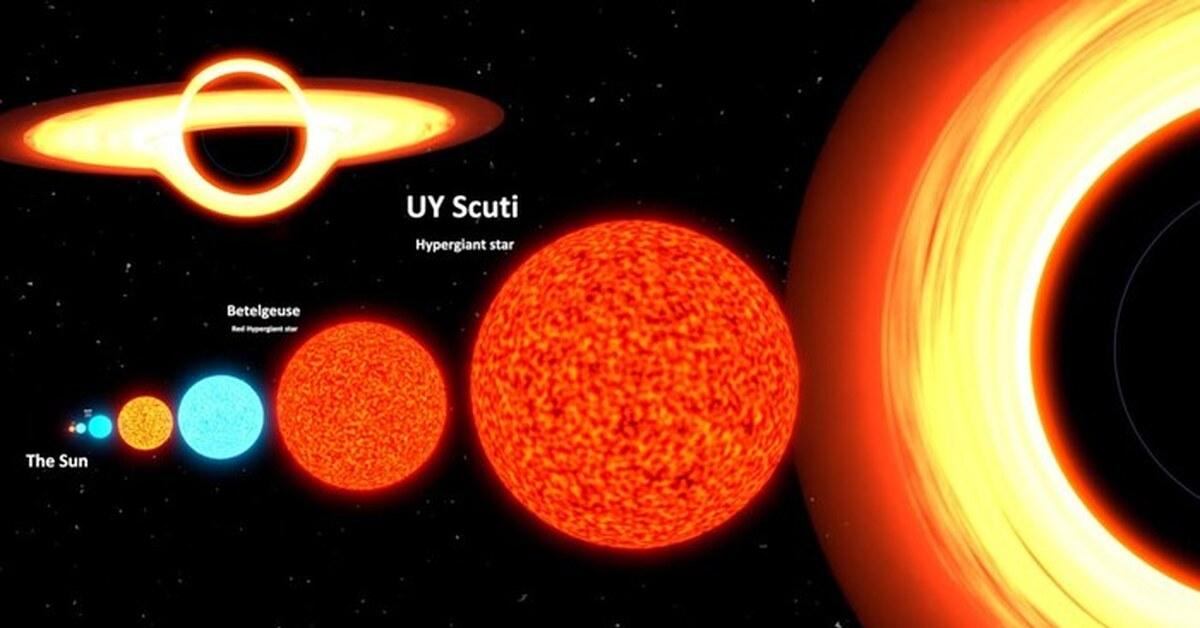
UY Scuti became widely known as one of the largest stars after estimates placed it among the extreme red supergiants. Current values vary, with diameter estimates often around a thousand times the Sun.
The ranking of the largest stars is not fixed because measurements improve and different methods produce different results. UY Scuti remains a key example of stellar size uncertainty.
Stephenson 2-18: Among the Largest Known Stars
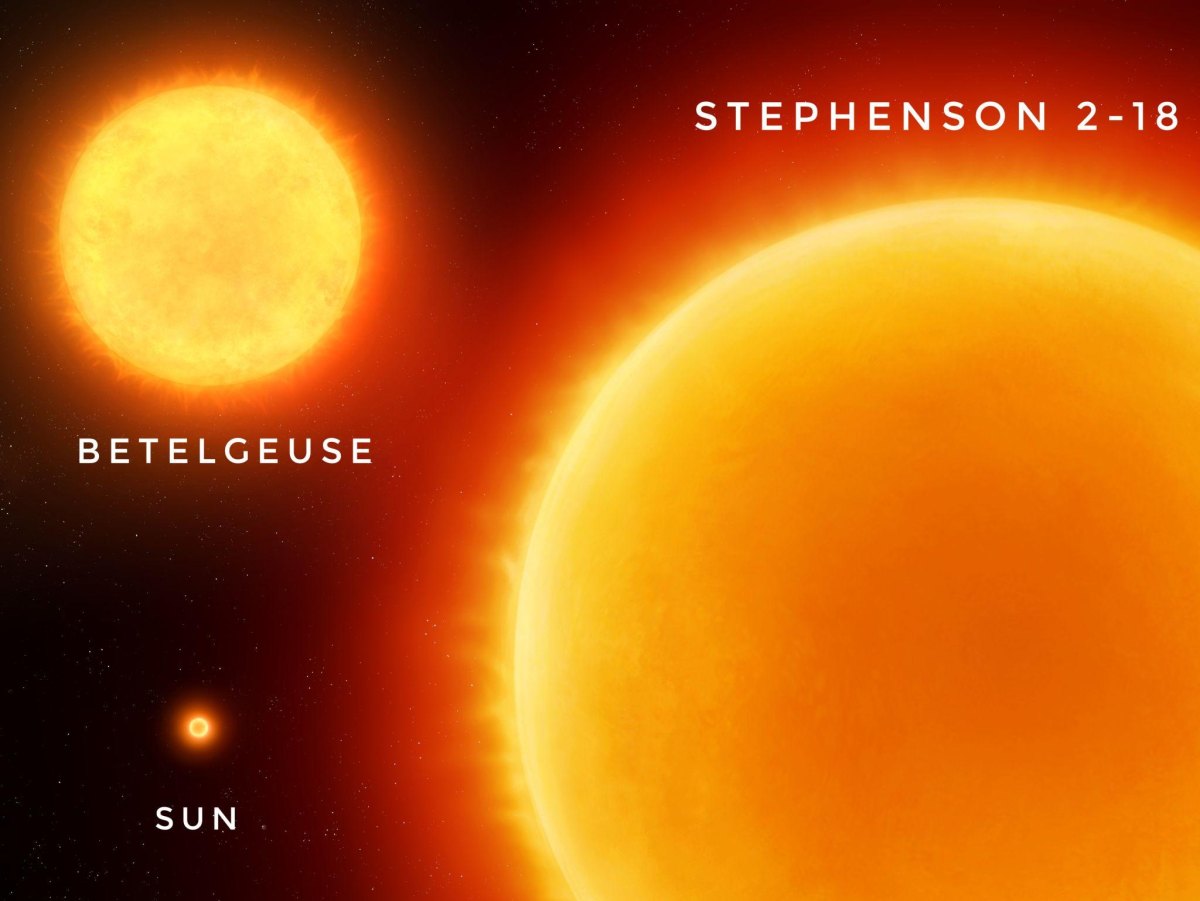
Stephenson 2-18 is a red supergiant often listed among the largest known stars. Estimates suggest a radius exceeding a thousand times the Sun's radius, although the exact figure remains uncertain.
Because its measurements rely on indirect methods, astronomers describe its size as an estimate rather than a confirmed measurement. This distinction matters in stellar comparison charts.
Stellar Size Scale: From Dwarfs to Hypergiants
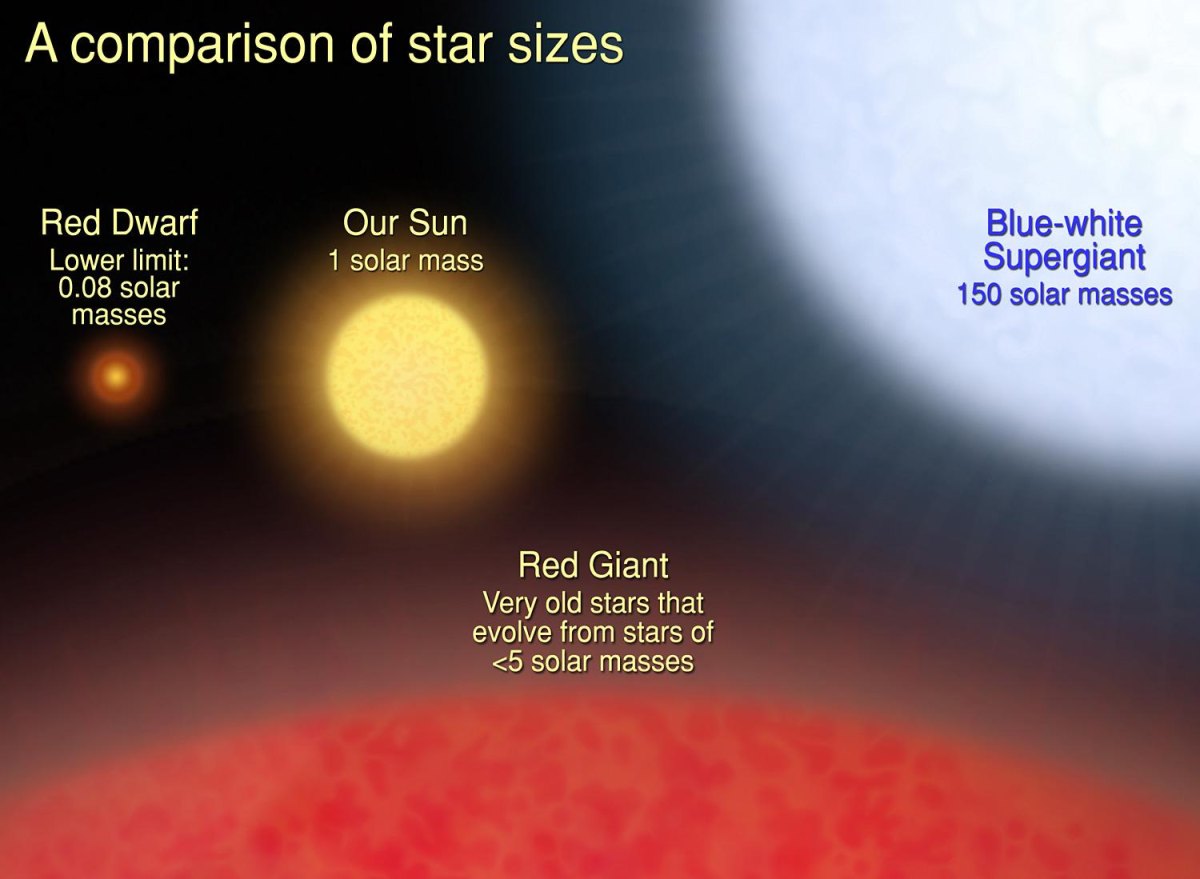
The range of stellar sizes stretches from compact red dwarfs to enormous hypergiants. A comparison chart makes the difference easier to understand: the Sun sits between small stars like Proxima Centauri and giant stars such as Betelgeuse.
- Red dwarfs: Small, cool stars with relatively small diameters.
- Main-sequence stars: Includes the Sun and stars such as Alpha Centauri A.
- Supergiants: Expanded stars with hundreds of solar diameters.
- Hypergiants: Among the most extreme known stellar sizes.
The Ultimate Star Size Comparison: Universe of Giants
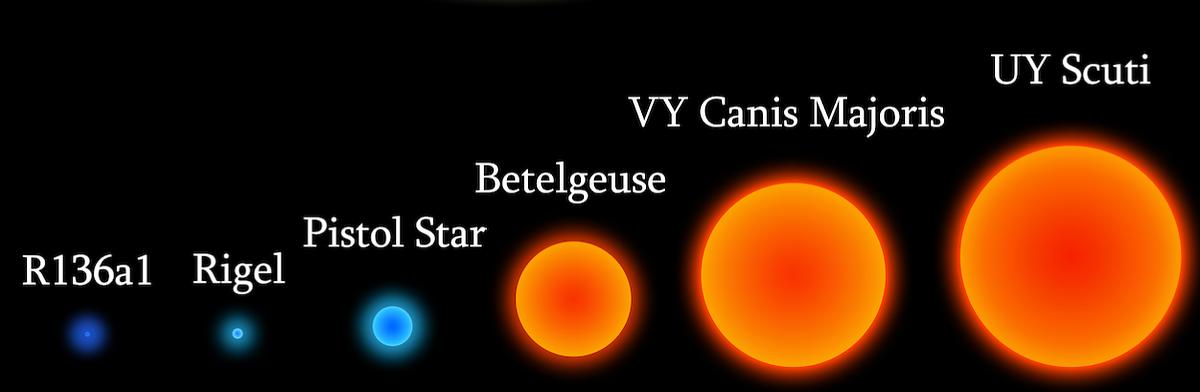
When all these stars are placed on one scale, the difference is difficult to imagine. The Sun, which already contains most of the mass in our Solar System, becomes a small point beside red supergiants and hypergiants.
The largest-star lists should always be read with measurement labels attached. A star described as the largest usually means the largest estimated diameter under current models, not a permanently confirmed record.
- Compare stars using solar diameters.
- Check whether a value is measured or estimated.
- Expect revisions as astronomy improves.




More Pinterest Visuals