

Japandi home decor brings together Japanese simplicity and Scandinavian comfort to create interiors that feel calm, functional, and welcoming. I find the appeal of this style lies in its balance: clean lines and uncluttered rooms are softened with natural materials, warm colors, and comfortable textiles. You do not need to renovate your entire home to achieve the look. A few thoughtful changes can make a noticeable difference.
Whether you are decorating a new home or refreshing a familiar room, these seven Japandi home decor ideas offer practical ways to introduce warmth, simplicity, and natural beauty without making your space feel overly minimal.
What makes a home feel Japandi
- A warm, nature-inspired color palette.
- Natural materials such as wood, linen, stone, and bamboo.
- Functional furniture and uncluttered surfaces.
- Subtle Japanese-inspired details and comfortable textures.
Embrace a Neutral Color Palette
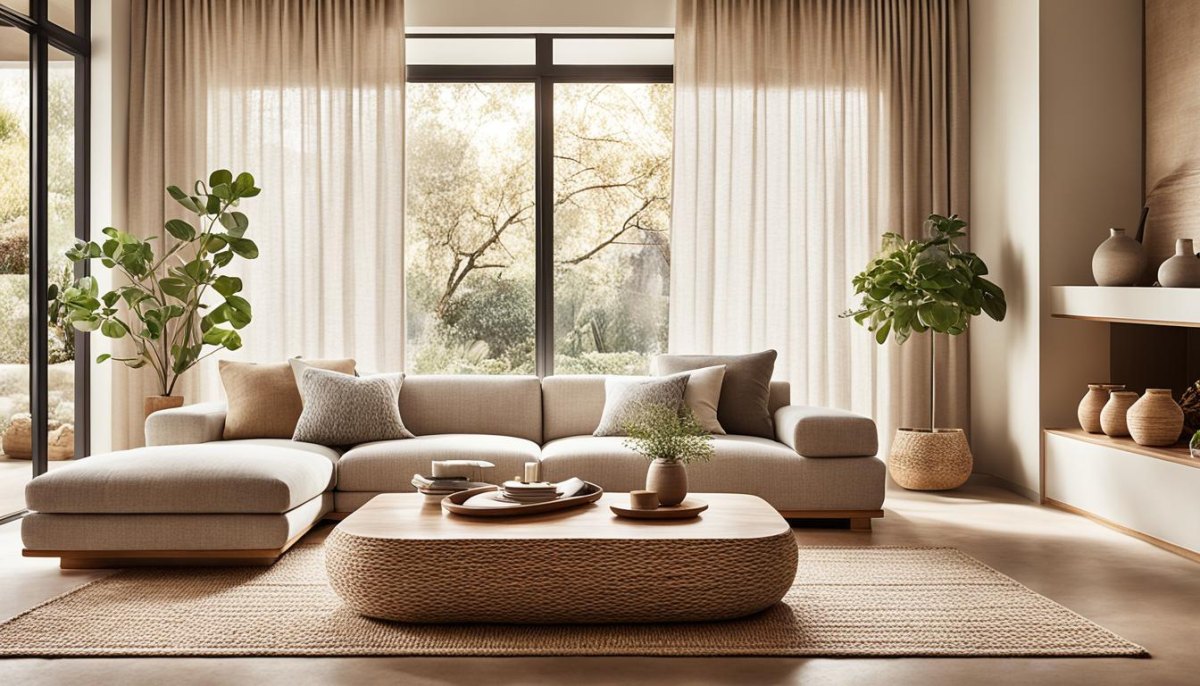
I would begin any Japandi makeover with the colors on the walls and larger furnishings. A warm neutral palette creates a consistent foundation, allowing furniture, natural finishes, and decorative details to work together. Warm white, cream, sandy beige, mushroom, taupe, and soft gray are particularly useful starting points.
According to Apartment Therapy's January 2026 designer guide, Japandi interiors also benefit from muted greens, earthy browns, and charcoal accents. This means you do not have to make every surface beige. A small amount of olive green or charcoal can provide contrast without disturbing the overall balance. See the Apartment Therapy color guide for additional palette inspiration.
| Color | Where to use it |
|---|---|
| Warm white | Walls and ceilings |
| Beige and oatmeal | Sofas and curtains |
| Taupe and mushroom | Cushions and accessories |
| Sage and olive | Small decorative accents |
| Charcoal | Lamp bases and picture frames |
My practical recommendation is to choose two or three main colors and repeat them throughout the room. Test paint samples in both daylight and evening lighting before committing, since the same neutral shade can look quite different depending on the light.
Choose Natural Materials
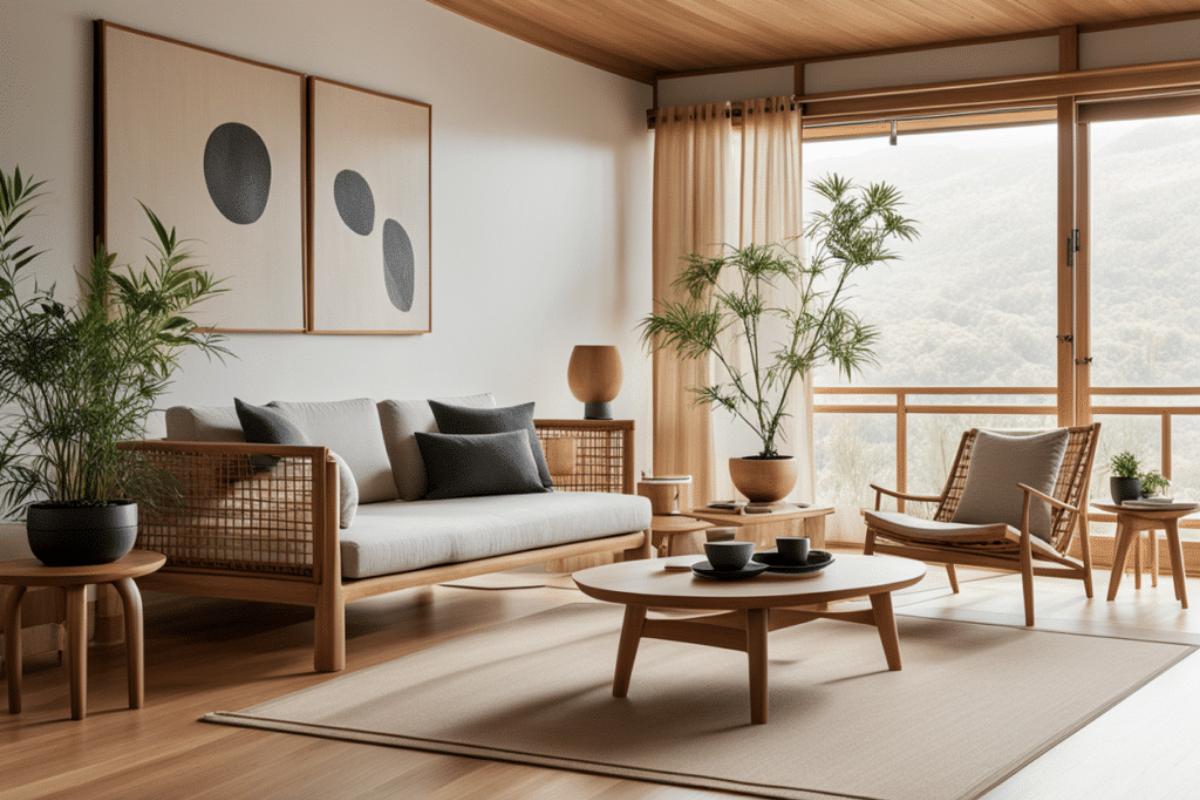
Natural materials are central to the Japandi aesthetic because they add character without requiring elaborate decoration. I would prioritize visible wood grain and tactile finishes over glossy or heavily decorative surfaces. Oak, ash, walnut, bamboo, rattan, stone, and clay all work well when their finishes feel understated.
For upholstery and soft furnishings, consider linen, cotton, and wool. Linen curtains soften incoming daylight, while a wool rug introduces warmth underfoot. A wooden dining table paired with woven chairs is another practical way to combine different materials. ArchiProducts' 2026 Japandi design guide also highlights natural textiles, ceramics, and indirect lighting as useful elements of this interior style. Its materials and furnishings guide provides further examples.
- Wood: Choose oak, ash, or walnut for tables, cabinets, and shelving.
- Linen: Use it for curtains, cushions, and bedding.
- Rattan and bamboo: Introduce woven details through chairs, baskets, and lampshades.
- Stone and clay: Add natural variation through vases, trays, and table accessories.
- Wool and cotton: Use them for rugs, blankets, and comfortable upholstery.
I recommend selecting a few materials and repeating them rather than introducing every possible natural finish. This creates visual consistency while allowing the individual textures to stand out.
Keep the Space Clutter-Free
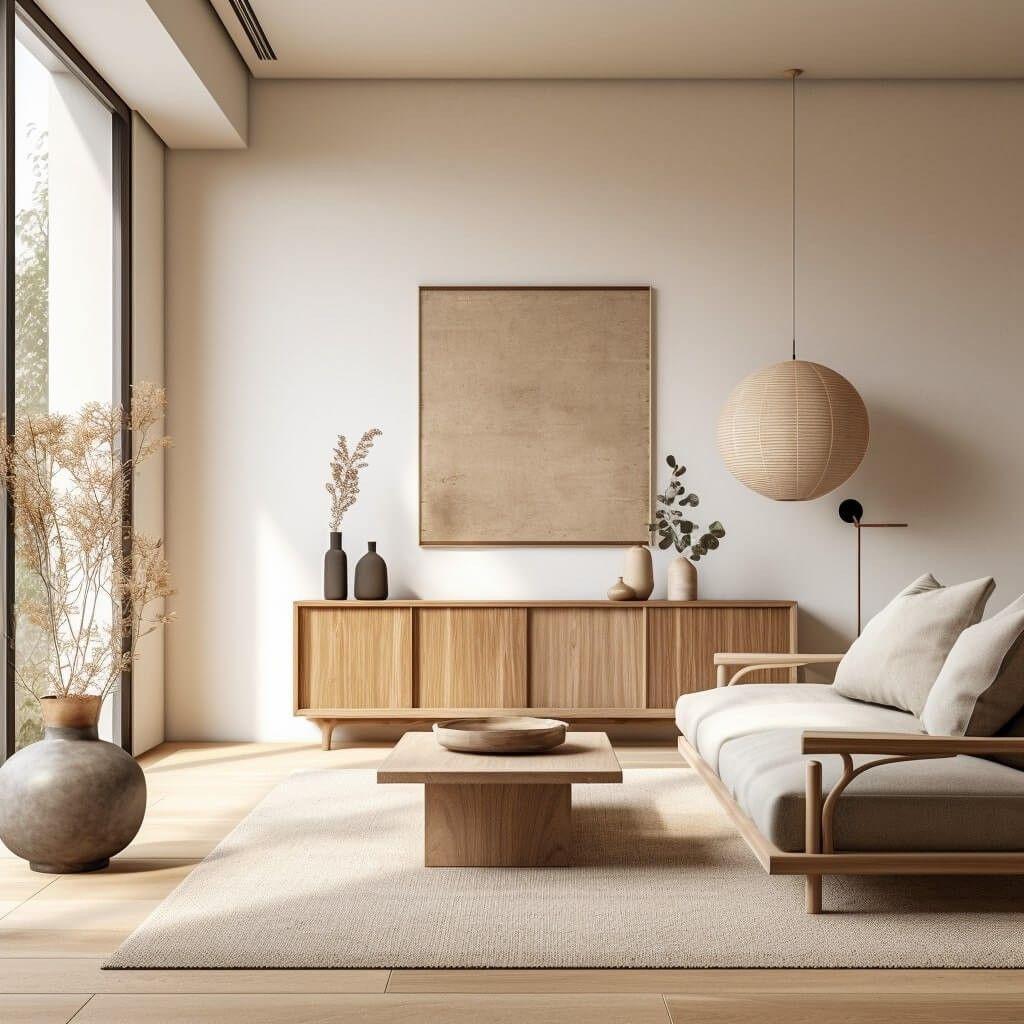
A peaceful Japandi room is defined as much by the space left empty as by the objects on display. The goal is not to remove everything that makes a home personal. Instead, I would focus on keeping everyday surfaces organized and displaying only items that serve a purpose or have personal meaning.
Start with the coffee table, kitchen counters, bedside tables, and open shelves. Remove unnecessary duplicates, organize small belongings, and find practical storage for things used every day. Closed cabinets and simple sideboards are especially helpful because they keep ordinary household items out of sight. The Washington Post's August 2026 guide to open storage also recommends limiting shelf displays and leaving space between decorative objects to avoid visual clutter.
- Edit. Remove objects that no longer serve a useful or meaningful purpose.
- Organize. Group similar belongings into baskets, drawers, and storage compartments.
- Display. Select a few favorite ceramics, books, or decorative pieces.
- Maintain. Return everyday items to their designated places after use.
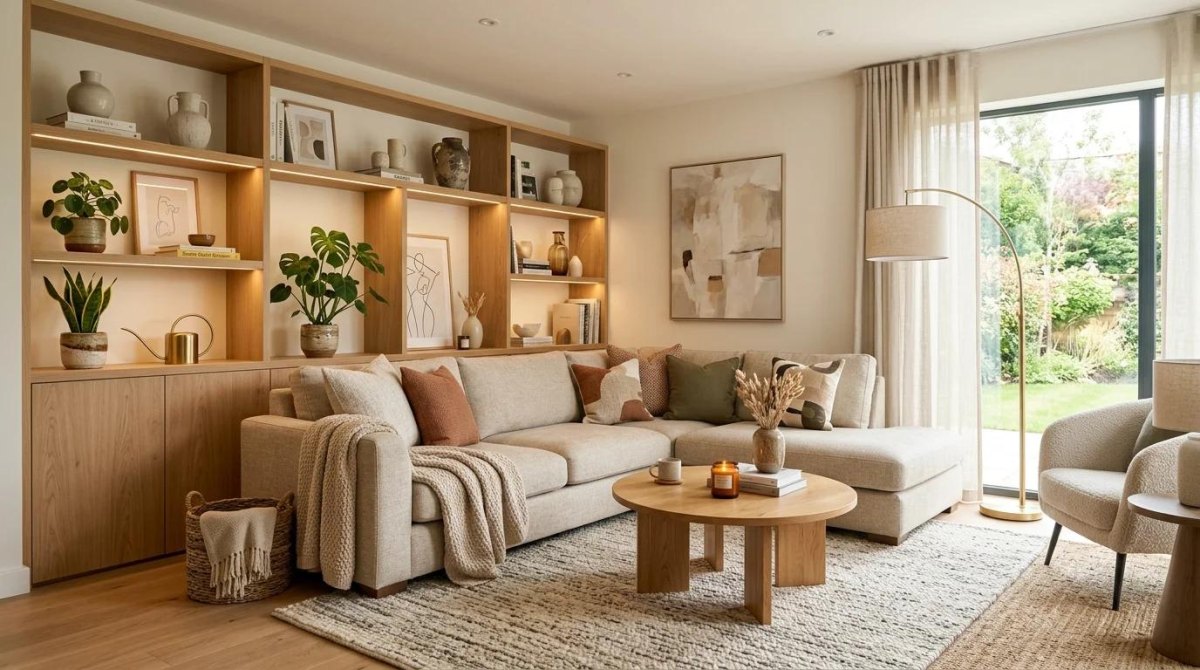
Open shelving can still work beautifully, particularly for books and attractive ceramics. However, I would avoid filling every shelf. Negative space helps individual objects feel intentional and gives the room room to breathe.
A simple styling tip
Try arranging a small group of objects on one shelf and leaving the neighboring section empty. This creates a more balanced display than filling the entire surface.Use Low-Profile Furniture
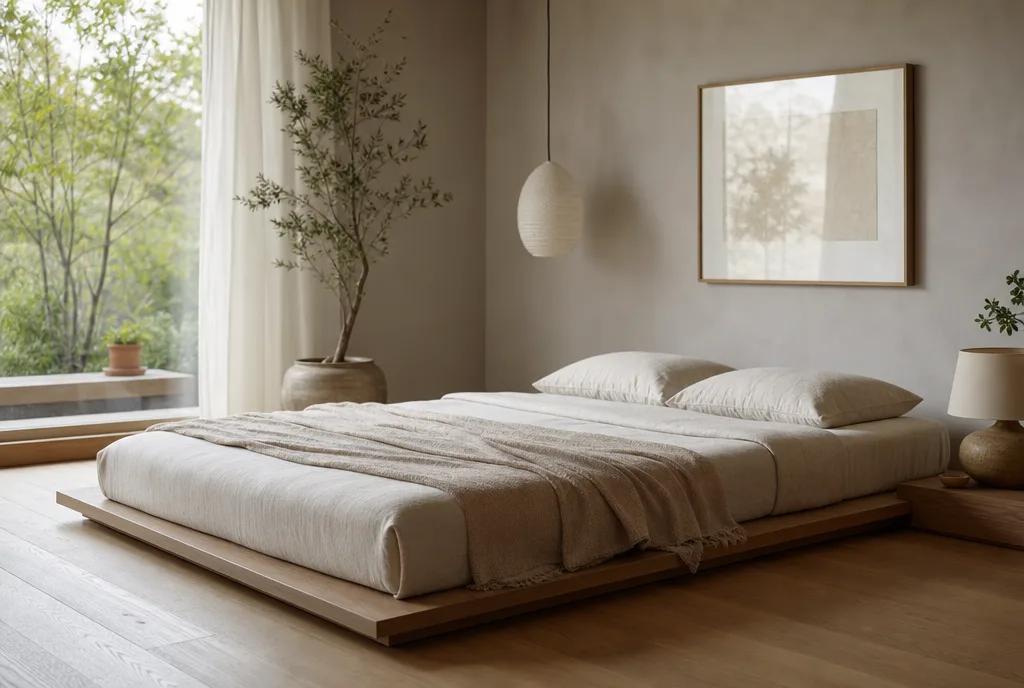
Furniture with low, simple silhouettes is another recognizable feature of Japandi interiors. Think platform beds, low coffee tables, streamlined sofas, and uncomplicated wooden benches. These pieces create grounded horizontal lines that complement the style's emphasis on simplicity and open space.
For a living room, I would choose a comfortable sofa in cream, oatmeal, or warm gray, preferably with a clean silhouette and understated legs. Pair it with a low wooden coffee table and a simple side table. In the bedroom, a natural timber platform bed with linen bedding creates a similarly relaxed atmosphere.
Low furniture should still be comfortable and practical. As highlighted in the recent Danby Interiors Japandi design guide, simple proportions, useful furniture, and craftsmanship matter just as much as appearance. Consider the needs of everyone using the room before choosing very low seating.
I would rather invest in one well-made functional piece than fill a room with several smaller furniture items that compete for attention.
Bring Nature Indoors
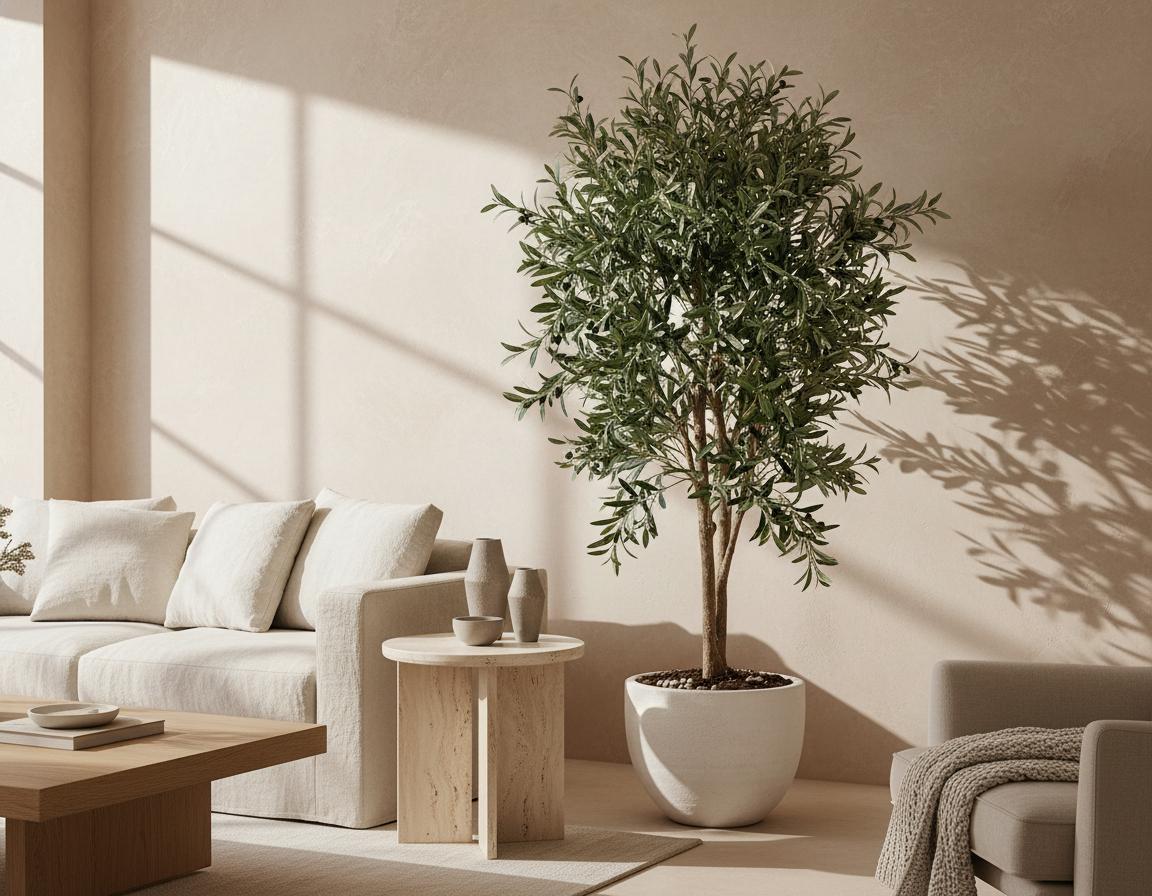
Plants and natural greenery bring an important living element into a minimalist home. A Japandi interior does not need an indoor jungle to feel connected to nature. Instead, I prefer the idea of choosing one or two carefully positioned plants that complement the room's shapes and colors.
An olive tree can work beautifully beside a bright window, while a bonsai creates a more deliberate Japanese-inspired focal point. Snake plants and other easy-care houseplants are useful alternatives when you want greenery without complicated maintenance. You can also use fresh branches or seasonal foliage in a simple ceramic vase if you prefer something understated.
This approach is consistent with the biophilic principles discussed in the July 2024 Furniture Choice designer-style guide, which identifies greenery, natural wood, and organic materials as ways to bring the outdoors into interior spaces.
- Living room: Position a larger plant near a window or an empty corner.
- Bedroom: Choose a modest plant that suits the available light and space.
- Dining area: Use a small branch arrangement as a simple centerpiece.
- Entryway: Place a potted plant beside a wooden console for a welcoming detail.
Choose plants according to their actual light and watering requirements rather than appearance alone. A simple ceramic planter in beige, stone, or earthy brown will help connect the greenery to the rest of your decor.
Add Subtle Japanese Accents
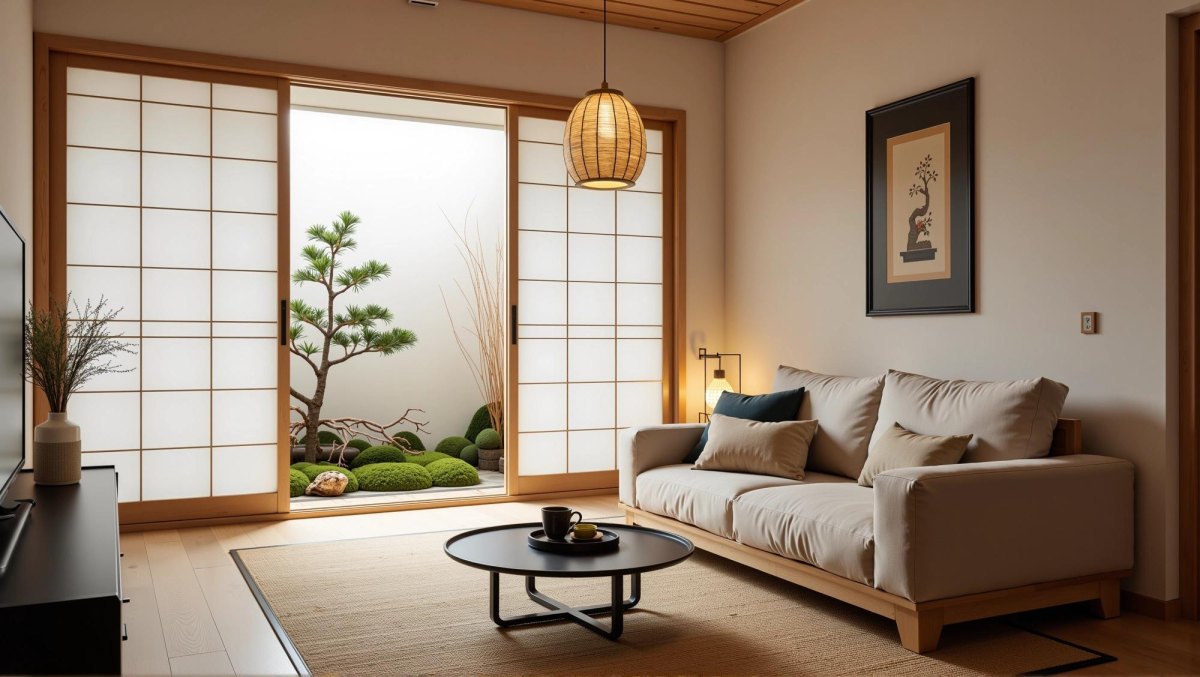
Japanese-inspired details give Japandi interiors some of their distinctive character. I would introduce these elements selectively rather than trying to recreate a traditional Japanese room. The aim is to incorporate simple forms and thoughtful craftsmanship while maintaining a comfortable, contemporary home.
Shoji-inspired screens, paper lanterns, handmade ceramics, low wooden platforms, and simple decorative bowls are useful starting points. Traditional shoji screens use wooden frameworks and translucent washi paper. According to the NHK Educational feature on the history and role of shoji screens, these screens traditionally helped divide interior spaces while allowing light to pass through.
In a modern home, a suitable screen can separate a reading corner from a living area or provide a little privacy without creating a heavy visual barrier. A paper-inspired pendant can also soften the lighting above a dining table or beside a bed.
Keep the details intentional
Choose a small number of Japanese-inspired elements and give each one room to stand out. If you use a statement paper lantern, for example, avoid surrounding it with several competing decorative pieces.Handmade pottery and simple artwork are other effective options. I particularly like matte ceramic finishes because their subtle irregularities add personality without introducing strong patterns or bright colors.
Layer with Texture
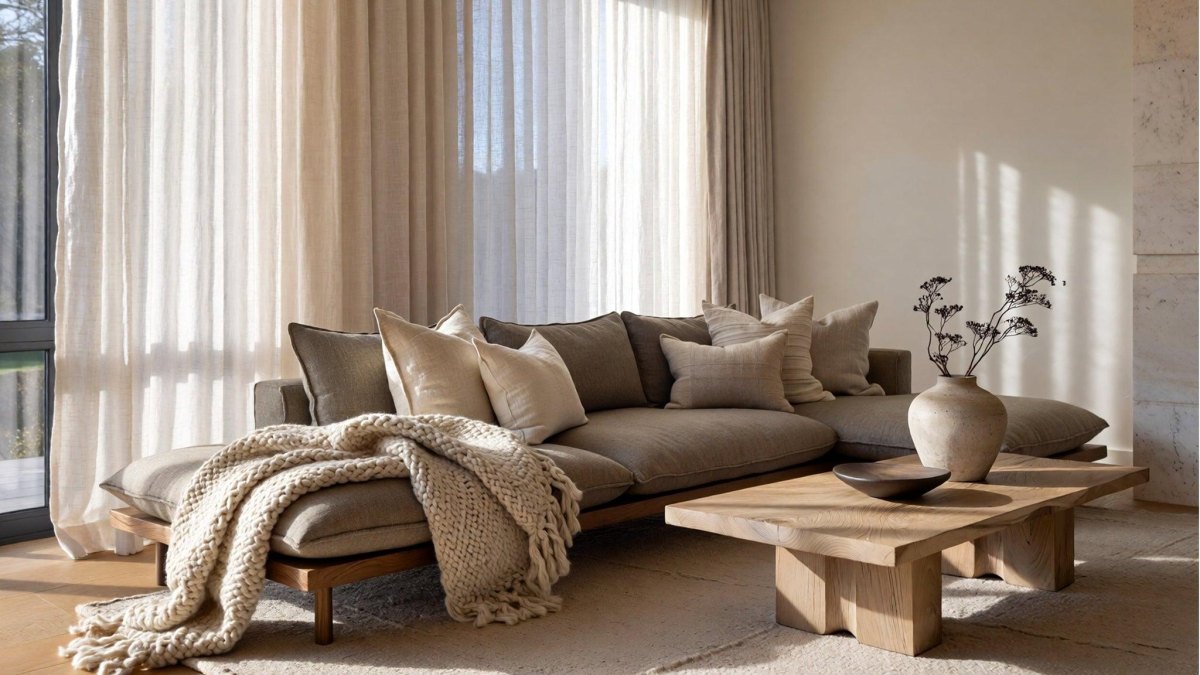
When a room uses mostly neutral colors, texture becomes one of the easiest ways to make it feel inviting. Rather than adding more colors or decorative patterns, I would combine materials with different surfaces. This is what gives a minimalist interior warmth and depth without making it visually busy.
Start with a soft linen sofa or bedding, then add a woven wool throw, cotton cushions, and a natural-fiber rug. A smooth wooden coffee table can be paired with a handmade ceramic vase or a stone tray. These small contrasts make the room more interesting while keeping the color palette consistent.
The James Hardie 2026 Japandi Design Handbook emphasizes the relationship between natural materials, tactile finishes, warm timber, and subtle tonal contrast. Similarly, Quiet Minimal's 2026 living room guide discusses combining wood, natural fibers, ceramics, and restrained metal finishes to build a layered interior.
- Combine linen upholstery with soft cotton cushions.
- Add a wool or jute rug in a natural shade.
- Introduce a knitted throw for extra warmth.
- Use handmade ceramic bowls and vases for subtle variation.
- Mix smooth wood with rougher woven or stone surfaces.
- Keep patterns and decorative accessories restrained.
One detail I would pay attention to is balance. Too many woven accessories, chunky blankets, and decorative fabrics can make a room feel crowded. Choose three or four complementary textures and repeat them naturally throughout the space.
A simple finishing combination
Try a cream sofa, a textured oatmeal throw, two linen cushions, a natural-fiber rug, and a wooden coffee table with one handmade ceramic vase. This combination adds comfort and visual depth without losing the simplicity that makes Japandi interiors appealing.
The most useful approach is to build the room gradually. Start with the larger materials, add a few comfortable textiles, and finish with one or two meaningful decorative pieces. A cozy Japandi home should feel practical and lived in, not like a carefully staged showroom.

 Home Organization12 Smart Small Rental Bathroom Storage Ideas Without Drilling
 Home Organization14 No-Drill Storage Ideas for Renters to Maximize Every Inch of Space
 Home Organization12 Smart Kitchen Foil Storage Ideas to Save Space and Stay Organized
 Home Organization9 Closet Organization Ideas For Small Spaces That Make