
 03.11.2026
Living in a rental doesn't mean accepting clutter or giving up on an organized home. I find that some of the most useful no-drill storage ideas for renters rely on making better use of existing doors, cabinets, closets, corners, and unused floor space rather than adding permanent fixtures.
The key is choosing storage that can move with you when your lease ends. From adhesive hooks and tension rods to freestanding shelving and hidden storage furniture, these renter-friendly organization ideas offer practical ways to create more room without reaching for a power drill.
Quick storage ideas worth trying
- Use vertical space with over-the-door and hanging organizers.
- Choose freestanding furniture instead of wall-mounted shelves.
- Make overlooked spaces useful with under-bed bins and corner units.
- Check adhesive weight limits and surface compatibility before installation.
- Choose portable storage that can be reused in your next home.
Use Over-the-Door Organizers to Maximize Vertical Storage
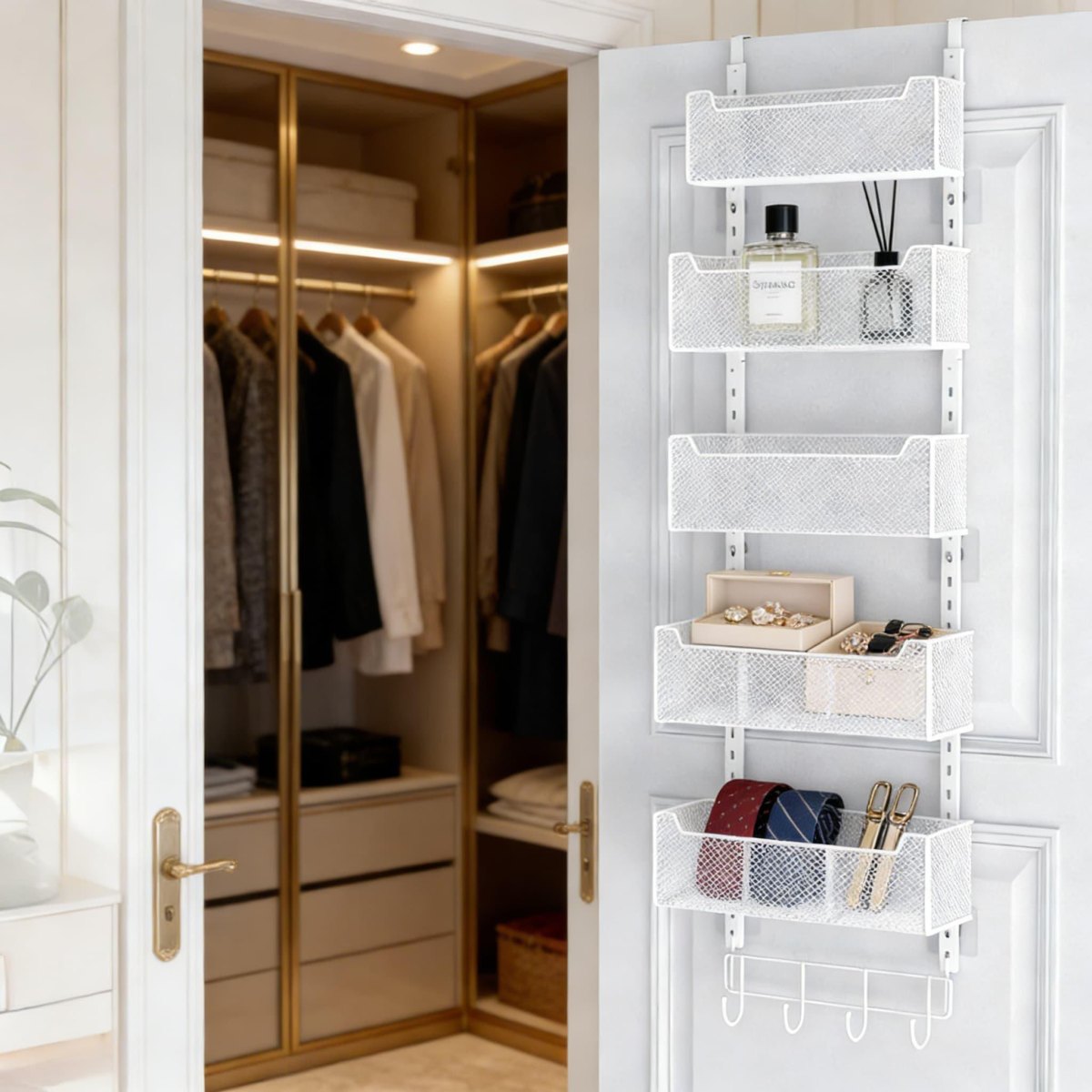
Doors are among the most overlooked storage surfaces in a rental. An over-the-door organizer makes use of space that would otherwise remain empty, without requiring screws, nails, or wall brackets. I particularly like this solution for bedrooms, bathrooms, pantries, and entryways.
Choose an organizer with several pockets or baskets depending on what you need to store. Bathroom versions work well for toiletries, hair accessories, and cleaning supplies, while bedroom organizers can hold scarves, bags, and smaller clothing items. For a kitchen pantry, look for sturdy baskets that accommodate packaged food and frequently used supplies.
Before buying, measure the door thickness and check the clearance between the door and its frame. The hooks should fit properly without preventing the door from closing. I also recommend checking whether the organizer could scratch the finish; protective padding can help prevent unnecessary marks.
A practical tip
Keep heavier items in the lower pockets and avoid overloading the organizer. A well-distributed load is easier to access and less likely to interfere with the door.Add Freestanding Shelving Units Without Damaging Walls
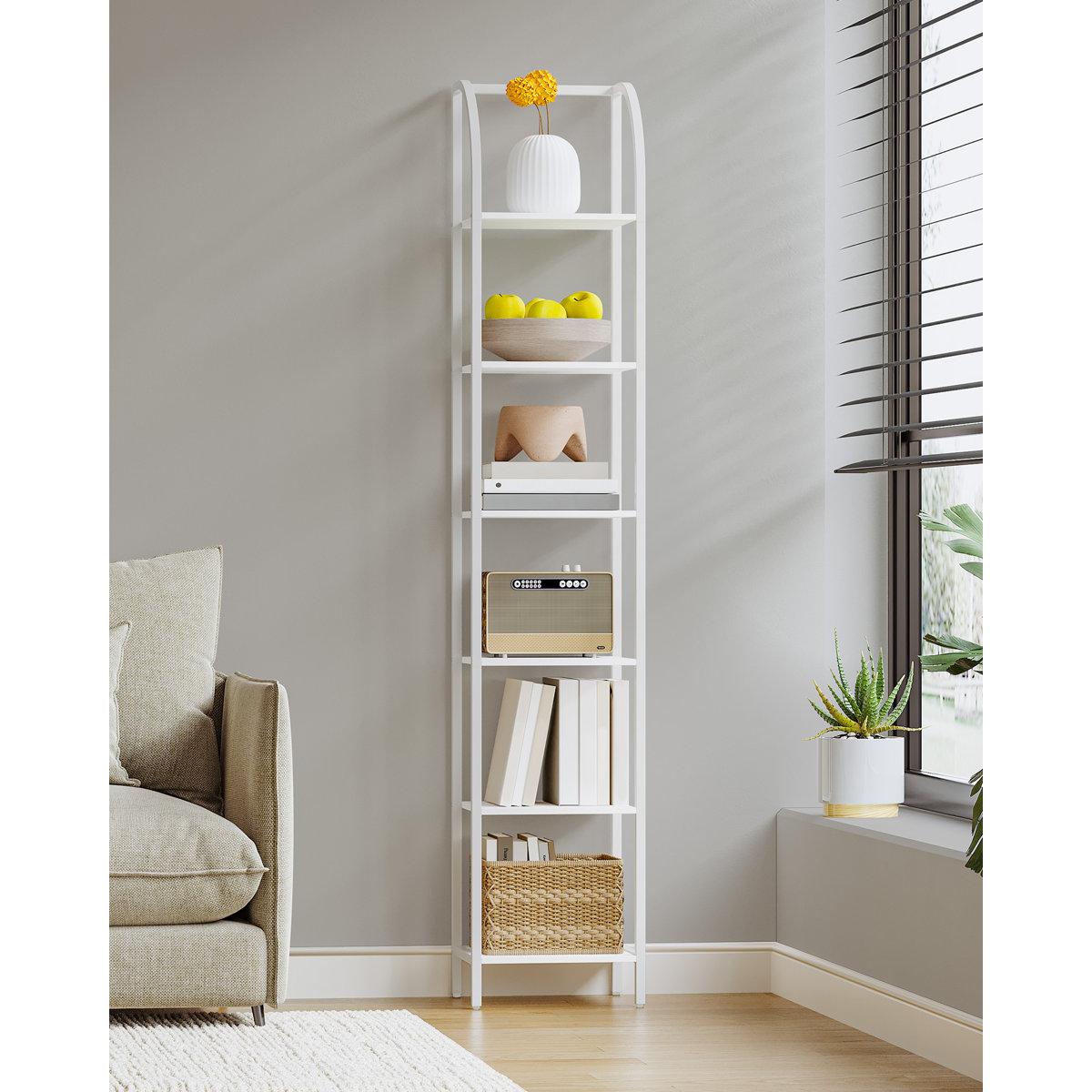
When I want additional storage without installing wall brackets, freestanding shelving units are one of the first options I consider. They provide several levels of storage while leaving the walls untouched, making them useful in living rooms, bedrooms, kitchens, and home offices.
A narrow shelving unit can fit beside a desk or sofa, while a wider bookcase can accommodate books, decorative objects, storage boxes, and folded linens. Open shelves also make frequently used belongings easier to reach than items hidden in deep cupboards.
Look for a design with a wide and stable base, a sturdy frame, and clearly stated shelf weight limits. Place heavier belongings on lower shelves and distribute weight evenly. Furniture safety guidance from the Australian Competition and Consumer Commission recommends stable furniture and appropriate anchoring to reduce tip-over risks. If a unit requires an anti-tip wall attachment, discuss an approved solution with your landlord rather than simply omitting the safety hardware. ACCC furniture safety guidance. Stability matters more than appearance when choosing tall storage.
Check furniture safety
Do not assume a freestanding bookcase is safe simply because it stands upright. Follow the manufacturer's instructions, especially in homes with children or pets. If secure anchoring is required, obtain permission before making any wall alterations.Create Extra Closet Space With Hanging Storage Organizers
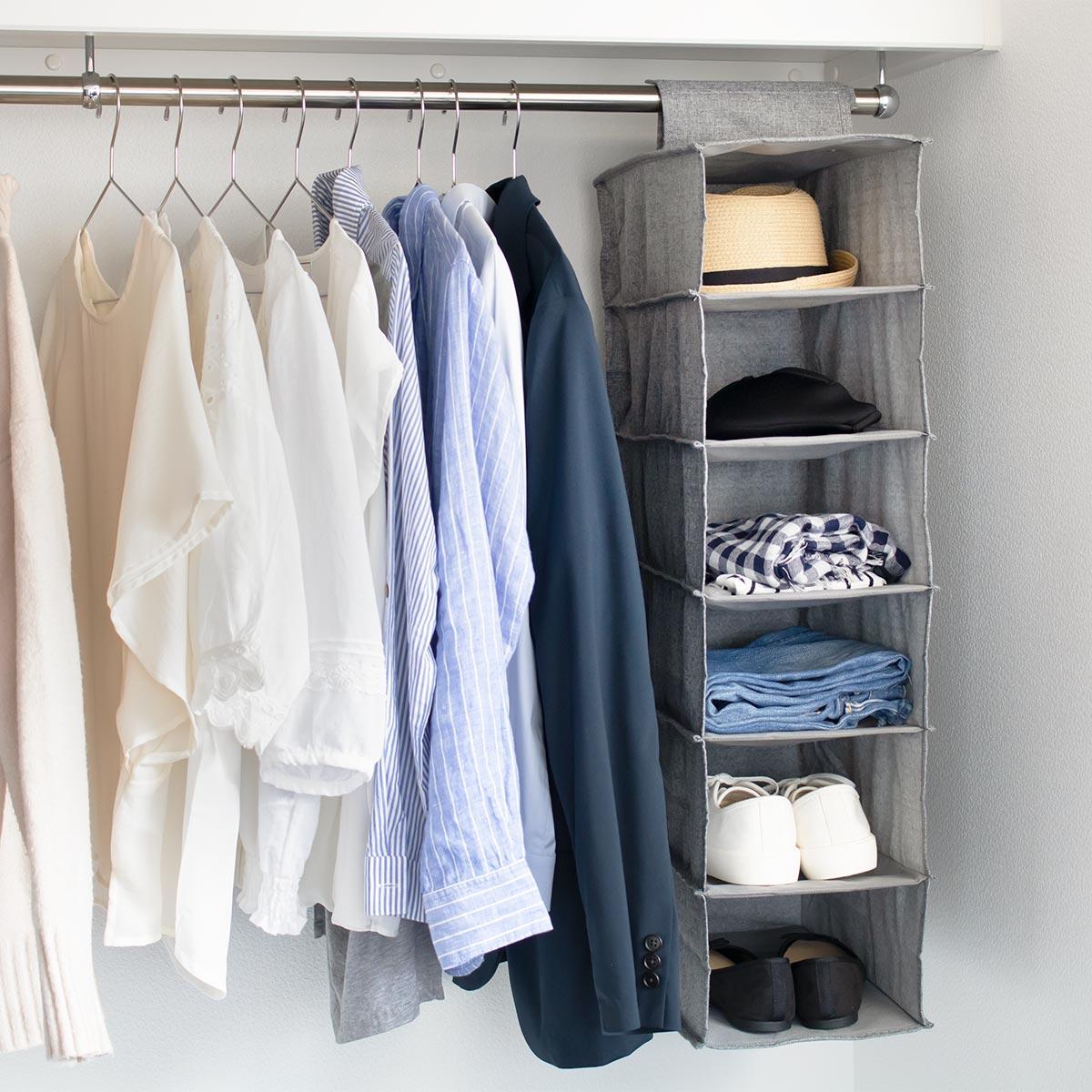
A small rental closet can become difficult to manage when clothes, accessories, and seasonal belongings compete for the same limited space. My preferred starting point is a hanging closet organizer because it introduces additional compartments without changing the existing closet structure.
Fabric hanging shelves are particularly useful for folded sweaters, T-shirts, handbags, towels, and accessories. They hang from an existing closet rod and make use of vertical space that often goes unused. Some versions include drawers or side pockets for smaller belongings.
I recommend choosing a model with reinforced seams and a hanging attachment suited to the weight of its contents. Measure the available hanging height first, especially if the closet already contains long dresses or coats. Keep heavier items lower and avoid exceeding the manufacturer's stated load capacity.
- For clothing: Choose wide fabric compartments for folded garments.
- For accessories: Look for smaller pockets and divided sections.
- For shoes: Use reinforced shelves that can support their weight.
- For seasonal items: Choose deeper compartments for scarves and spare linens.
Use Tension Rods for Flexible Kitchen and Bathroom Storage
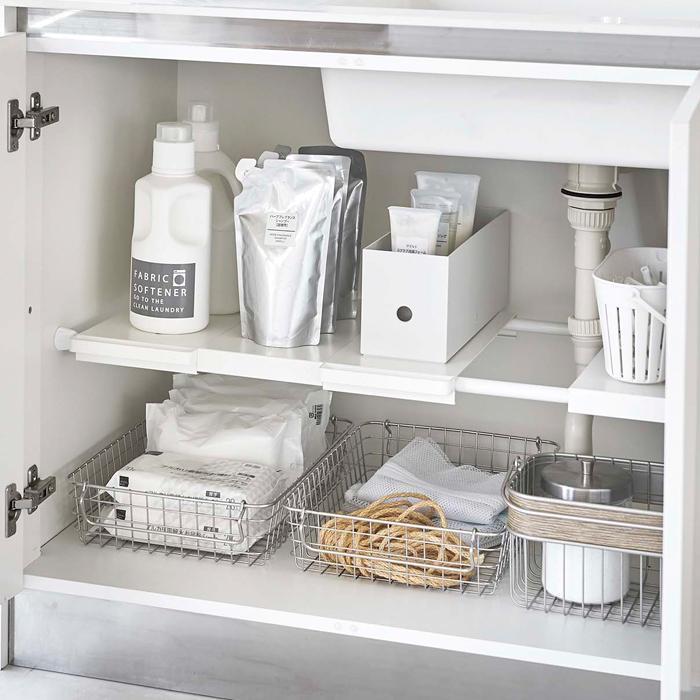
Tension rods are a useful option when a rental has limited cabinet organization or an awkward gap that is difficult to use. They fit between two opposing surfaces through adjustable pressure, so there is no need to drill holes. I like them for creating temporary storage divisions in kitchens and bathrooms.
Inside a kitchen cabinet, a correctly fitted rod can support a lightweight curtain or help divide cleaning cloths and small supplies. Under a bathroom sink, it can provide a place to hang lightweight spray bottles with suitable handles. A shower tension rod can also support a curtain when the product is designed for that purpose.
Measure the distance between the two surfaces carefully and choose a rod with an adjustable range that includes your measurement. Follow the manufacturer's installation instructions and check the load rating before hanging anything. The contact surfaces should be suitable for the rod, and the ends should be firmly seated.
Avoid unnecessary pressure
Do not use an ordinary tension rod to support heavy cookware, glass containers, or valuable belongings. Excessive pressure can damage painted surfaces or cause the rod to fall.Install Removable Adhesive Hooks for Everyday Essentials
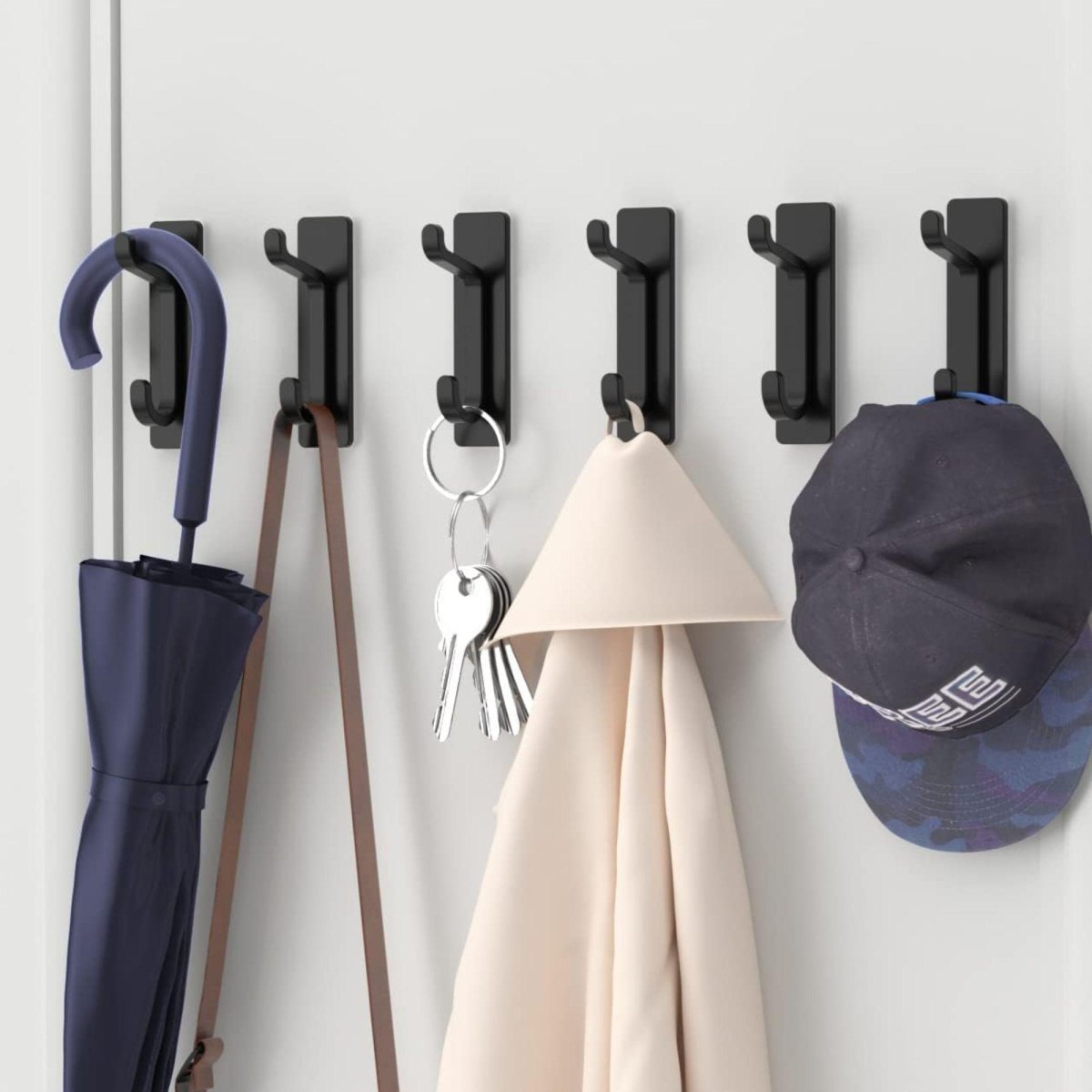
Removable adhesive hooks are among the simplest ways to create extra hanging space in a rental. I find them especially useful near entryways, inside closets, and around desks, where everyday belongings tend to accumulate. They provide convenient wall storage without the need for traditional screws or nails.
Use appropriately rated hooks for lightweight bags, keys, hats, towels, headphones, and small accessories. Some products are designed for painted walls, while others are intended for tile, glass, or finished wood. The surface compatibility information on the packaging is important because not every adhesive works on every finish.
According to the official Command product FAQs, surfaces should be clean, smooth, and dry, and many products require at least one hour before loading. Weight limits differ between products, so check the specific packaging rather than assuming multiple hooks automatically increase the safe capacity.
Protect your rental walls
Test compatibility in an inconspicuous area when appropriate, wait until fresh paint has fully cured, and remove the hook according to its manufacturer's instructions. Never pull the adhesive straight away from the wall if the product requires a specific removal technique.Store Shoes in Stackable Bins and Slim Shoe Racks
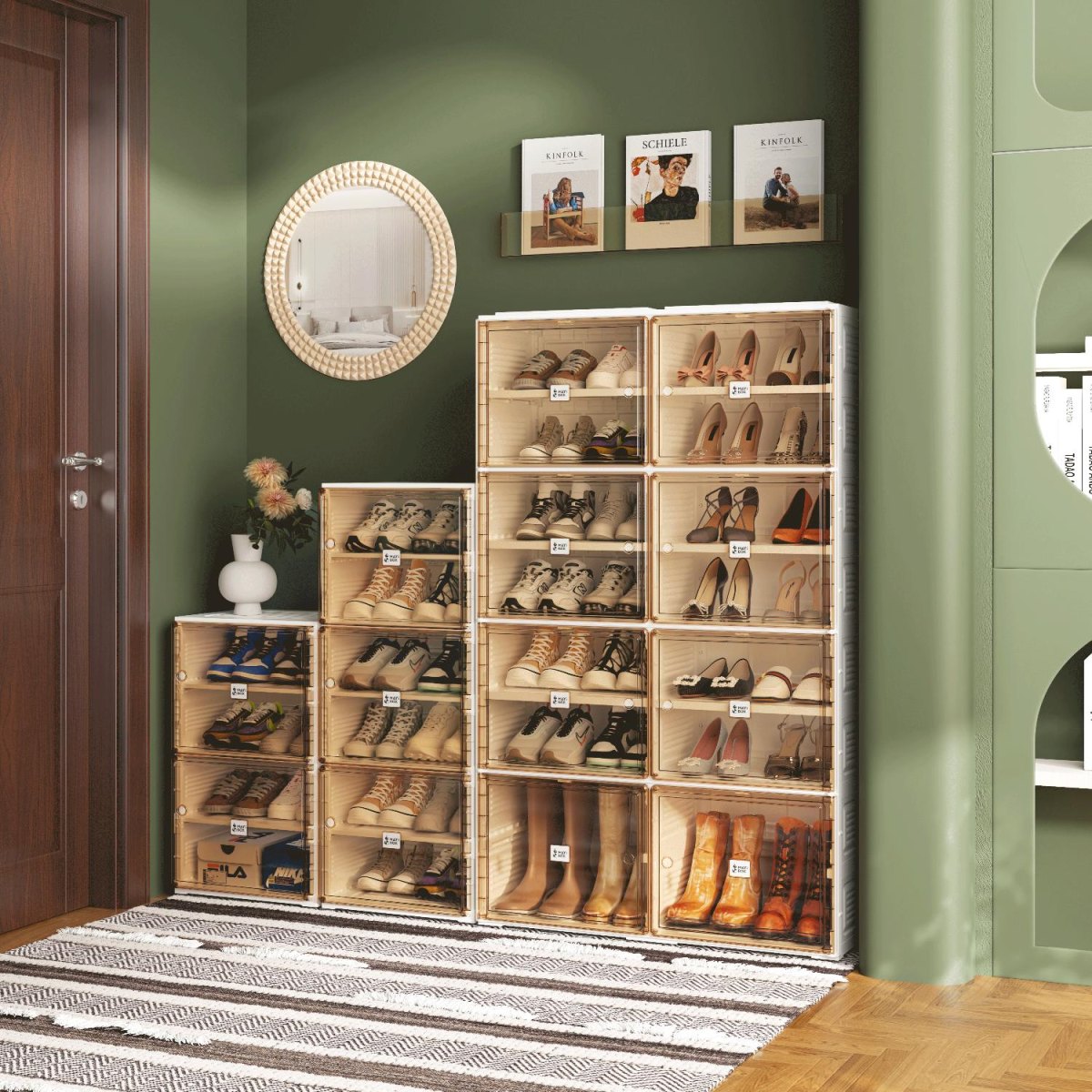
Shoes can quickly take over an entryway, closet floor, or the space beside a bedroom door. Instead of leaving pairs scattered around, I recommend using stackable shoe storage bins or a narrow freestanding shoe rack to keep footwear organized without permanent installation.
Transparent bins make it easier to identify individual pairs, while front-opening designs provide access without dismantling the entire stack. Look for interlocking or purpose-designed stacking features rather than placing unrelated containers on top of one another. Ventilation openings are also useful because they allow air to circulate around stored footwear.
If floor space is particularly limited, a slim vertical shoe rack can fit into a narrow entryway or closet. Measure the available width and depth, including enough room to open doors and walk comfortably. Keep the most frequently worn shoes at an accessible height and reserve upper compartments for occasional footwear.
Stackable shoe bins
- Make vertical storage possible.
- Help protect shoes from dust.
- Allow easy identification with transparent fronts.
Things to consider
- Check the dimensions for larger shoes.
- Allow ventilation before long-term storage.
- A tall stack needs a stable, level position.
Make Use of Under-Bed Storage Containers and Drawers
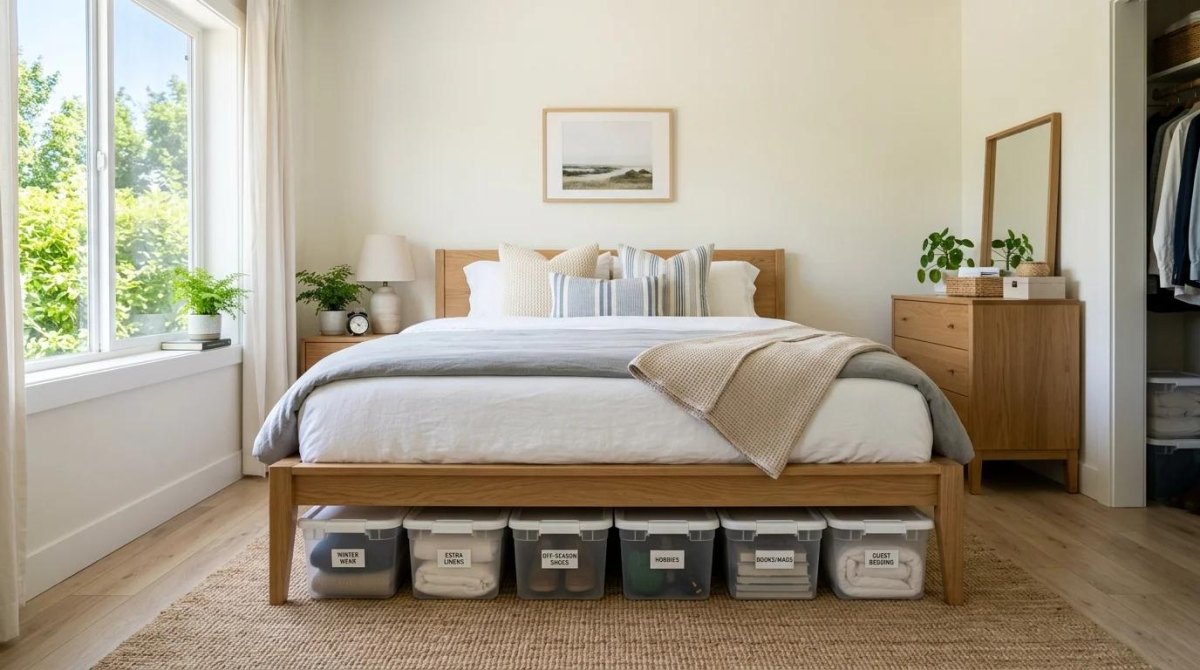
The space beneath a bed can provide useful storage without adding another cabinet or occupying valuable walking space. I consider under-bed storage containers particularly practical for spare bedding, seasonal clothing, shoes, and belongings that are not needed every day.
Start by measuring the clearance between the floor and the lowest part of the bed frame. Check the center supports and any other obstructions rather than measuring only at the sides. The external dimensions of the container, including its lid and handles, should fit through the available opening.
Choose shallow containers with lids if dust protection is important. Rolling drawers are convenient when the floor is smooth and there is enough clearance to pull them out. Fabric storage bags are another option for soft belongings that can be compressed or folded.
- Measure the lowest available clearance.
- Check the width and depth between bed supports.
- Choose containers with easy-to-grip handles.
- Store clean, completely dry clothing and linens.
- Keep frequently used items near the accessible side.
A useful measurement principle also appears in under-bed storage clearance guidance: account for the complete container dimensions and the route needed to retrieve it. This helps avoid buying a box that fits underneath but cannot slide out comfortably.
Organize Small Bathrooms With Freestanding Storage Carts
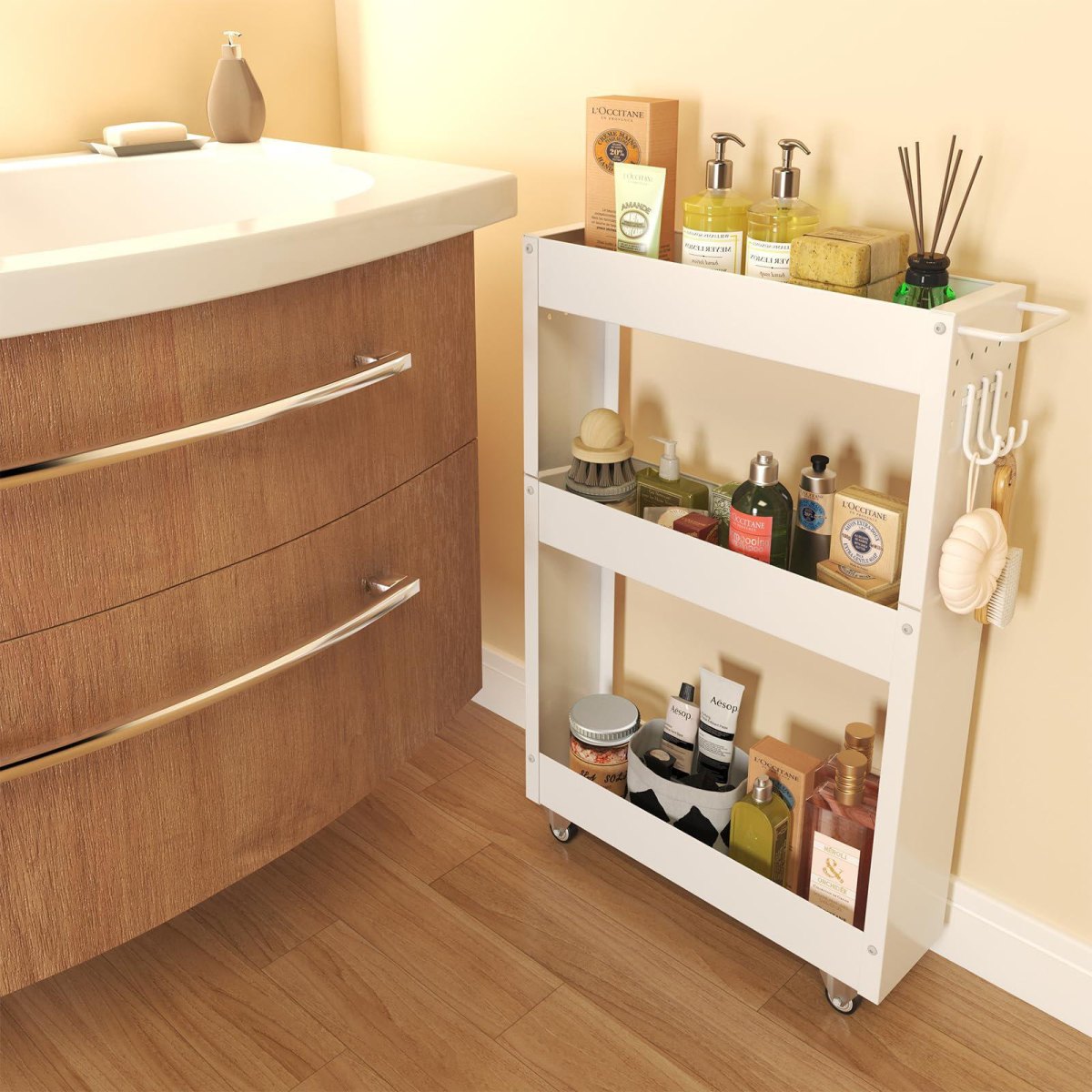
In a compact bathroom, even a small amount of additional storage can make the daily routine easier. A freestanding rolling storage cart is a practical solution because it can fit beside a sink, washing machine, or vanity without requiring wall-mounted shelves.
I recommend choosing a slim cart with several tiers. The upper level can hold frequently used toiletries, the middle can accommodate towels and skincare products, and the lower level can store spare toilet paper or cleaning supplies. Models with raised edges help prevent smaller items from sliding off.
For a useful local example, IKEA Türkiye's bathroom trolley collection includes slim options such as the VESKEN trolley, designed for compact spaces. Its product information describes its use beside a washbasin or along a wall. See the IKEA Türkiye bathroom trolley range.
When selecting a cart, check its overall dimensions and wheel design. Locking wheels are helpful if the floor is slightly sloped or the cart needs to remain stationary. Choose moisture-resistant materials and avoid placing electrical items where they could come into contact with water.
Add Command Strip Shelves for Lightweight Items
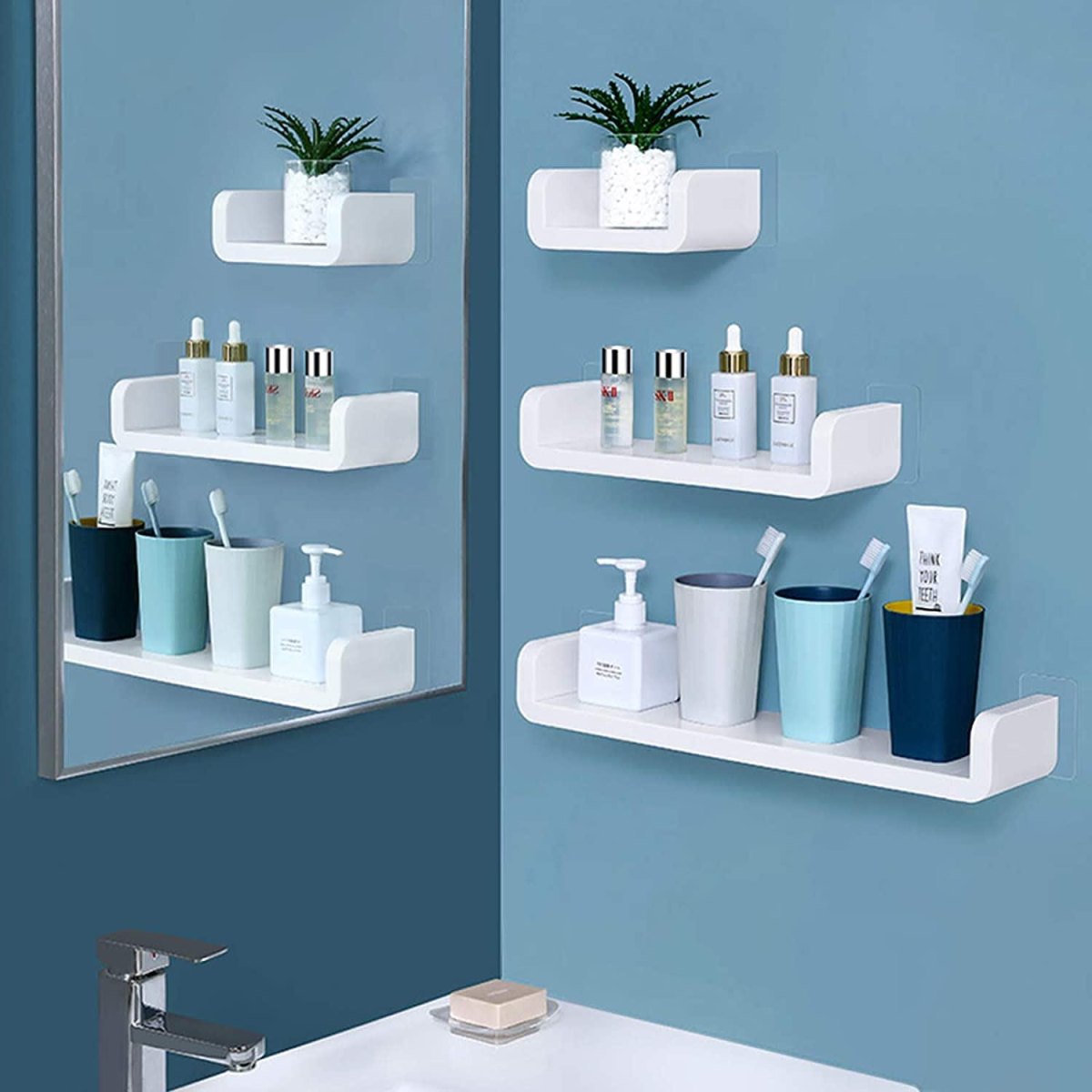
Small wall shelves can be useful for belongings that need to stay visible and accessible, but traditional mounting hardware is not always suitable for a rental. Adhesive-mounted picture ledges and shelves offer an alternative when the product is specifically designed for the intended surface and load.
One example is the Command Quartz Picture Ledge from 3M. Its product information describes a no-tool installation using adhesive strips and identifies suitable smooth indoor surfaces. This makes it worth considering for lightweight decorative objects and small everyday items. Product details are available on the official 3M product page.
I would use this type of shelf for lightweight framed photographs, small decorative pieces, or similarly modest belongings. It is not a substitute for a properly installed heavy-duty bookshelf. Check the exact weight limit and surface requirements before purchasing, and follow the recommended application and removal procedure.
An installation mistake to avoid
Do not assume that every adhesive strip is suitable for textured paint, wallpaper, or damp bathroom walls. Even products from the same brand can have different requirements.Transform Unused Corners With Corner Storage Units
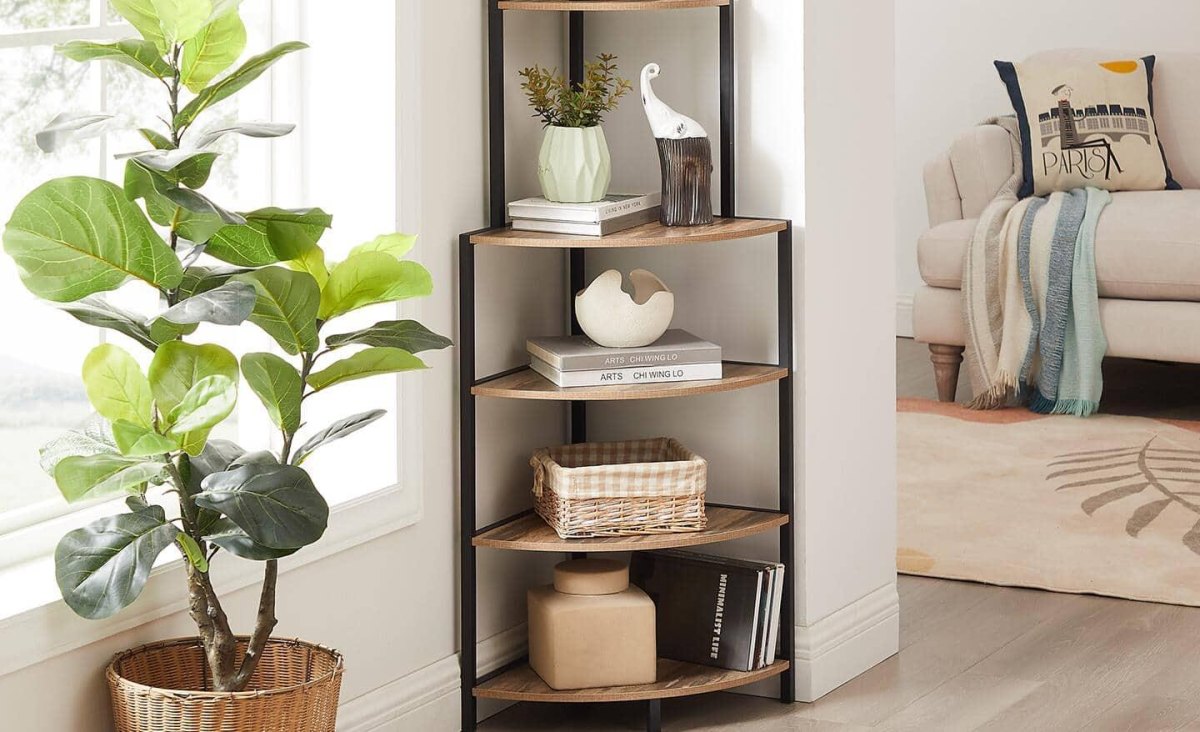
Empty corners often become forgotten spaces where miscellaneous belongings collect without any real organization. A freestanding corner storage unit can turn one of these areas into useful storage while keeping walls free from drilled brackets.
For a living room, consider a tiered corner shelf for books, plants, baskets, and decorative pieces. In a bedroom, a compact corner unit can hold accessories, folded clothing, or small storage boxes. A moisture-resistant freestanding design may also work in a bathroom if its dimensions and materials are appropriate.
Before choosing a unit, measure both walls and the distance the furniture will project into the room. Remember to account for skirting boards, nearby doors, drawers, and electrical outlets. I prefer open corner shelving when accessibility matters and a small cupboard when I want to conceal visual clutter.
Make the corner functional
Place frequently used items on the middle shelves and use the upper levels for lightweight decorative belongings. Keep the base level and avoid creating an unstable top-heavy arrangement.Choose Storage Ottomans and Benches With Hidden Compartments
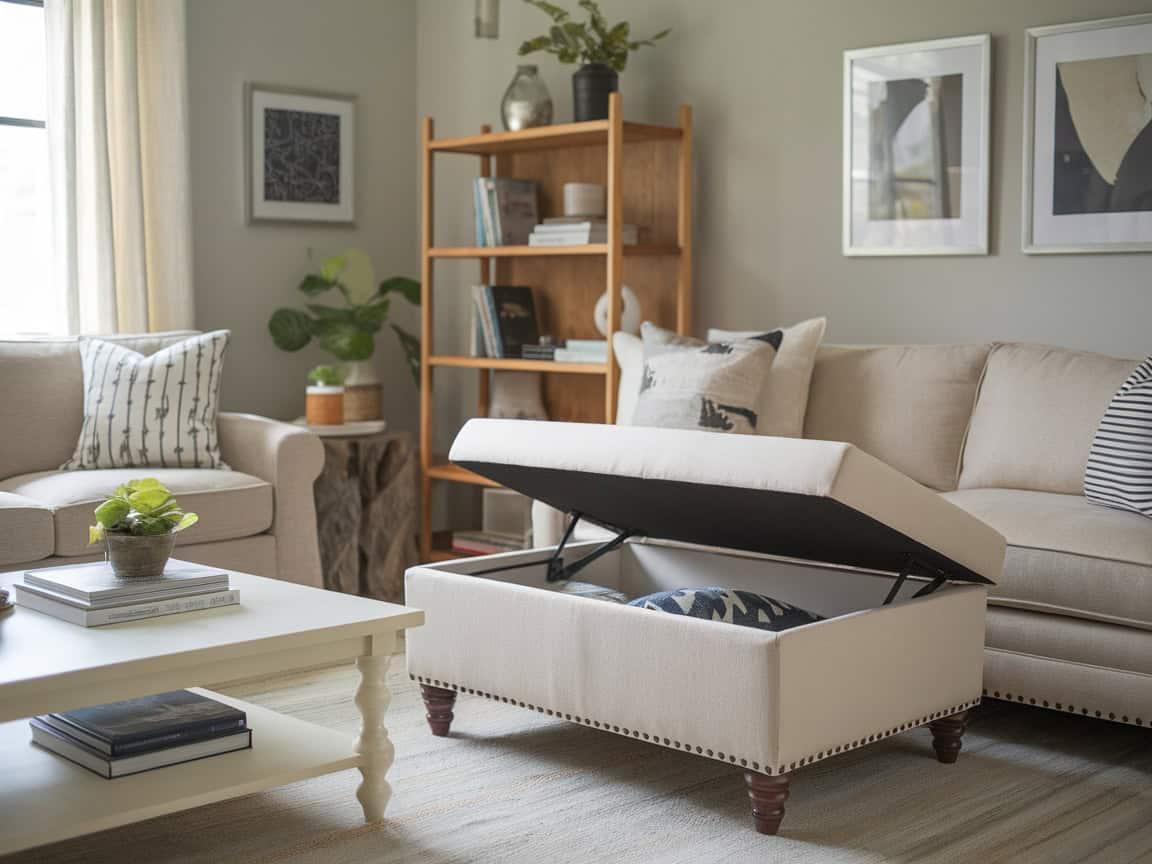
When furniture needs to serve more than one purpose, storage ottomans and benches are worth considering. They combine seating with a concealed compartment, providing hidden storage without wall installation. I particularly like this approach for entryways, bedrooms, and smaller living rooms.
An entryway bench can hold shoes, reusable shopping bags, and accessories while providing a convenient place to sit. A bedroom ottoman can store spare blankets, cushion covers, or seasonal clothing. In a living room, a padded storage ottoman can double as a footrest while keeping everyday clutter out of sight.
Look for a model with a sturdy frame, a suitable weight capacity, and a lid that opens and closes safely. If the furniture will be used for seating, verify its seating capacity separately from its storage capacity. Keep the compartment clean and completely dry, particularly when storing bedding or fabrics.
Why I like this option
- Combines seating and storage.
- Conceals belongings from view.
- Can move between rooms or homes.
Before purchasing
- Check the lid opening clearance.
- Measure the interior compartment.
- Avoid storing damp items inside.
Hang Pegboards With Removable Mounting Solutions
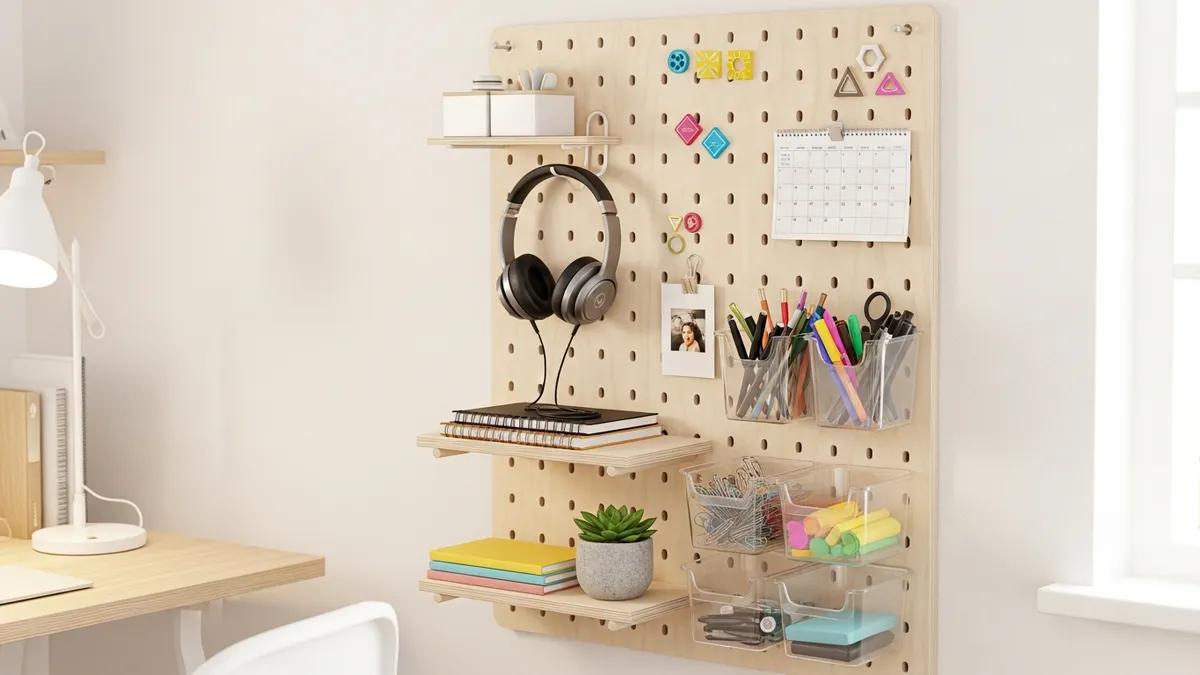
Pegboards are useful for organizing collections of smaller belongings that otherwise end up scattered across desks, countertops, and drawers. A renter-friendly pegboard setup can provide a dedicated place for stationery, craft supplies, accessories, and lightweight household tools.
For a no-drill arrangement, consider a lightweight pegboard with a manufacturer-approved adhesive mounting system or a freestanding tabletop version. Another option is to use an existing shelf or sturdy furniture surface as the support for a compact pegboard display.
The important distinction is between a conventional pegboard designed for screws and a product specifically rated for adhesive mounting. Do not assume that an adhesive strip intended for picture frames can safely support a fully loaded pegboard. Check the mounting system's combined weight capacity, surface compatibility, and instructions before adding accessories.
I recommend organizing the board by category. Keep pens and scissors together, group craft supplies in small containers, and reserve the most accessible positions for frequently used items. This creates a practical storage station without adding another piece of bulky furniture.
Use Stackable Kitchen Shelves to Double Cabinet Space
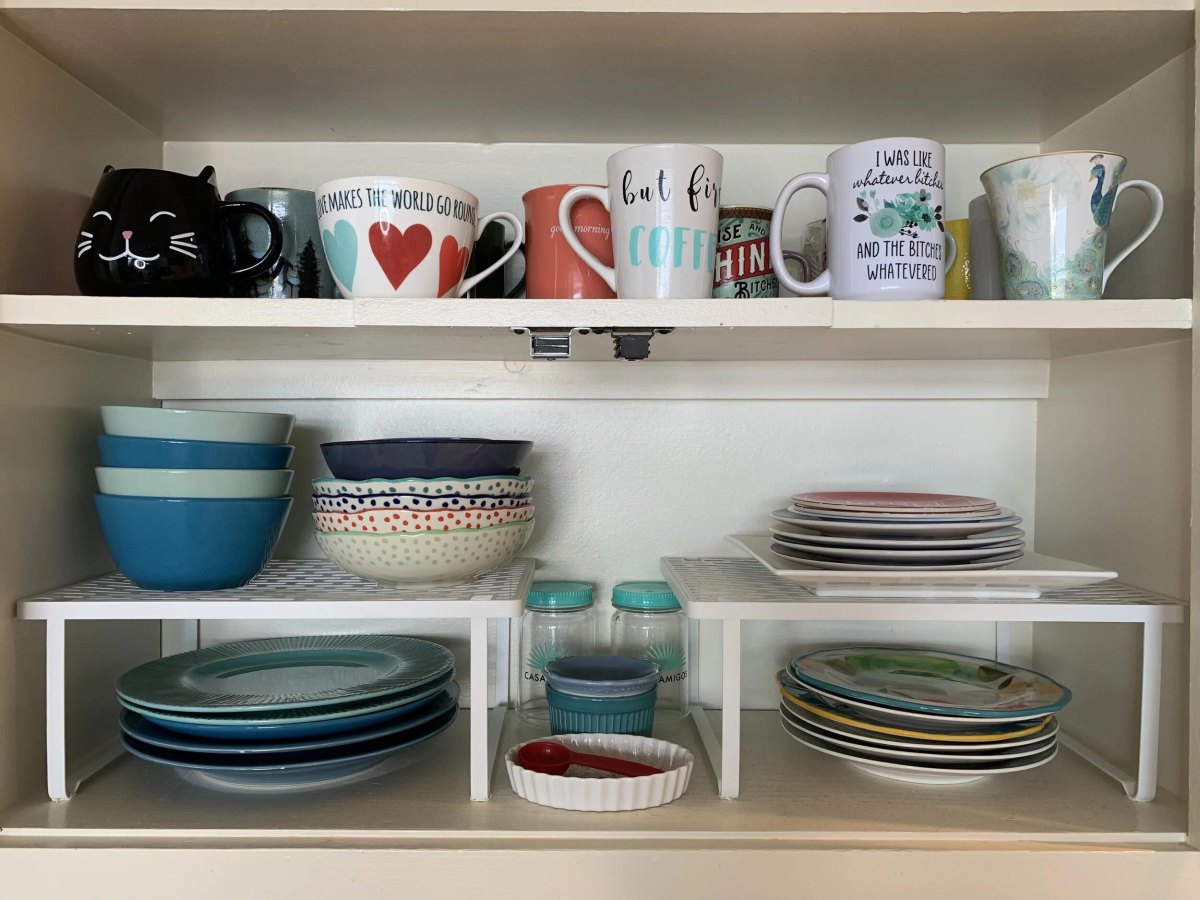
Kitchen cabinets often have more vertical space than their contents actually use. Plates, cups, bowls, and spice containers can occupy the bottom of a cabinet while leaving a large unused gap above them. Stackable kitchen shelf inserts help divide this space into separate levels without drilling into the cabinet.
Use a shelf riser for plates, mugs, or small bowls, depending on the available dimensions and the product's load rating. A two-level arrangement makes it easier to see what is stored at the back and reduces the need to move several items whenever you need one plate.
I also recommend measuring the cabinet interior before buying an insert. Check the height beneath the shelf above it, the door clearance, and the depth available. IKEA's VARIERA interior organizer is one example of a shelf insert designed to create additional storage space for glasses, bowls, and spice jars. Its product description also explains how multiple inserts can be connected. See IKEA VARIERA organizer details.
Organize by frequency
Keep everyday plates and glasses on the easiest-to-reach level. Reserve the upper section for lightweight items that you use less frequently.Repurpose Decorative Baskets for Clutter-Free Open Storage
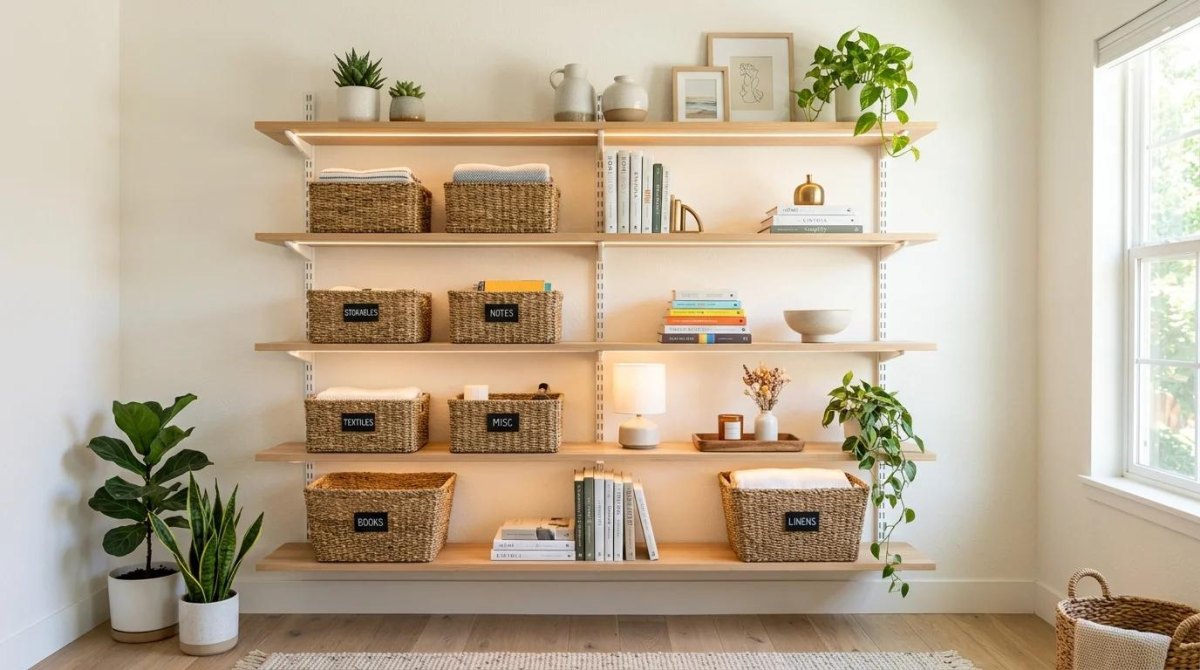
Not every storage solution needs to be a dedicated organizer. Decorative baskets can make existing shelves, countertops, and floor areas more functional while keeping smaller belongings grouped together. I find woven storage baskets especially useful when an open shelving unit looks cluttered despite having plenty of available space.
Use small baskets for chargers, remote controls, toiletries, and stationery. Medium-sized versions can hold folded towels, scarves, or accessories, while larger baskets are suitable for spare cushions and blankets. Matching baskets create a consistent appearance, but different sizes can work just as well when each one has a clear purpose.
Material choice matters. Woven natural fibers suit dry living areas, while washable fabric or moisture-resistant plastic baskets are often easier to maintain in bathrooms and kitchens. If a basket will hold laundry or frequently used towels, consider a design that allows adequate airflow.
- Entryway: Store reusable bags, gloves, and everyday accessories.
- Living room: Group blankets, magazines, and remote controls.
- Bedroom: Organize scarves, handbags, and spare linens.
- Bathroom: Keep dry toiletries and clean towels together.
- Kitchen: Group packaged snacks and pantry accessories.
My recommendation is to label baskets when their contents are not immediately visible. A simple label can make an open storage system much easier to maintain, especially when several baskets look alike.
A simple way to keep open shelves organized
Give each basket one category of belongings, leave a little unused space for items that come and go, and avoid filling every shelf to capacity. The result is storage that remains practical rather than becoming another place to hide clutter.

 Home Design7 Japandi Home Decor Ideas for a Calm and Cozy Living Space
 Home Organization12 Smart Small Rental Bathroom Storage Ideas Without Drilling
 Home Organization12 Smart Kitchen Foil Storage Ideas to Save Space and Stay Organized
 Home Organization9 Closet Organization Ideas For Small Spaces That Make