

A small closet doesn't have to mean a crowded wardrobe or a daily struggle to find what you need. I love solutions that make every inch work harder while keeping a closet calm, attractive, and easy to maintain. These nine closet organization ideas explore different approaches, from thoughtful built-in storage to clever door and under-bed solutions, so you can find the right fit for your space.
Make a Narrow Walk-In Closet Work Harder with Two-Sided Storage
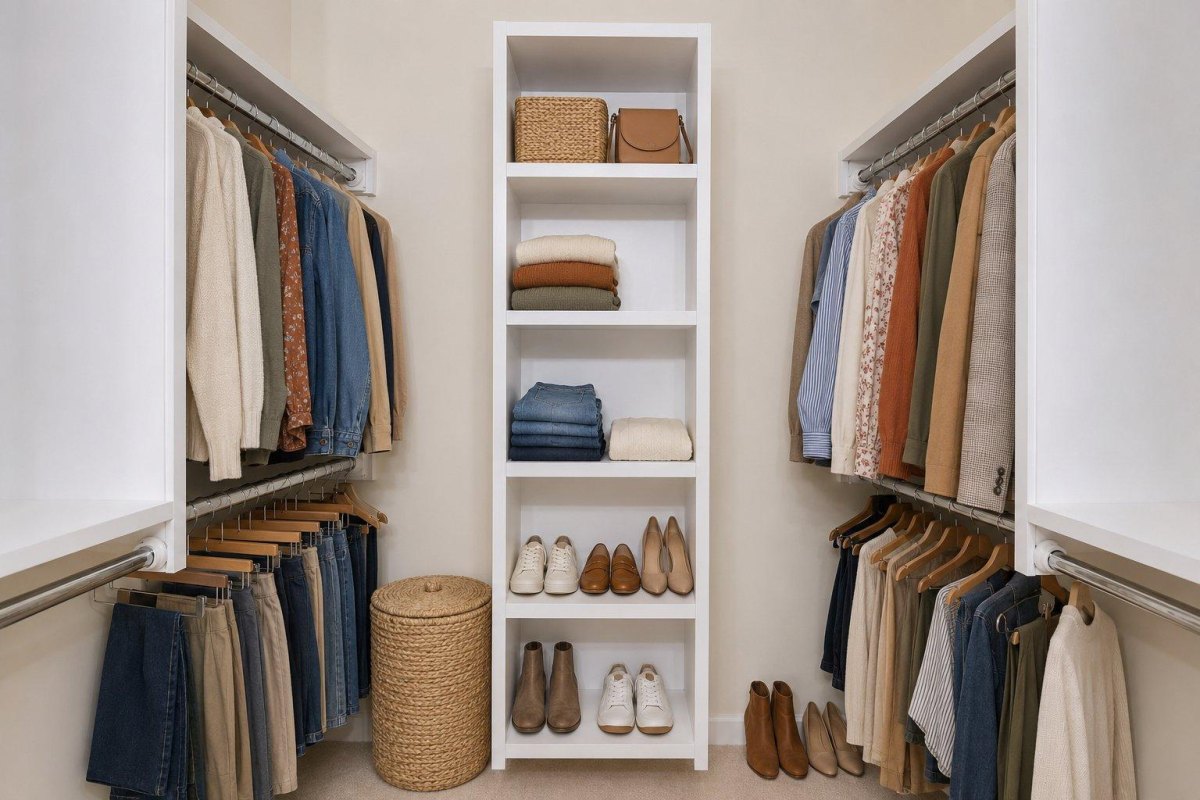
When floor space is limited, a two-sided closet layout can transform an awkward narrow room into a surprisingly capable dressing area. This arrangement uses parallel hanging rails along both walls, leaving a central walkway and a slim shelving tower at the back. Instead of relying on one overloaded wardrobe, it distributes storage according to clothing type and frequency of use.
What makes this design particularly effective is its combination of hanging and folded storage. Longer garments can occupy one section, while shorter jackets, shirts, trousers, and denim share separate rails. The central shelves accommodate folded sweaters, shoes, handbags, and small accessories without consuming additional floor space.
How to adapt the layout
- Reserve one side for everyday clothing. Keep frequently worn pieces at a comfortable height.
- Use the opposite wall for secondary storage. Place occasionwear, trousers, or seasonal pieces here.
- Build upward. Add narrow shelves above and between hanging zones.
- Keep the floor clear. A single compact hamper or woven basket is usually enough.
For a similar result, choose matching slim hangers and keep the color palette restrained. The visual consistency makes even a densely used closet feel more spacious. This approach works best when the central walkway remains comfortable rather than being sacrificed for extra storage.
Create More Hanging Space with Double Closet Rods
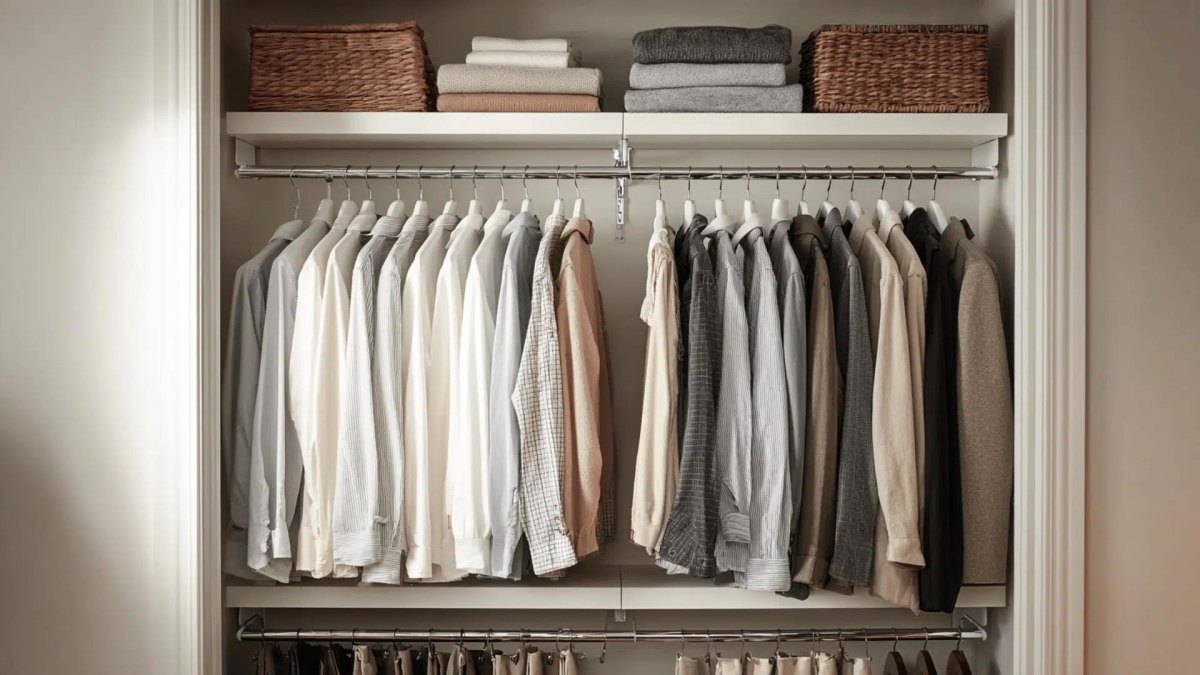
One of the easiest ways to double a closet's usefulness is to stop treating every hanging section as a single-level space. A double-rod arrangement introduces a second rail beneath the first, making use of the vertical area that often goes unnoticed in standard wardrobes.
This design combines two generous hanging zones with a high shelf for woven baskets, folded knitwear, and spare linens. The upper rod is ideal for shirts, blouses, jackets, and other shorter pieces. The lower rod can accommodate trousers folded over hangers, skirts, and additional tops. The result is a wardrobe that holds more without requiring a wider footprint.
I particularly like the use of baskets above the clothing. They provide a softer alternative to visible plastic containers and make it easy to group accessories or occasional-use pieces.
Getting the proportions right
- Measure your longest garments. Avoid installing the lower rod where clothing will drag or crease.
- Keep the upper shelf accessible. Store less frequently used belongings there.
- Choose matching hangers. Uniform hangers reduce visual clutter and save a little space.
A useful styling trick
Arrange clothing by category, then by color. A consistent sequence makes it easier to see what you own and prevents forgotten pieces from disappearing at the back.
This solution is especially useful for standard reach-in closets and wardrobes with enough height for two comfortable hanging levels.
Install a Slim Vertical Shelf Tower for Better Wardrobe Storage
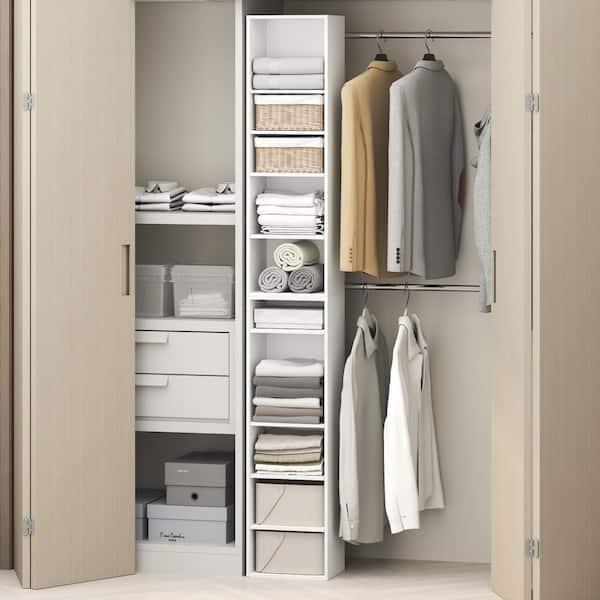
A slim vertical shelving unit is a smart answer when a small wardrobe has plenty of height but very little width. Rather than adding bulky cabinets or sacrificing hanging room, this design introduces a narrow tower of open compartments between the main storage zones.
Its greatest advantage is versatility. The individual shelves can hold neatly folded towels, sweaters, T-shirts, baskets, and smaller accessories. The open design also makes everything visible, which is particularly helpful when a closet is shared or when several categories of belongings need their own place.
Notice how the storage is divided into different-sized compartments. This is an important detail: shelves that are all identical may look tidy, but they do not always accommodate real-life belongings efficiently.
Make a narrow tower more useful
- Top compartments: Keep spare bedding and occasional-use accessories.
- Middle compartments: Store everyday folded clothing and smaller baskets.
- Lower compartments: Use for heavier folded garments or accessible storage boxes.
Choose a unit that fits the available width without obstructing the wardrobe doors or hanging garments. Adjustable shelving is especially valuable because your storage needs will change over time.
For a polished finish, repeat the same folding method throughout and use a small number of matching baskets. The result feels like a considered piece of furniture rather than an improvised storage solution.
Use Labeled Woven Baskets and Wall Hooks for Accessories
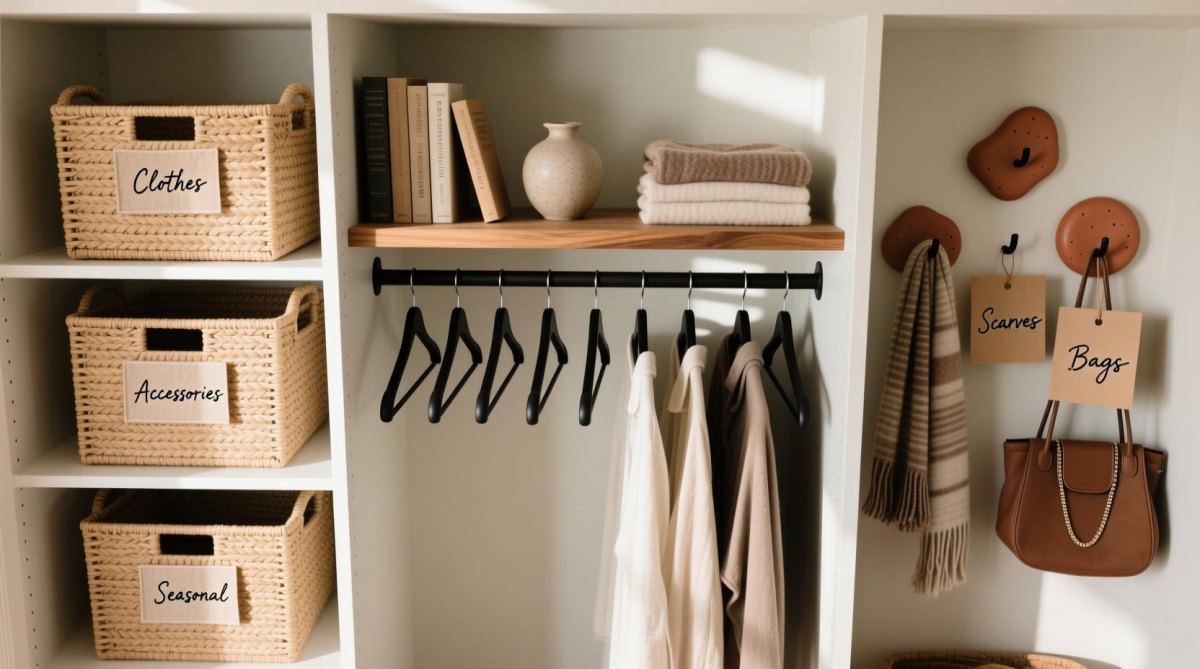
Not everything in a wardrobe needs to hang or fold neatly on a shelf. Accessories, seasonal extras, scarves, and miscellaneous belongings often create the most persistent clutter because they lack an obvious home. This design tackles that problem with three woven baskets, a central hanging section, and individual wall hooks.
The labeled baskets are particularly effective. Giving each container a specific purpose means that smaller belongings are grouped rather than scattered across shelves. Woven textures also introduce warmth into a practical storage area, making the closet feel more like part of the bedroom's interior design.
The wall hooks are another clever detail. They turn otherwise unused vertical space into a convenient place for handbags and scarves, keeping frequently used accessories visible and accessible.
Give every accessory a designated home
- Clothing basket: Reserve it for items that do not need to hang.
- Accessories basket: Group belts, small bags, and other everyday extras.
- Seasonal basket: Store pieces that are not currently in rotation.
- Wall hooks: Display frequently used scarves and handbags.
I recommend choosing baskets that fit the shelf dimensions precisely. Containers that are too large waste valuable space, while undersized ones can make a storage system look fragmented.
A well-organized closet is not simply about hiding belongings. It is about making the things you use easiest to reach.
A practical approach to everyday wardrobe organization
This is an especially attractive option for open closets and small dressing areas where storage needs to look as good as it functions.
Maximize the Back of the Closet Door with Hanging Organizers
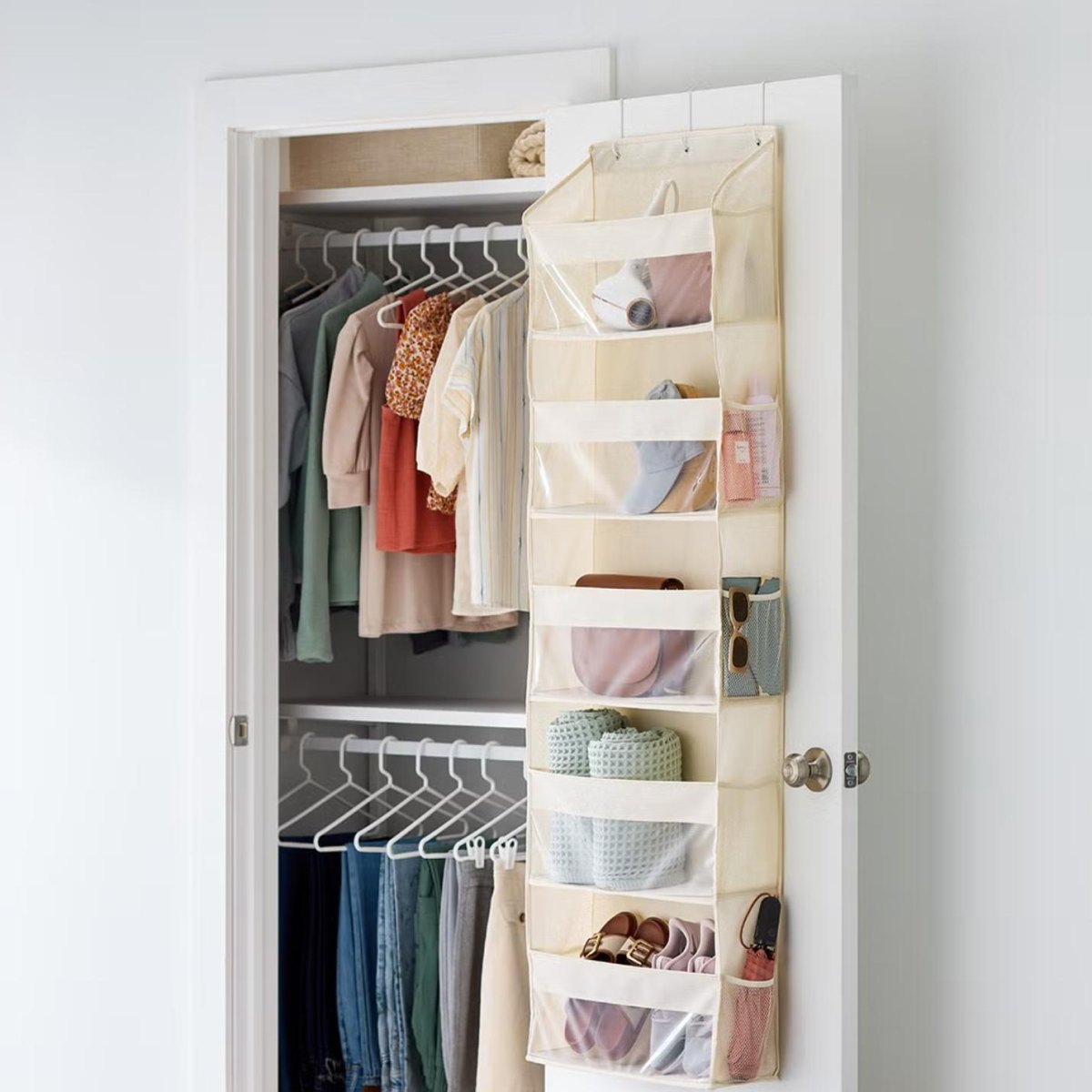
The back of a closet door is valuable storage real estate, particularly when the wardrobe itself is already full. An over-door hanging organizer makes use of this overlooked surface without requiring additional shelves, drawers, or floor space.
The design shown here uses multiple fabric compartments with transparent fronts and smaller side pockets. This arrangement is ideal for belongings that are difficult to store neatly elsewhere, including sunglasses, small handbags, toiletries, folded accessories, and lightweight footwear.
Transparent panels are a worthwhile feature because they allow you to identify contents without opening every compartment. The smaller side pockets also prevent tiny essentials from getting lost among larger belongings.
What belongs in an over-door organizer?
- Upper pockets: Lightweight accessories and occasional-use items.
- Middle pockets: Sunglasses, small bags, and personal essentials.
- Lower pockets: Slippers, sandals, and other lightweight footwear.
- Narrow side pockets: Small accessories that need their own compartment.
Check the door clearance first
Measure the organizer's depth and check that the door can close properly. Also confirm that the hooks are compatible with your door and that the organizer will not interfere with the handle.
For a smaller wardrobe, this can be one of the most affordable improvements available. It is also renter-friendly when installed with suitable over-door hooks rather than permanent hardware.
Dedicate a Vertical Shoe Rack to Free Up Closet Floor Space
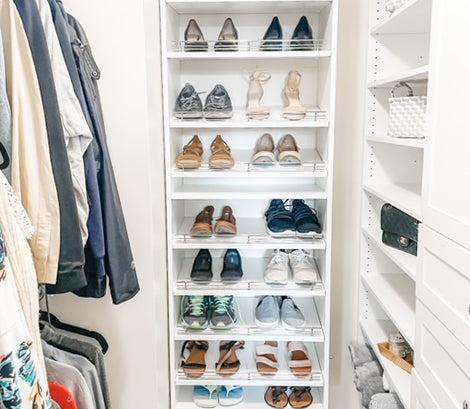
Shoes are among the quickest ways to make a small closet feel overcrowded. They tend to accumulate along the floor, where pairs become mixed together and access to other belongings becomes difficult. A dedicated vertical shoe rack solves this by turning one narrow section into organized, easy-to-scan footwear storage.
The open shelving arrangement shown here makes the most of vertical height, allowing several pairs to occupy a relatively small footprint. Each level becomes a separate storage zone, and the open fronts make it easier to identify shoes without pulling out boxes or moving other pairs.
For the most efficient layout, arrange footwear according to how often it is worn. Everyday sneakers and flats belong on the easiest-to-reach shelves. Occasion shoes and less frequently used pairs can move toward the upper levels.
Choose the right shoe-storage system
- Open tiered racks: Best for everyday shoes that need quick access.
- Adjustable shelves: More practical for a mixture of flats, boots, and heels.
- Clear shoe boxes: Useful for delicate or seasonal footwear that needs protection.
Before purchasing a rack, count your actual pairs and measure their height. Tall boots may need a separate floor-level compartment, while heels benefit from shelves with enough depth to sit securely.
A final detail worth adopting is a simple maintenance habit: return shoes to their designated shelf as soon as you take them off. That small routine prevents the floor from becoming a temporary dumping area again.
Organize Drawers with Individual Compartments for Accessories
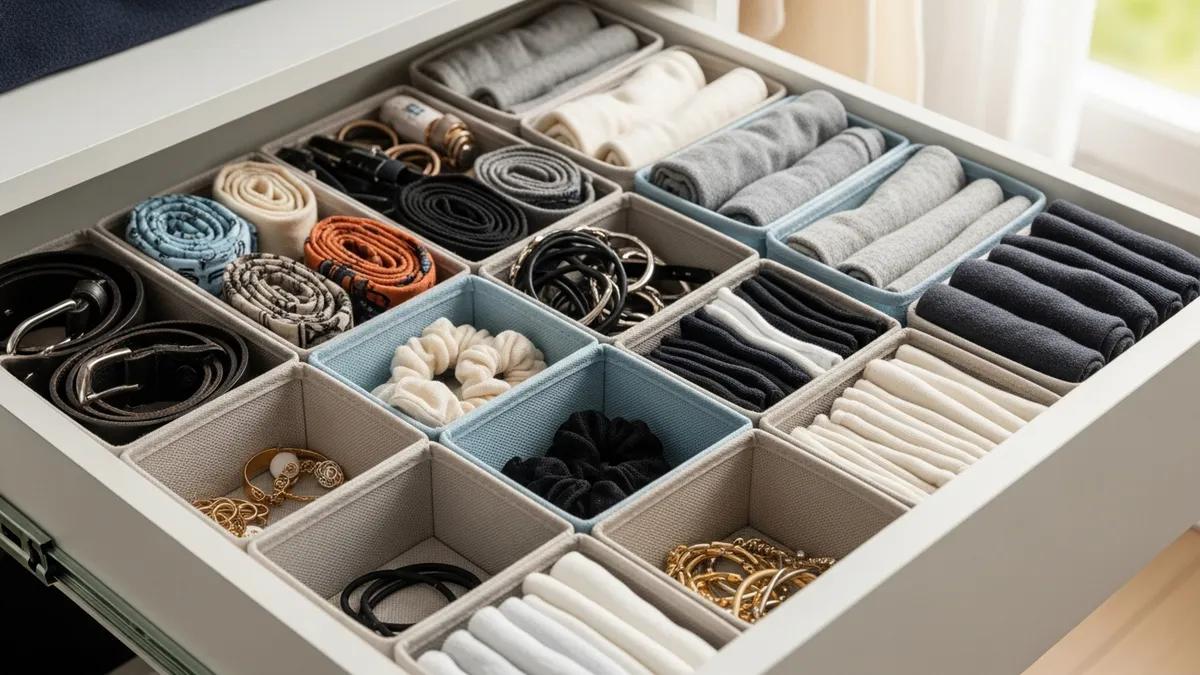
Opening a beautifully organized wardrobe drawer is a small everyday pleasure, and compartment dividers make it much easier to achieve. Instead of allowing belts, scarves, socks, underwear, and accessories to mingle in one large space, this approach gives each category its own defined area.
The arrangement uses individual fabric compartments in several sizes. Larger sections accommodate rolled scarves and folded garments, while smaller compartments are ideal for belts, jewelry, hair accessories, and other little essentials. This flexibility is what makes drawer dividers particularly effective in small closets: they organize the space that already exists rather than demanding additional furniture.
Build a drawer system that suits your belongings
- Empty the drawer. Remove everything and group similar items together.
- Measure the interior. Note the usable width, depth, and height.
- Choose compartment sizes. Mix larger sections with smaller accessory organizers.
- Fold or roll consistently. Make contents visible without stacking too deeply.
- Return items by category. Give each group a permanent compartment.
Fabric organizers are a lovely choice for soft accessories, while rigid dividers can work better for small items that tend to move around.
Keep the system flexible
Choose adjustable or removable dividers whenever possible. You can rearrange the compartments as your wardrobe changes instead of replacing the entire organizer.
This idea is especially useful for shallow drawers that cannot accommodate bulky storage boxes. A few carefully chosen compartments can make a surprisingly big difference.
Use Colorful Hangers and Double Rails in a Compact Wardrobe
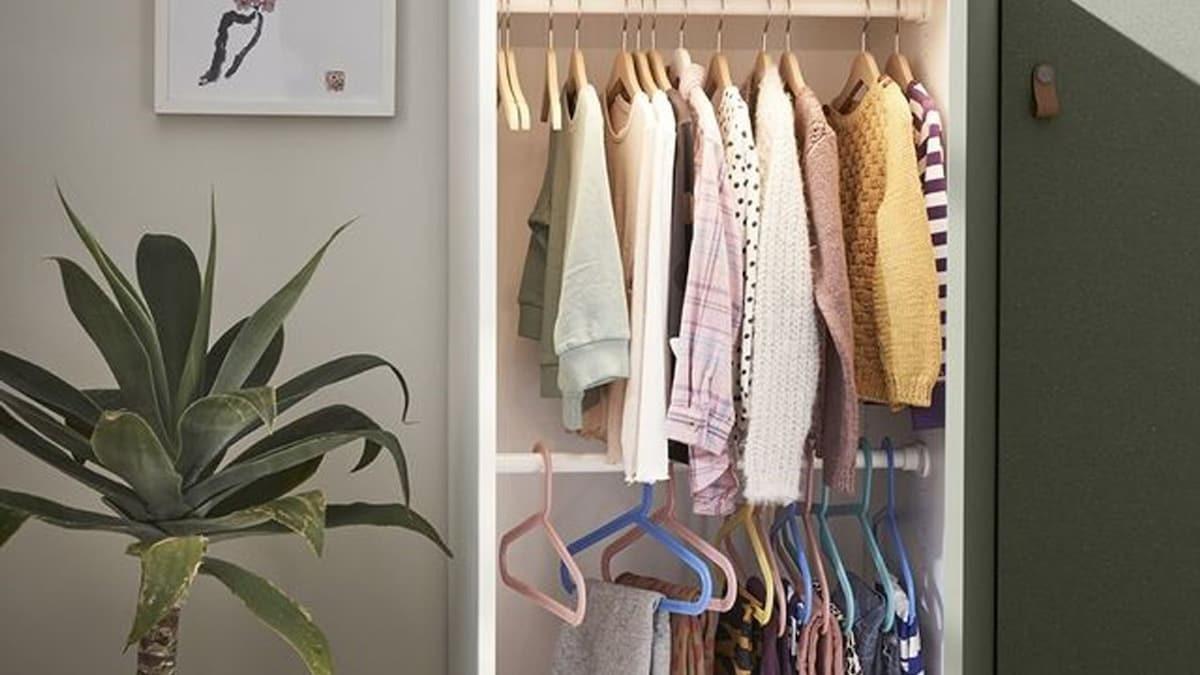
A compact wardrobe can hold considerably more when its hanging space is planned vertically and its hangers are chosen with intention. This approach combines two hanging levels with slim, colorful hangers to create a practical system for separating clothing categories while making the closet feel less monotonous.
The upper rail is suitable for shorter garments such as shirts, blouses, lightweight jackets, and tops. A second rail beneath it can hold additional everyday pieces, provided there is sufficient clearance for the clothing to hang without bunching. This is particularly helpful in children's wardrobes, guest closets, and small bedroom cupboards where hanging capacity is often limited.
The colorful hangers introduce another organizational opportunity. Different colors can distinguish clothing categories, family members, or outfit types. However, I would keep the palette coordinated rather than using too many unrelated shades.
Make the hanging arrangement work
- Separate by garment length. Keep shorter items on the double-hanging section.
- Use slim hangers. They help maximize rail capacity.
- Group by purpose. Keep workwear, casual pieces, and special-occasion clothing together.
- Leave a little breathing room. Clothes should slide along the rail without constant rearranging.
One important consideration is the weight of the clothing and the strength of the existing rails. A second hanging level should be installed securely and should not be overloaded.
This is a particularly adaptable solution for anyone who has more short garments than long dresses or coats.
Store Seasonal Clothing Under the Bed to Relieve Closet Clutter
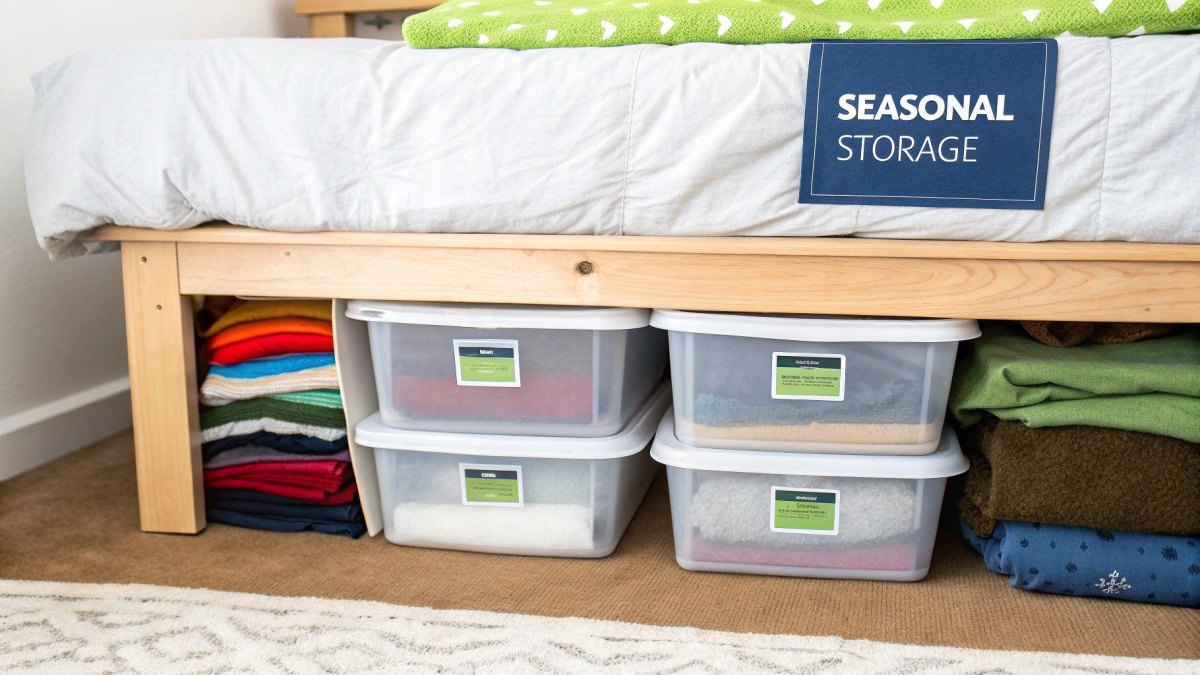
Sometimes the best way to organize a small closet is to move some belongings out of it entirely. Under-bed storage takes advantage of an area that often goes unused, creating a practical home for seasonal clothing, spare bedding, and bulky pieces that do not need to be accessible every day.
The arrangement shown here combines stackable transparent containers with neatly folded garments placed directly into separate sections beneath the bed. The clear boxes are especially useful because their contents can be identified without opening each container. They also help keep clothing protected from everyday dust.
This approach works beautifully for winter sweaters during warmer months, summer clothing during colder weather, spare blankets, and occasional-use accessories.
Make under-bed storage practical
- Measure the available clearance. Include the height of container lids and any bed-frame supports.
- Choose shallow containers. They are easier to slide out and access.
- Wash and dry garments first. Never store clothing while damp or dirty.
- Use clear labels. Identify the season and category on each container.
- Keep a simple inventory. Avoid buying duplicates because stored pieces have been forgotten.
Protect clothing between seasons
Use clean, completely dry storage containers and avoid compressing delicate fabrics for extended periods. For valuable natural-fiber garments, choose breathable storage and follow the care instructions.
The greatest benefit is that your everyday closet becomes less crowded. By relocating clothing you do not currently need, you create room for the pieces you actually wear while making seasonal wardrobe changes easier.
The secret to an organized small closet isn't finding more room at any cost. It's making better use of the room you already have. Start with one improvement that addresses your biggest frustration, whether that's overcrowded hanging space, scattered shoes, or overflowing drawers. Add the next solution only when you need it. With a little planning and a few well-chosen organizers, even the smallest wardrobe can become a practical, attractive part of your home.
Your Questions, Answered
How do I organize a very small closet with too many clothes?
Start by removing pieces you no longer wear, then group the remaining clothing by category. Introduce double hanging rails for shorter garments, slim hangers, vertical shelving, and drawer dividers. Move seasonal clothing and occasional-use items into labeled under-bed containers to free up everyday storage.
What is the best way to maximize closet space without remodeling?
Use removable storage solutions such as over-door organizers, hanging shelves, freestanding shoe racks, adjustable drawer dividers, and stackable containers. These improvements can make existing storage more efficient without requiring permanent construction.
How can I make a small closet look more organized?
Choose matching slim hangers, group clothing by category and color, use coordinated baskets, and avoid overcrowding shelves. Keep frequently used items visible and store seasonal belongings elsewhere. A consistent visual system makes a small wardrobe feel calmer and easier to maintain.
What should I store outside my closet?
Seasonal clothing, spare bedding, bulky blankets, occasional-use footwear, and accessories can be stored in suitable under-bed containers or labeled baskets. Keep everyday essentials in the closet so getting dressed remains convenient.

 Celebrity Homes12 Most Beautiful Celebrity Homes and the Stories Behind Them
 Celebrity Nail Art18 Kylie Jenner Nails Ideas to Save for Your Next Manicure
 Home Design15 Cozy Apartment Room Ideas to Make Your Space Feel Warm and Inviting
 Home Organization12 Pantry Organization Ideas For Cans That Make Every Shelf