 19.10.2026
I find that an organized bathroom drawer can make a daily routine noticeably easier. The trick is to give every product a clear place instead of relying on one large compartment where everything eventually gets mixed together. These bathroom drawer organization ideas cover adjustable dividers, clear trays, stackable containers, and simple storage systems that work in bathrooms of different sizes. I recommend measuring your drawers, sorting what you already own, and choosing organizers only after you know what needs to fit.
What makes bathroom drawers easier to organize
- Group products by purpose and frequency of use.
- Choose containers that fit the drawer dimensions and available height.
- Keep everyday essentials accessible and backups elsewhere.
- Make room for cleaning, drying, and occasional decluttering.
Use Adjustable Drawer Dividers
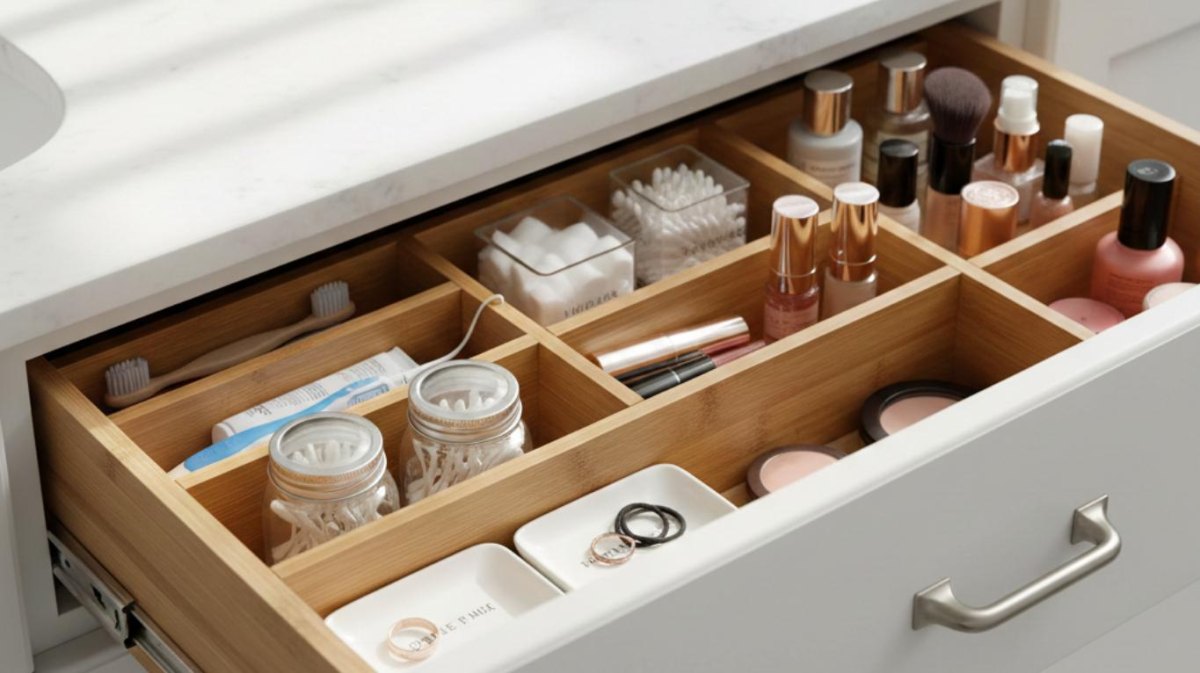
I like adjustable drawer dividers because they let me create compartments around the items I actually own. Instead of forcing toothpaste, razors, hair ties, and skincare bottles into identical spaces, I can make wider sections for bottles and narrow ones for small accessories. IKEA's drawer divider range illustrates how separate compartments can make mixed contents easier to manage.
Before buying a set, measure the drawer's internal width, depth, and height, including any plumbing cutouts. Arrange the dividers so frequently used items sit near the front. I also leave a little clearance so the drawer opens smoothly and the dividers do not interfere with the runners.
Organize Makeup in Clear Acrylic Trays
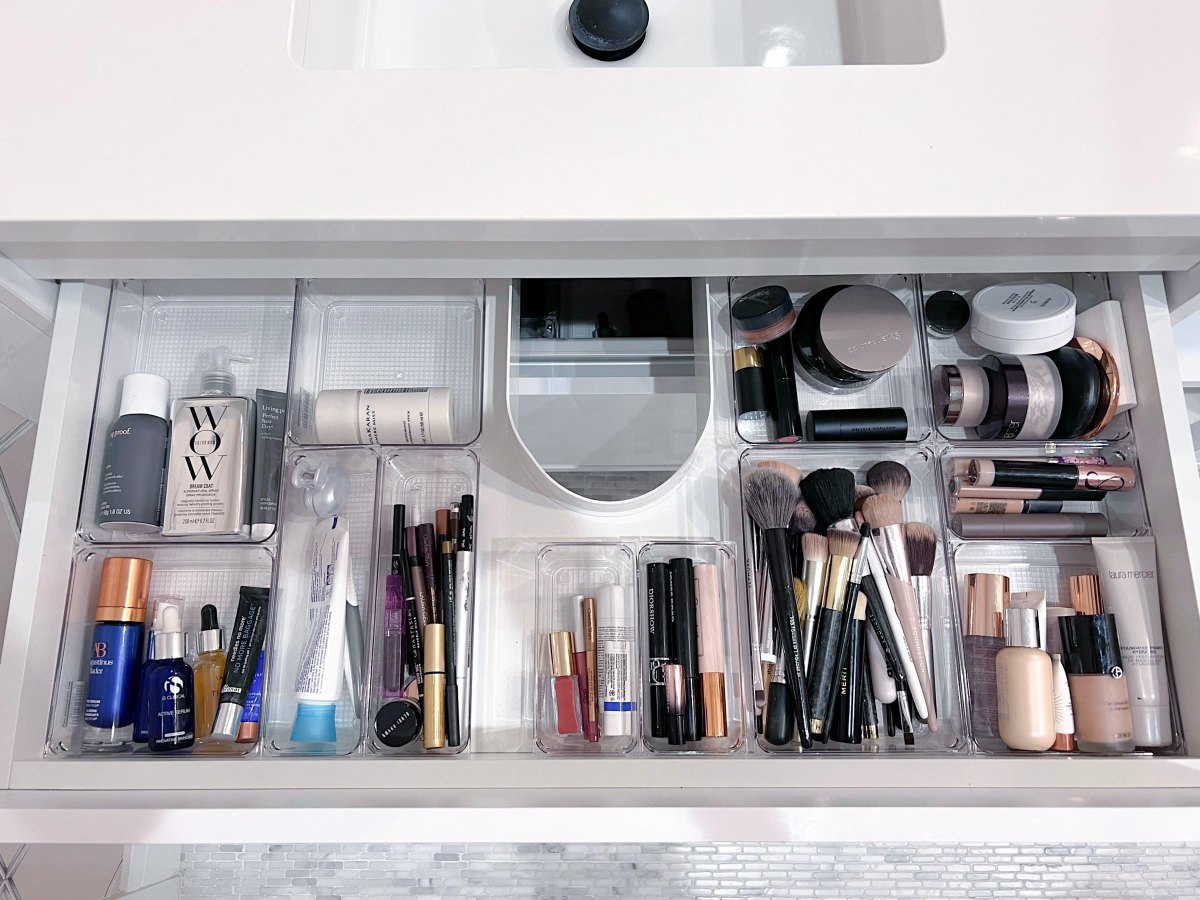
Clear acrylic trays are useful when I want to see makeup at a glance without lifting several containers. I separate lipstick, mascara, foundation, concealer, and brushes into their own compartments, grouping products by how I use them rather than by color alone. This visible storage system makes it easier to return items to the right place.
Keep trays sized to the products instead of filling the drawer with empty compartments. The U.S. Food and Drug Administration advises keeping cosmetic containers clean and tightly closed, protecting products from temperature extremes, and discarding products that change in smell or color. Its guidance on cosmetic shelf life is worth reviewing before organizing older makeup. Choose a clean, dry storage area away from direct heat and excessive bathroom moisture.
Create a Dedicated Skincare Drawer
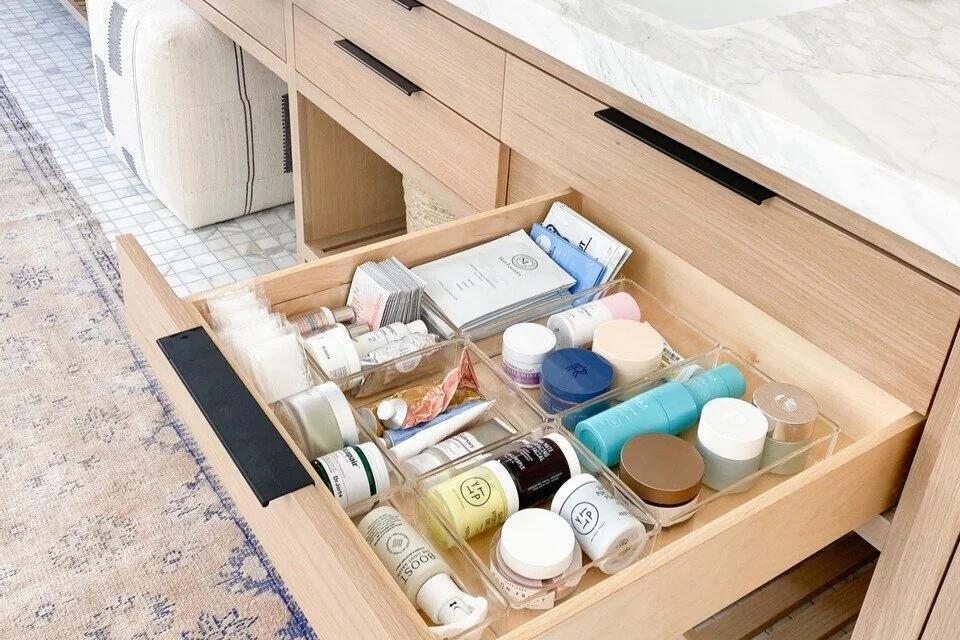
I find a dedicated skincare drawer especially helpful when bottles, jars, serums, and tubes tend to migrate around the vanity. I group cleansers and moisturizers together, place serums in a separate section, and keep the products used every morning near the front. If I follow different morning and evening routines, I arrange products in the order I reach for them to create a simple skincare station.
Store bottles upright when their shape allows it, and use a small tray to contain droppers or products that might leak. The FDA explains that heat, sunlight, air, and moisture can affect cosmetic products over time. I therefore follow each product's storage instructions and avoid placing sensitive formulas beside a hot appliance or in a consistently damp spot. Keep backup products separate so the everyday drawer does not become overcrowded. See the FDA's shelf-life guidance for more information.
Store Hair Tools in Heat-Resistant Organizers
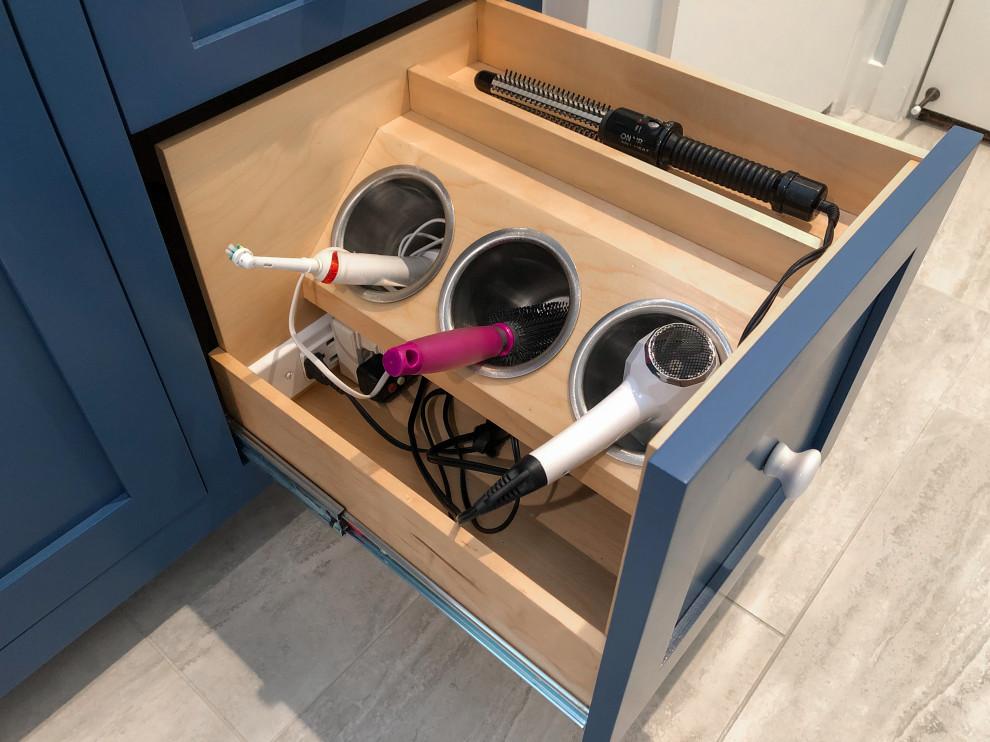
Hair dryers, curling irons, straighteners, and their cords can take over a bathroom drawer if they are stored together without a plan. I give each tool its own section and use a separate space for attachments and cords. The main rule is to choose storage that suits the tool's size and the manufacturer's instructions rather than squeezing everything into one compartment.
Let heated tools cool completely before putting them away, and never store a warm appliance against plastic organizers or nearby products unless the manufacturer specifically permits it. A heat-resistant organizer is not permission to put away an appliance while it is hot. Keep cords loosely arranged rather than tightly wound, and inspect them periodically for damage. If a drawer is too shallow or does not provide suitable clearance, I prefer a separate heat-safe storage location over forcing the tools inside.
Use Small Bins for Everyday Essentials
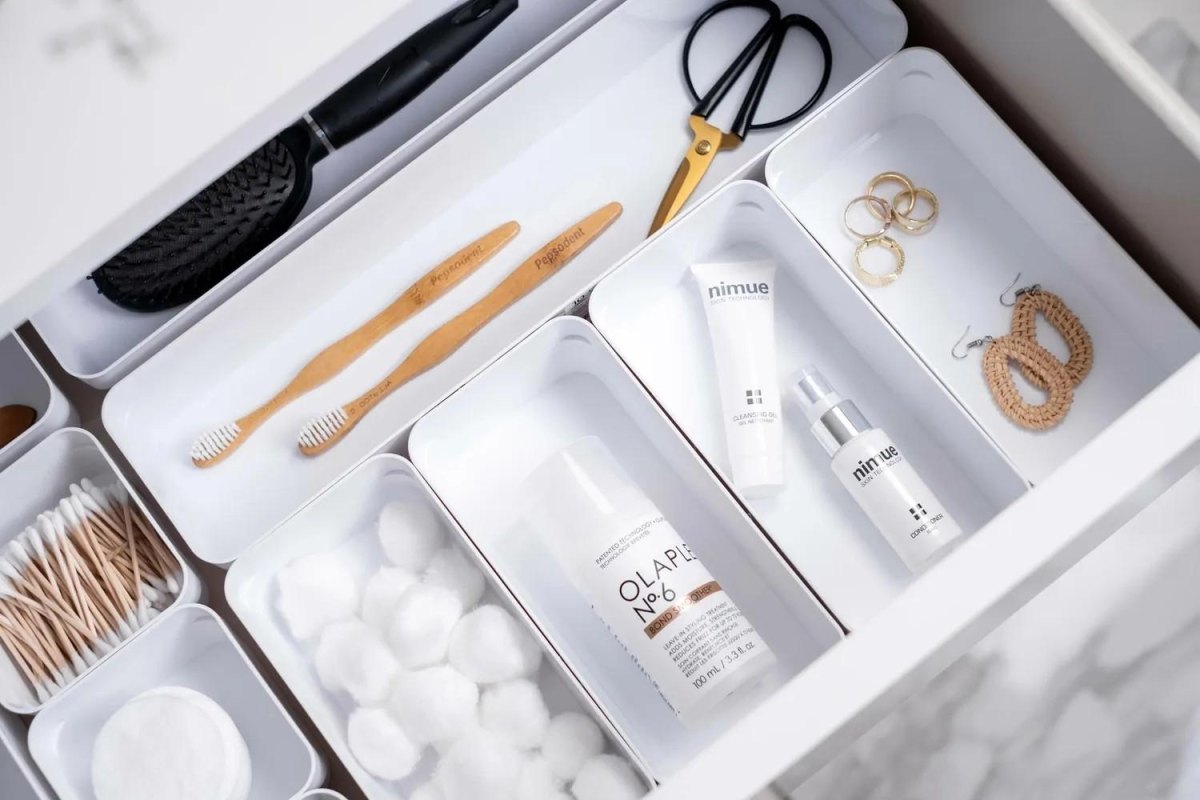
Small bins are among my favorite solutions for items that otherwise scatter across the bottom of a drawer. I use separate containers for cotton pads, floss, tweezers, hair ties, cotton swabs, and spare razor heads. Each bin becomes a small category, making it easier to find what I need without disturbing everything else.
For a practical starting point, choose a few washable bins in different sizes and arrange them around the drawer's existing shape. IKEA's bathroom organizer guide describes using compartmentalized storage to separate cosmetics and personal-care items. I follow the same principle by keeping the most frequently used items closest to the front. The goal is easy access rather than maximum filling, so leave enough room to lift out each container for cleaning.
Arrange Toiletries in Stackable Containers
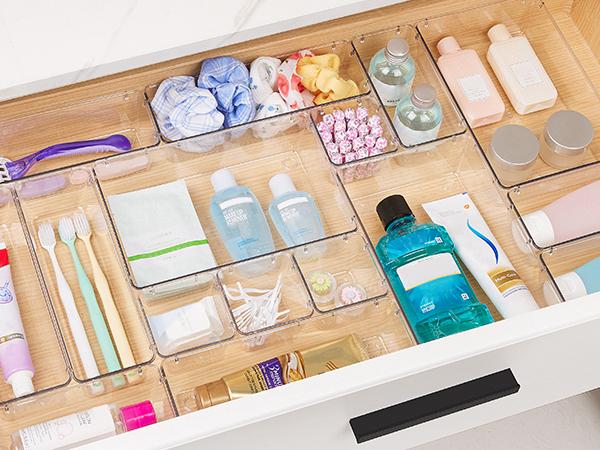
Stackable containers can help when a bathroom has limited drawer space, but I use them selectively. They are useful for grouping travel-size toiletries, spare soap, unopened dental products, and other items that do not need to be reached every morning. Where the drawer has enough vertical clearance, a compact two-level system can make better use of the available space.
Measure the full height before stacking anything, including the height of the containers themselves and the clearance needed to close the drawer. Keep daily products in the easiest-to-reach section and reserve stacked containers for less frequently used supplies. IKEA's bathroom storage organizers include boxes intended for grouping toiletries and other essentials. I recommend choosing stable, easy-to-clean containers and avoiding tall stacks that wobble whenever the drawer moves.
Design a Minimalist Bathroom Drawer
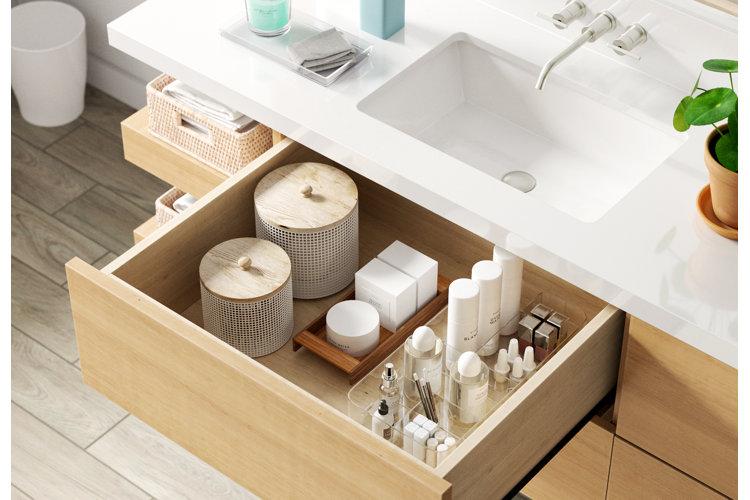
A minimalist drawer does not have to be completely empty or styled in matching containers. For me, the practical goal is to keep only the products that serve a clear purpose in that particular drawer. I start by removing everything, checking what I use regularly, and separating duplicates, expired products, and items that belong somewhere else. This declutter-first approach prevents me from buying organizers for things I do not need.
Once the contents are reduced, I add only enough trays or dividers to keep categories separate. Neutral containers can create a consistent appearance, but simple reusable boxes work just as well. The useful part of minimalism is not a specific color palette; it is having a clear place for every essential and enough open space to return items without rearranging the entire drawer. IKEA's bathroom storage ideas offer additional examples of organizing small items into dedicated containers.
Organize Nail Polish and Manicure Supplies
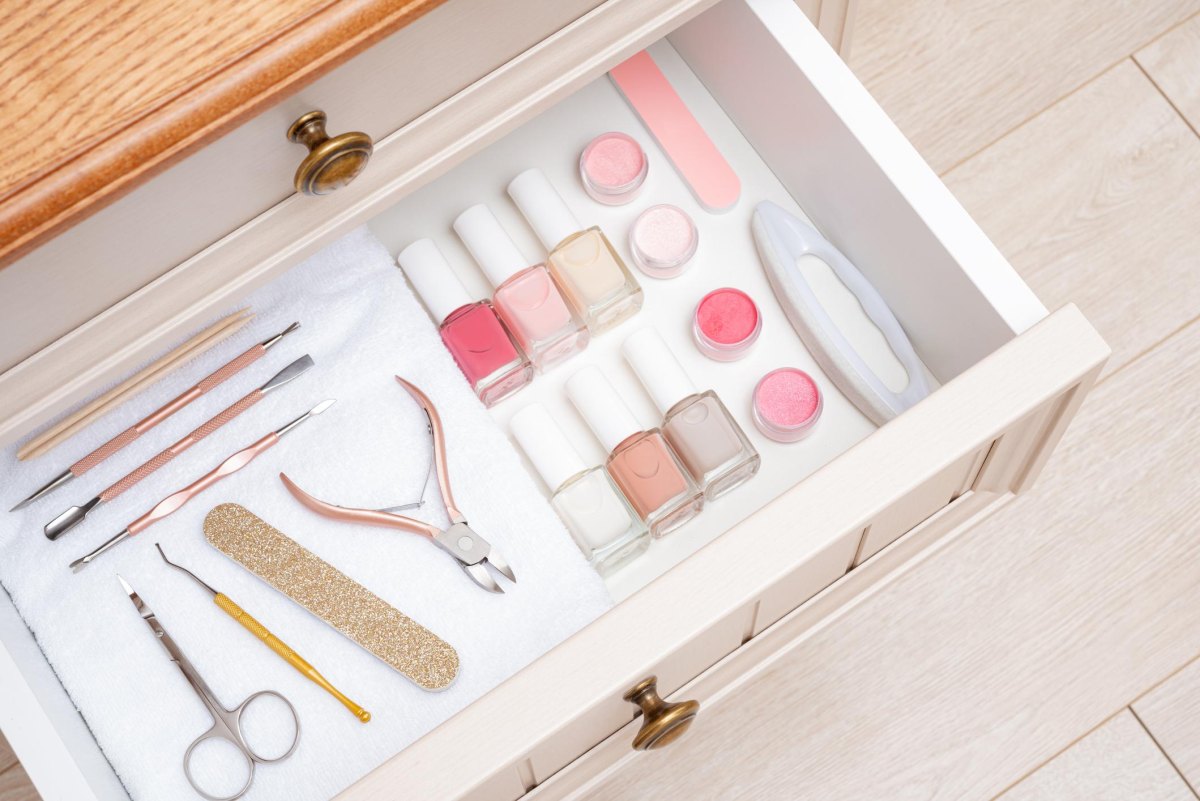
Nail polish bottles, files, clippers, buffers, and cuticle tools are easier to manage when they have separate compartments. I keep polish bottles upright in a stable tray and place small tools in a narrow section so sharp edges do not get mixed with cotton pads or other delicate items. A shallow divided organizer often works better than a large open box where bottles can tip over.
Keep lids tightly closed and follow each product's label for storage and safety instructions. The FDA includes nail polish among the products covered by its cosmetic safety guidance, which advises protecting cosmetics from temperature extremes and keeping containers clean. For a safer, easier-to-maintain manicure drawer, remove dried spills promptly, keep tools clean and dry, and store any product according to its specific instructions.
Make a Drawer for Dental Care Products
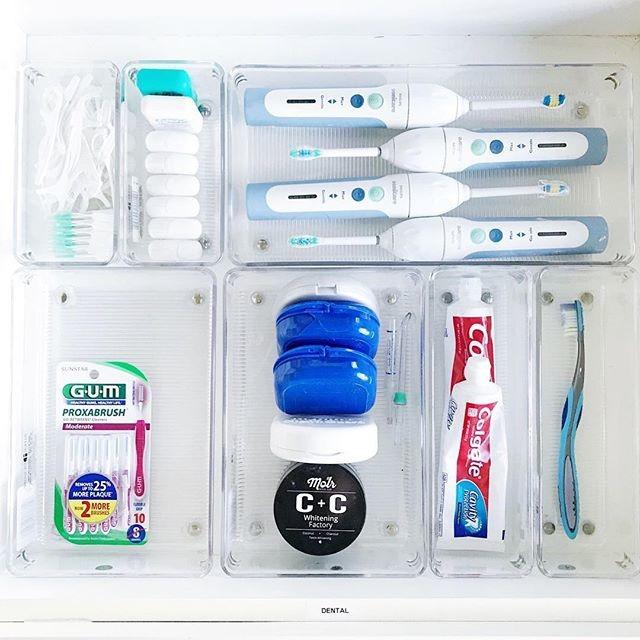
A dedicated dental-care drawer can hold toothpaste, floss, replacement brush heads, interdental cleaners, and other daily oral-care supplies. I separate sealed refills from the products currently in use and keep small items together in a washable tray. This prevents tiny packages from disappearing behind larger bottles and makes it easier to notice when supplies need replacing.
There is one important detail when storing toothbrushes. The American Dental Association recommends rinsing brushes after use, storing them upright, and allowing them to air-dry; keeping a moist toothbrush in a closed container can encourage microbial growth. Its toothbrush care guidance supports keeping brushes separate from damp, enclosed storage. I use the drawer for dry supplies and refills, while toothbrushes in regular use remain in a suitable ventilated holder.
Use Bamboo Organizers for a Natural Look
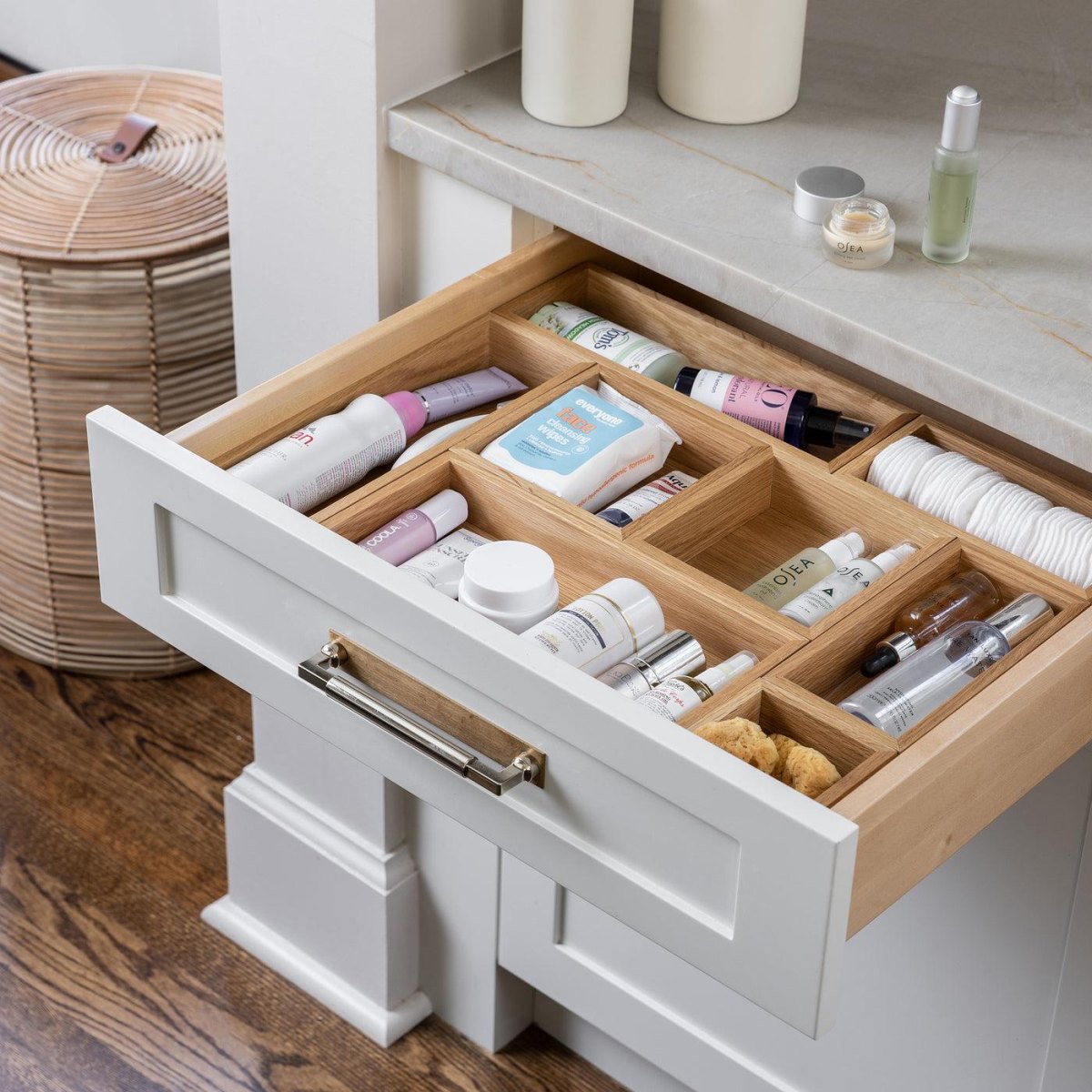
Bamboo organizers add a warm, natural finish to a bathroom drawer while providing separate spaces for skincare, grooming tools, and small accessories. I like using a few matching bamboo compartments when I want a coordinated look without filling the drawer with decorative objects. Different compartment sizes are particularly useful for mixing long tools with small containers.
Before buying, check the organizer's dimensions and whether its finish suits the bathroom environment. Bamboo products are not automatically waterproof, so I avoid leaving them in standing water or repeatedly exposing them to damp contents. IKEA's bamboo drawer organizer listing provides an example of a product with stated dimensions and care instructions. For longer-lasting natural storage, wipe up spills promptly, clean according to the manufacturer's directions, and let the organizer dry thoroughly.
Keep First-Aid and Personal Care Items Together
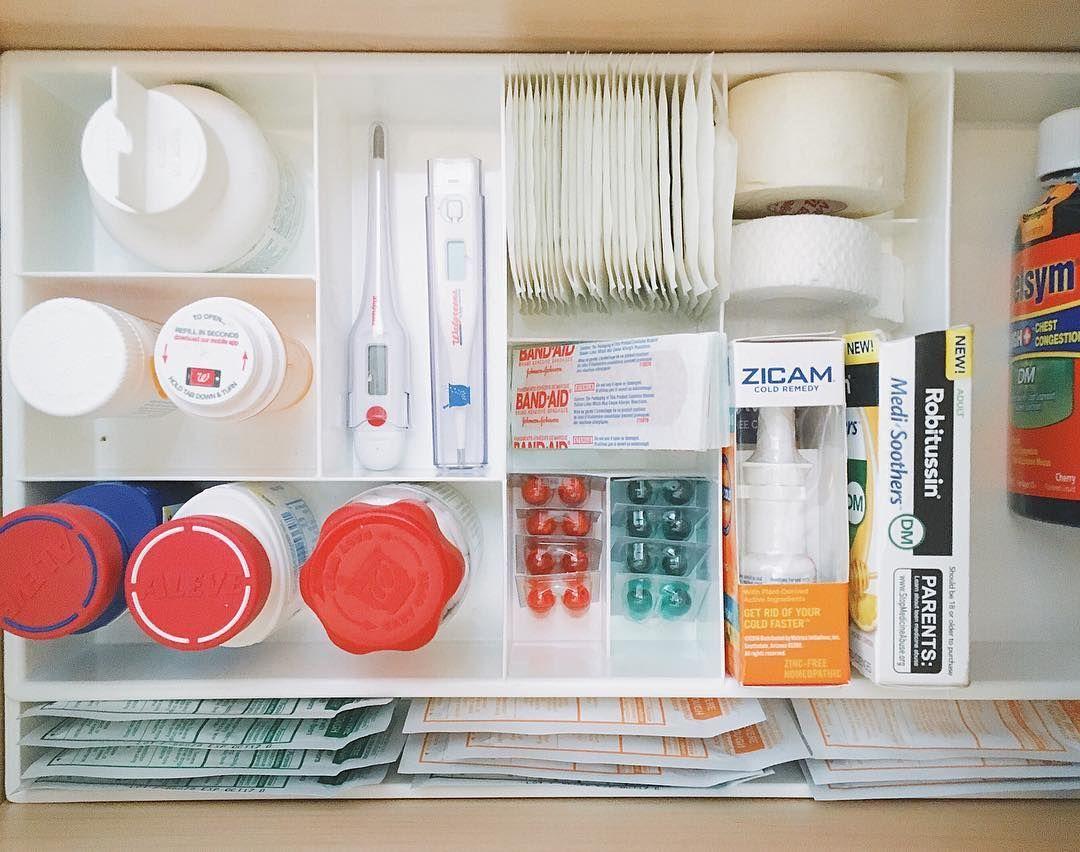
Bandages, adhesive dressings, tweezers, a thermometer, and other basic first-aid supplies are easier to locate when they have a dedicated storage area. I keep related items together in a clearly identified container instead of distributing them among skincare, makeup, and grooming products. Small compartments help prevent packets from becoming buried underneath larger items.
Storage conditions matter more than appearance here. Follow the label on each product, check expiry dates where provided, and keep supplies away from moisture and excessive heat. Medicines and products with specific temperature requirements should not automatically be placed in a bathroom drawer; use the storage conditions stated on their packaging. Keep potentially hazardous products out of children's reach. The priority is safe, reliable access, not fitting every health-related item into the same compartment.
Maximize Space in a Shallow Bathroom Drawer
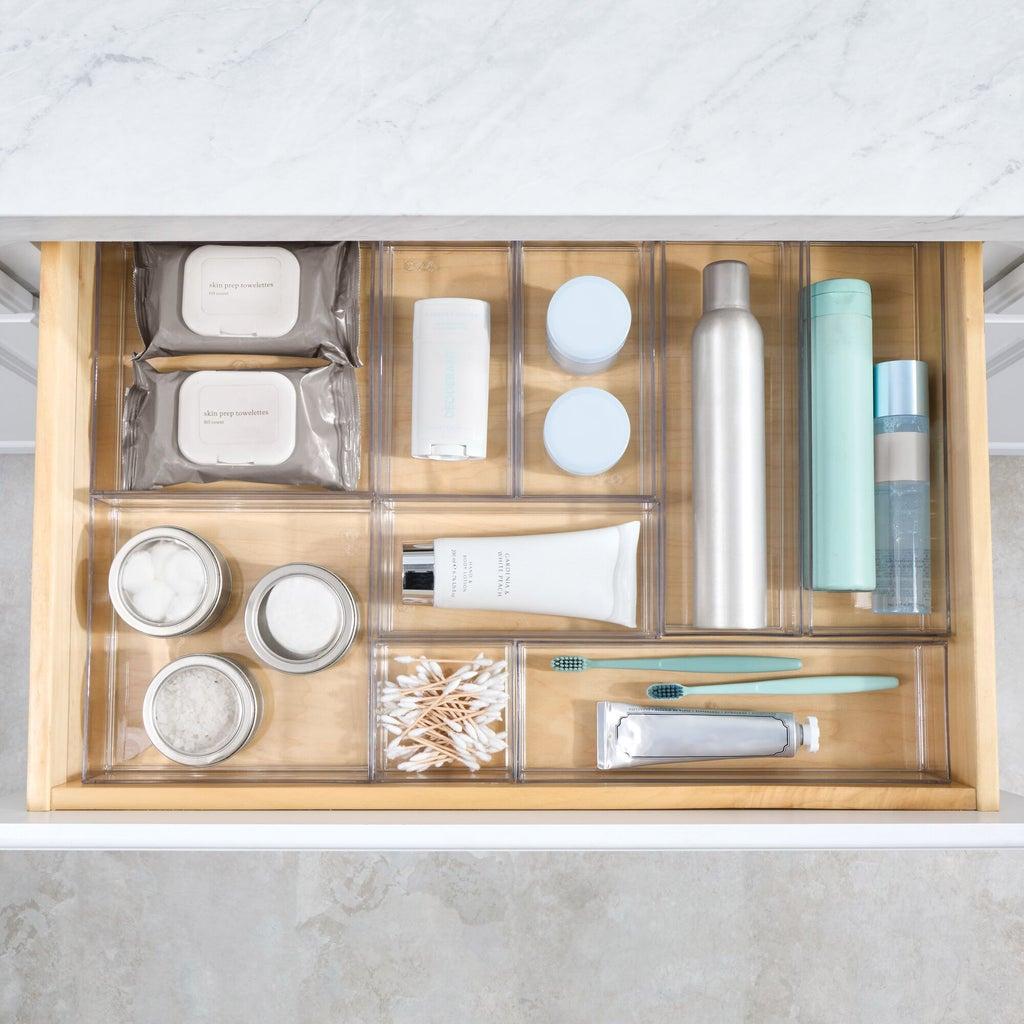
Shallow drawers can be surprisingly useful when the organizers are selected for their limited height. I use low-profile trays for cotton pads, tweezers, lip balm, hair clips, and other small items that do not need deep storage. Slim compartments also prevent products from stacking on top of one another, which is often what makes a small drawer difficult to use.
Measure the usable interior height rather than relying on the cabinet's exterior dimensions. Include space for the drawer to close freely, and check whether the plumbing or drawer runners reduce the usable area. Instead of buying a large organizer set, combine a few narrow trays that fit around these obstacles. Keep bulky bottles and backup supplies in a deeper drawer or cabinet, leaving the shallow space for small, frequently used essentials.
Add Labels to Drawer Storage Bins
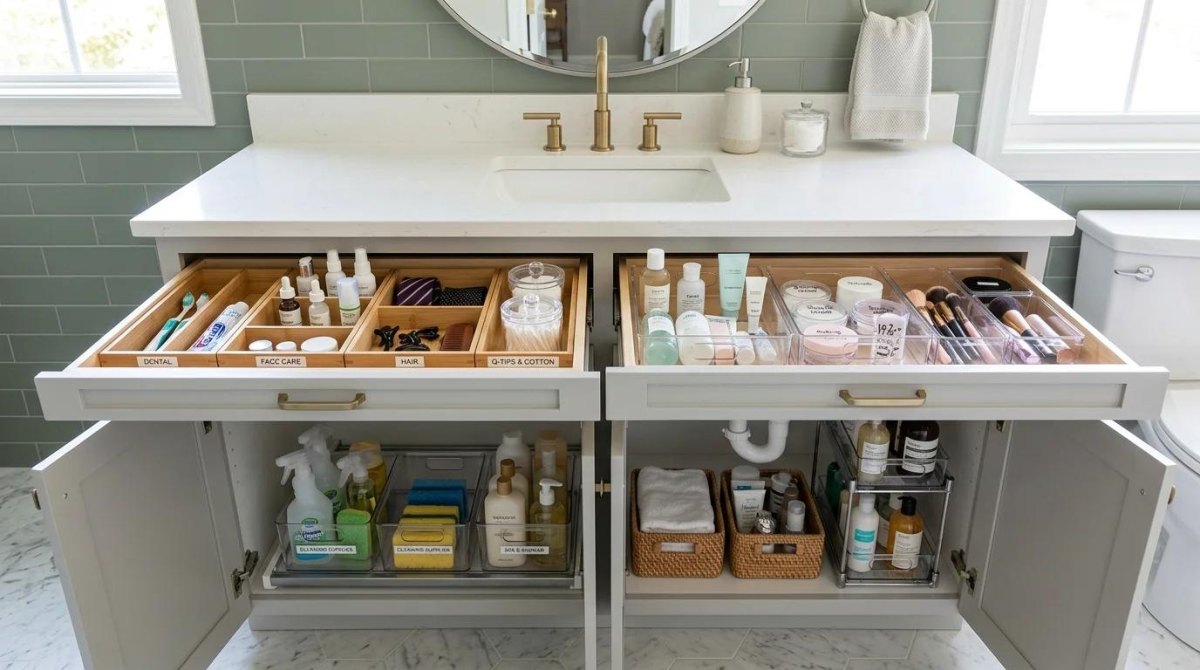
Labels are useful when a drawer contains several similar containers or when more than one person uses the bathroom. I label bins with straightforward names such as dental care, hair accessories, skincare, and refills. These descriptions make the storage system easier to follow without requiring everyone to remember which container holds what.
Place each label where it remains visible when the drawer is open, and keep the wording short enough to read quickly. Water-resistant labels can be useful in a bathroom, but they should still be kept away from direct splashes. I also avoid labeling every individual product when a category label is enough. The aim is a simple, repeatable organization system that makes putting things away as easy as finding them. If the contents change, update the label rather than allowing the system to become misleading.
Create Separate Drawers for Each Family Member
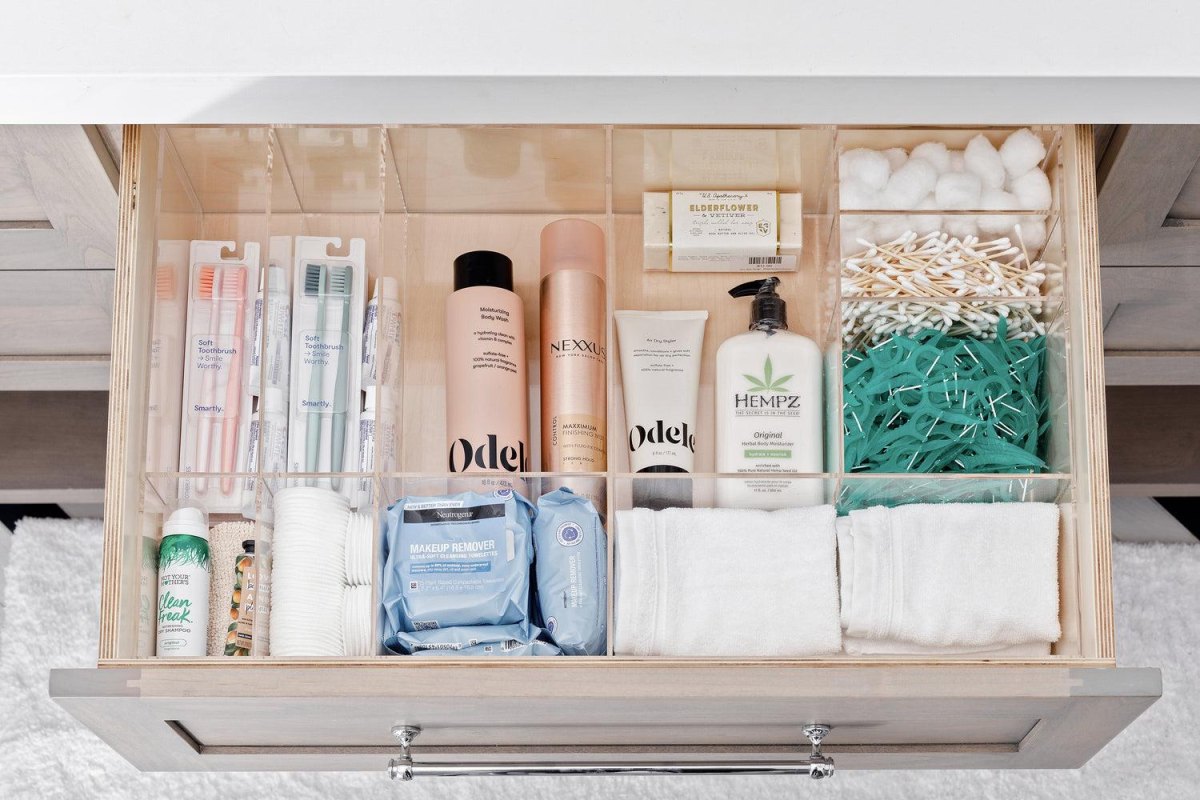
Shared bathrooms are easier to manage when each person has an identifiable space for personal products. If the vanity has several drawers, I assign one to each family member where possible. In a single shared drawer, individual labeled bins can provide a similar result without requiring extra furniture. This keeps personal grooming tools and daily toiletries from becoming mixed together.
Give everyone enough space for the items they use regularly, and keep shared supplies such as spare toothpaste or cotton pads in a separate common section. IKEA's family bathroom organization guide discusses using storage zones and boxes to make shared spaces easier to manage. I also keep products that require adult supervision or secure storage in an appropriate location, rather than relying on a drawer label alone. The best family bathroom storage system is clear, consistent, and easy for everyone to maintain.
Transform a Cluttered Drawer Into an Organized Space
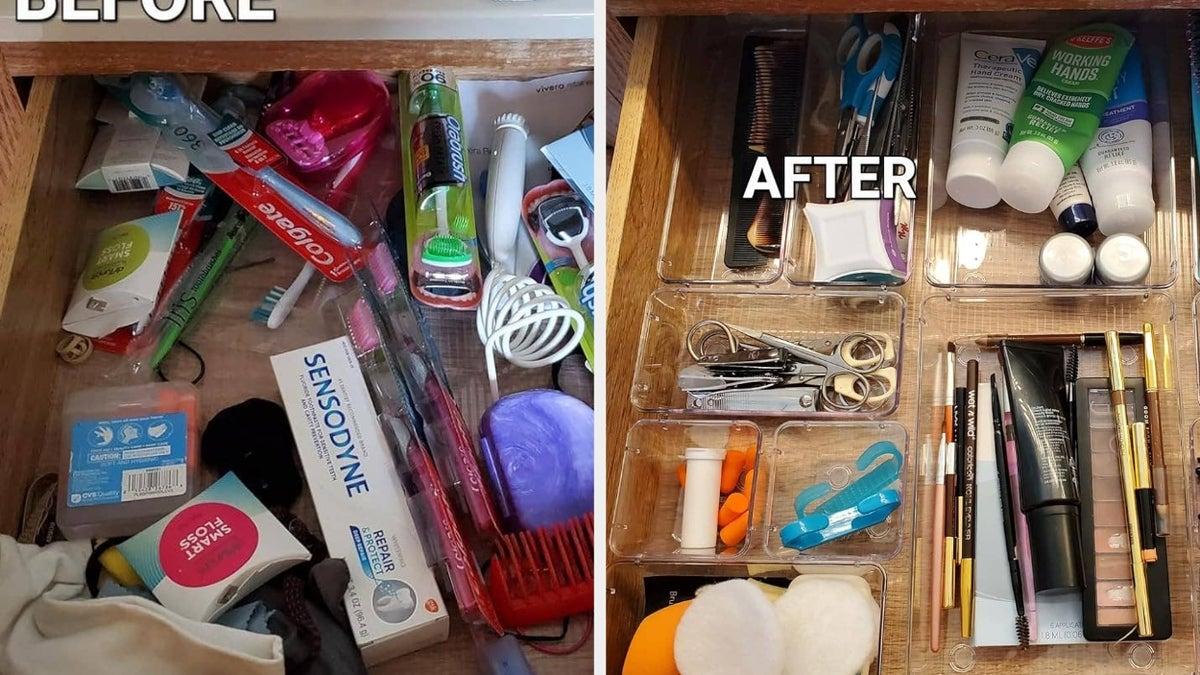
When a bathroom drawer has become a catch-all, I start by emptying it completely instead of trying to organize around the existing mess. I wipe the drawer clean, sort products into categories, and check which items are useful, duplicated, expired, or better stored elsewhere. Only after this review do I decide which containers are needed. This sort-before-shopping method avoids spending money on organizers that do not fit the final contents.
- Empty the drawer. Place everything on a clean surface so each item is visible.
- Sort by category. Group makeup, skincare, dental care, grooming tools, and refills.
- Review the contents. Check product labels and condition, and remove items that should no longer be kept.
- Measure and arrange. Select containers that fit the drawer and put everyday essentials at the front.
- Maintain the system. Return items to their assigned sections and remove new clutter before it accumulates.
I find that the final step matters as much as the initial cleanout. A brief reset whenever the drawer starts to fill up helps preserve usable space and easy access without repeating the entire project. The result should be a drawer that works for the routine you actually have, not one that only looks organized on the first day.